
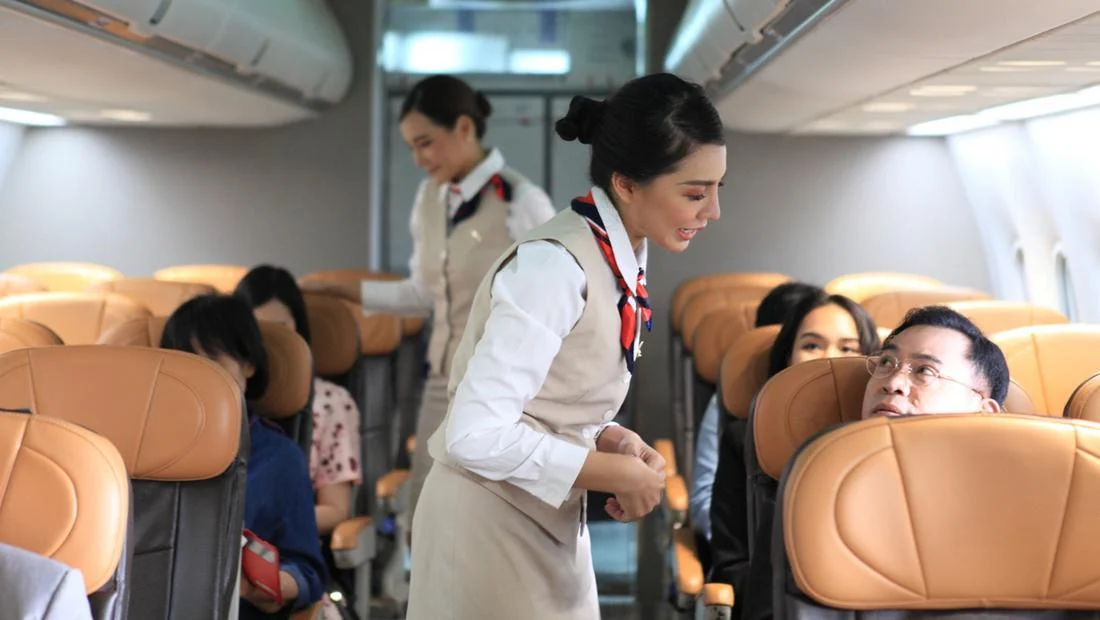
The preparation process for a commercial flight is a highly choreographed sequence of events, designed to ensure the safety and efficiency of hundreds of passengers. While passengers settle into their seats, often distracted by their electronic devices or carry-on luggage, the flight crew is engaged in a rigorous, standardized communication protocol that dictates every phase of the journey. Among the most frequent, yet often misunderstood, phrases heard over the aircraft’s intercom system are "arm doors" and "cross-check." While these terms have become synonymous with the boarding and deplaning process, they represent critical safety procedures that, if mishandled, could have severe consequences for aircraft integrity and emergency response readiness.
The Standardized Language of Flight Operations
According to industry standards maintained by major carriers such as Qantas Airlines, the command to "arm doors" is issued by the captain or senior cabin crew member as the aircraft prepares for departure. This directive serves as a formal notification that the aircraft’s doors are now configured for emergency deployment. In the event of a rapid evacuation, the slide-raft attached to the door must automatically inflate; the "arming" process engages the girt bar, which connects the slide mechanism to the floor fittings of the aircraft.
The subsequent command, "cross-check," is the vital verification step in this sequence. In the context of cabin operations, it signifies that each crew member has checked their own door, as well as the door of their colleague, to ensure the arming process was completed correctly. This "four-eyes" principle is a fundamental pillar of aviation safety, designed to eliminate human error by ensuring that a second person confirms the status of safety-critical equipment. As noted in reports by Travel + Leisure, these phrases are not merely procedural jargon; they are the final barrier against potential failure in an emergency scenario.
A Multidimensional Definition of Safety Protocols
While the cabin crew’s use of "cross-check" is widely recognized, the term holds varied meanings depending on the operational context within the cockpit. Justin Crabbe, a commercial pilot and the founder of Jettly and BlackJet, emphasizes that the aviation industry utilizes a complex lexicon that varies significantly between flight deck personnel and cabin attendants.
For the flight crew—the pilots—"cross-check" refers to a systematic verification of flight instruments. Before a jet reaches V1 (the critical takeoff decision speed), pilots must ensure that their primary digital flight displays are in harmony with the secondary analog backups. This cross-referencing process allows the crew to identify potential sensor failures or data discrepancies that could prove fatal during the critical phases of flight. If the primary airspeed indicator shows a significant deviation from the standby instrument, flight protocol mandates an immediate investigation, which may necessitate an aborted takeoff or a return to the gate.
Chronology of the Pre-Flight Sequence
The communication sequence follows a strict timeline designed to maximize the safety of all individuals on board. The process generally adheres to the following chronology:
- Gate Arrival and Door Monitoring: Upon arrival at the gate, doors are "disarmed" to allow the jet bridge or mobile stairs to be positioned without triggering the automatic slide deployment mechanism.
- Boarding Phase: The crew monitors passenger flow while conducting secondary security checks, including the reconciliation of passenger manifests and cabin baggage stowage.
- Pre-Pushback Protocol: Once the final passenger is seated and the cabin door is closed, the senior cabin crew verifies that the cabin is "ready for departure."
- Arming the Doors: The captain issues the "arm doors" command. Cabin crew manually move the slide arming lever, verify the engagement of the girt bar, and perform the "cross-check" with their counterparts.
- Takeoff and Cruise: Once in the air, the "cross-check" protocols shift to the cockpit, where pilots continuously monitor navigational data against flight plans.
- Arrival and Disarming: Upon landing, the reverse process occurs. The crew is instructed to "disarm doors," ensuring the slides remain packed while the aircraft is docked at the arrival gate.
Hidden Codes and Industry Nuances
Beyond the well-known "cross-check" command, aviation professionals utilize a subtle code system to communicate medical issues, unruly behavior, or operational challenges without inciting panic among the traveling public.
Medical emergencies, ranging from minor incidents like a fainting spell to critical situations, are often categorized by codes to facilitate rapid response. A "Code Yellow" is frequently used to denote a minor medical issue that requires attention but does not necessitate a diversion. Conversely, the term "Pan-Pan" is a formal emergency signal—derived from the French word panne (breakdown)—which indicates an urgent situation that is not yet a "Mayday" (an immediate life-threatening emergency).
Furthermore, cabin crew members occasionally employ lighthearted or internal slang to describe recurring passenger behaviors. A "Code Mermaid," for instance, is a colloquial term sometimes used by crews to describe passengers who are restless and frequently move between seats, potentially disrupting the weight and balance calculations of the aircraft or complicating service delivery. While these terms are not universal across all airlines, they highlight the necessity of efficient, discreet communication in a confined environment.
The Role of Human Factors in Aviation Safety
The reliance on cross-checking mechanisms is a direct result of decades of research into "Human Factors" in aviation. The industry acknowledges that individual fatigue, distraction, and cognitive bias can lead to oversight. By enforcing a system where one crew member must visually verify the work of another, the industry creates a redundancy that protects against the consequences of a single individual’s lapse in judgment.
Data from the International Air Transport Association (IATA) suggests that human error remains a factor in a significant percentage of aviation incidents. Consequently, the adoption of strict, verbalized communication protocols—often referred to as "sterile cockpit" rules—is strictly enforced. During the "cross-check" phase, unnecessary conversation is prohibited to ensure that the crew’s focus remains entirely on the task at hand.
Implications for the Modern Traveler
For the average passenger, these codes and protocols are a reassuring sign of a well-regulated industry. While the technical nature of the communication might seem mysterious, it is designed with the passenger’s well-being as the primary objective.
Passengers are encouraged to follow the guidance of the cabin crew during these procedures, specifically regarding seatbelts, seat positions, and the clearance of aisles. These are not merely suggestions but safety requirements designed to ensure that in the event of an emergency, the evacuation path is unobstructed. The "cross-check" process ensures that when the cabin crew announces the doors are ready, they are indeed prepared for whatever the flight may encounter.
As aviation technology continues to advance, the reliance on automated systems is increasing. However, the human element—the voice-to-voice confirmation of safety statuses—remains irreplaceable. The next time a traveler hears the phrase "cross-check" over the intercom, they can recognize it as the culmination of rigorous training and a commitment to safety that defines the modern aviation experience. It is a reminder that while the passenger experience is focused on comfort and destination, the primary mission of the crew is the meticulous management of the aircraft’s integrity from the moment the door closes until it opens once again at the destination.
