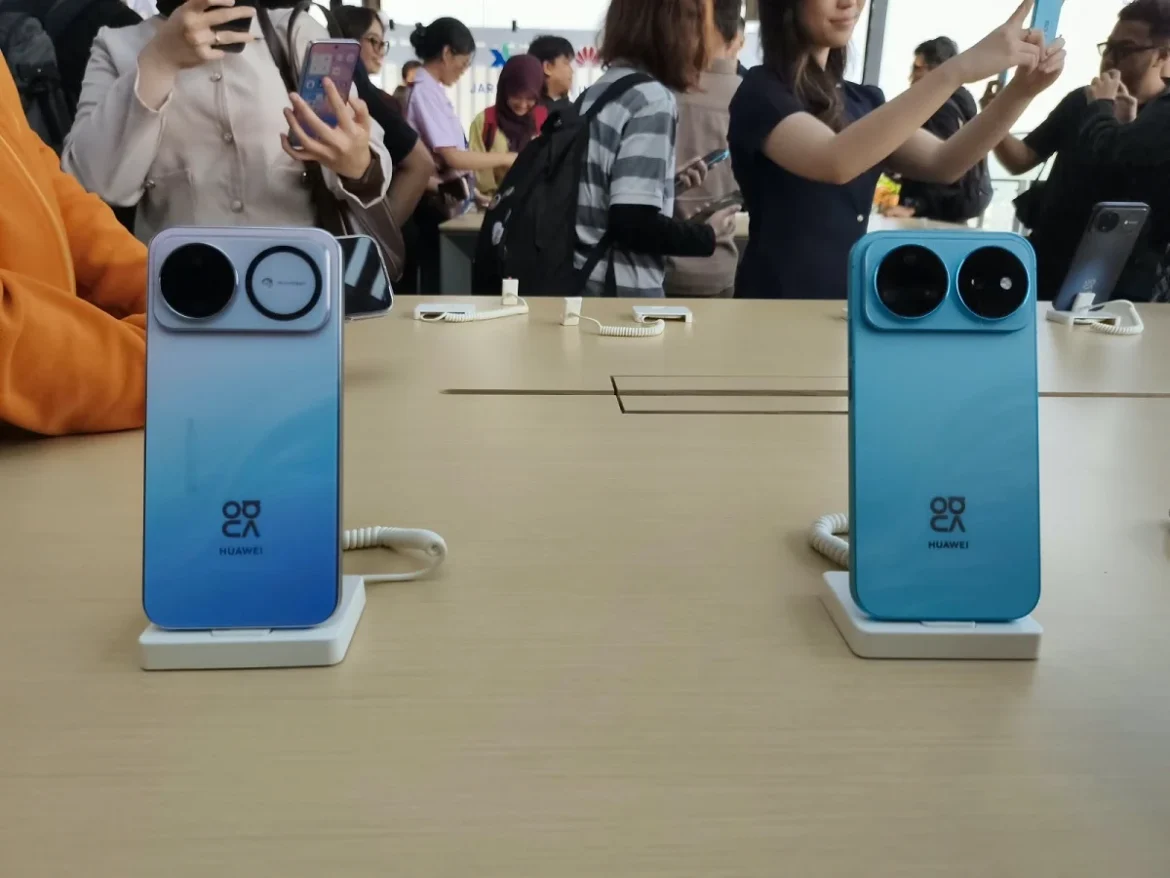
JAKARTA — Huawei has officially expanded its footprint in the Indonesian smartphone market with the launch of the Huawei Nova 16s Series, a dual-device lineup comprising the standard Nova 16s and the premium Nova 16s Pro. This launch marks a significant milestone for Huawei’s mid-to-high-tier strategy, emphasizing a convergence of extreme durability, professional-grade photography, and high-performance display technology. The move is widely seen as an attempt to reclaim market share in the Southeast Asian tech hub by catering to consumers who prioritize hardware sophistication and aesthetic industrial design.
The introduction of the Nova 16s series arrives at a pivotal time for the smartphone industry, as manufacturers are increasingly shifting their focus toward AI-enhanced imaging and resilient material science. By integrating a 200MP AI-driven sensor and proprietary glass technology, Huawei is positioning this series as a direct competitor to current flagship offerings from other global tech giants, despite the ongoing shifts in the mobile ecosystem.
Architectural Design and Durability Standards
At the core of the Nova 16s series is a focus on structural integrity. The devices feature a 7.1mm ultra-slim chassis, a dimension that balances portability with the internal space required for sophisticated camera hardware. To achieve this, Huawei utilized an aluminum alloy mid-frame, providing a rigid skeletal structure that remains lightweight.
A defining feature of the series is the inclusion of Huawei’s proprietary Kunlun Glass. In previous iterations, Kunlun Glass has demonstrated a significant increase in drop resistance, and the company claims that the version implemented in the Nova 16s series provides up to 10 times the durability against falls compared to industry-standard protective screens. This focus on "ruggedized elegance" addresses a growing consumer demand for devices that do not require bulky cases to remain functional under everyday stress.
Display Specifications and Visual Performance
The visual experience across the two models is differentiated by screen size and display technology, though both cater to the high-refresh-rate standard that modern users expect.
The Nova 16s Pro features a 6.84-inch LTPO OLED display. The use of Low-Temperature Polycrystalline Oxide (LTPO) technology allows the screen to dynamically adjust its refresh rate from 1Hz to 120Hz, optimizing battery consumption without compromising fluidity. Perhaps most striking is the peak brightness, which hits an impressive 6,000 nits. This level of brightness ensures visibility in direct sunlight and enhances High Dynamic Range (HDR) content playback, placing the Pro model among the top-tier devices in terms of luminosity.
The standard Nova 16s offers a more compact 6.68-inch display, also maintaining a 120Hz refresh rate. While it scales back slightly on peak brightness compared to its Pro sibling, it maintains the color accuracy standards inherent to the Huawei display ecosystem. Both devices leverage Huawei’s "True-to-Color" technology, which calibrates the panel to ensure that the images captured by the powerful sensor arrays are represented accurately on the screen.
The Evolution of Mobile Photography
Photography remains the primary pillar of the Nova series identity. Huawei has leaned heavily into high-resolution sensor technology, with the Nova 16s Pro acting as the flagship of this effort.
The Pro model is equipped with a 200MP main sensor utilizing an ultra-large RYYB (Red-Yellow-Yellow-Blue) filter arrangement. This sensor, measuring 1/1.28 inches, is designed to capture significantly more light than traditional RGGB sensors, particularly in challenging low-light conditions. The technical advantage of the RYYB architecture is its ability to boost sensitivity, effectively reducing digital noise in dimly lit environments.
Complementing the primary sensor is a sophisticated secondary array:

- 50MP Periscope Telephoto: Providing high-fidelity zoom capabilities without the loss of detail associated with digital cropping.
- 50MP Ultrawide: Designed to maintain edge-to-edge sharpness, crucial for architectural and landscape photography.
- OIS and AIS: The integration of Optical Image Stabilization (OIS) and AI-driven Image Stabilization (AIS) ensures that high-resolution shots remain crisp, mitigating the effects of hand shake during long-exposure or telephoto shooting.
The front-facing camera has not been ignored, with a 50MP sensor housed in a 1/2.5-inch module. This inclusion suggests a focus on the burgeoning creator economy, where high-quality front-facing video and images are essential for social media engagement.
Strategic Implications and Market Positioning
The launch of the Nova 16s Series in Indonesia is a calculated strategic move. The Indonesian market is currently characterized by a high volume of young, tech-savvy users who are increasingly sensitive to the "price-to-performance" ratio. By introducing two models, Huawei is segmenting its audience: the standard Nova 16s serves the mainstream market, while the Pro model appeals to power users and mobile photographers.
From an industry perspective, the inclusion of 200MP hardware in a series that is not strictly branded as a "flagship P-series" indicates that Huawei is successfully democratizing its premium camera technology. This "trickle-down" of hardware capability is a common tactic used to stabilize market share in highly competitive regions.
Historical Context and Development
Huawei’s history in Indonesia dates back over a decade, with the company establishing deep roots in both the telecommunications infrastructure sector and the consumer mobile market. Following the geopolitical shifts of 2019, which restricted access to certain Western software services, Huawei pivoted toward its proprietary HarmonyOS and a massive investment in internal hardware innovation.
The Nova 16s series represents the current pinnacle of this pivot. The development of this series reflects a multi-year effort to refine the balance between high-end hardware performance and the constraints of the current global semiconductor supply chain. By focusing on proprietary glass, custom display controllers, and specialized sensor arrays, Huawei has demonstrated an ability to maintain high manufacturing standards despite external market pressures.
Official Response and Future Outlook
While specific sales targets for the Indonesian market have not been publicly disclosed, representatives from Huawei’s regional branch have indicated that the Nova 16s series is expected to lead the brand’s growth in the fourth quarter of 2026. The company’s focus remains on building an ecosystem where hardware performance is complemented by a robust array of local apps and services, tailored specifically for the Indonesian user base.
Industry analysts suggest that the success of the Nova 16s series will hinge on the company’s ability to maintain a competitive price point while ensuring a seamless user experience. With competitors offering aggressive pricing in the mid-range segment, Huawei’s emphasis on durability (via Kunlun Glass) and camera prowess serves as their primary value proposition to differentiate the Nova 16s from its rivals.
Looking Ahead
As the smartphone market continues to mature, the focus is shifting away from mere specification bumps toward user-centric innovations like long-term durability and AI-supported utility. The Nova 16s series positions Huawei as a contender that understands these nuances. By delivering a combination of high-resolution imaging, robust construction, and high-performance display technology, Huawei is signaling that it remains a serious participant in the global smartphone landscape.
For consumers in Indonesia, the availability of these two models provides a clear choice: a high-performance, photography-focused device in the Pro, or a balanced, efficient, and durable smartphone in the standard Nova 16s. As the devices roll out to retailers across the archipelago, the industry will be watching closely to see how these specs translate into real-world user adoption and long-term brand loyalty.
The introduction of this series is not merely a product launch; it is a reaffirmation of Huawei’s commitment to the Indonesian market. Through persistent R&D and a keen understanding of regional preferences, Huawei continues to navigate the complexities of the modern mobile landscape, offering consumers a distinct alternative in a market saturated with options. Whether this series will be enough to shift the competitive balance remains to be seen, but the technical foundations laid by the Nova 16s Pro and the standard Nova 16s are undeniably robust.