
The development of modern tourism in Indonesia is inextricably linked to the era of the Dutch East Indies, a period when global trade routes and maritime innovations first opened the archipelago to international travelers. Following the inauguration of the Suez Canal in 1869, transit times between Europe and Southeast Asia decreased dramatically, spurring a surge in commercial shipping and maritime exploration. By the late 19th century, luxury cruise liners began docking in various ports across the Dutch East Indies, offloading European tourists eager to explore the tropical landscapes, ancient temples, and diverse cultures of the archipelago.
To accommodate this nascent wave of tourism, the colonial administration and private entrepreneurs recognized an urgent need for Western-standard lodging. Consequently, a series of grand hotels were constructed, primarily across the island of Java and later expanding to Bali. These properties were designed not merely as places to sleep, but as symbols of European luxury, engineering prowess, and architectural ambition in the tropics. Surprisingly, despite the profound geopolitical shifts of the 20th century—including the Japanese occupation, the Indonesian War of Independence, and the birth of a sovereign republic—several of these colonial-era hotels have survived the test of time. Today, they continue to operate as fully functioning luxury accommodations, serving as living museums where guests can experience the intersection of colonial history and contemporary Indonesian hospitality.
The Evolution of Hospitality: From Colonial Enclaves to National Icons
The inception of the Indonesian hospitality industry is historically anchored in the construction of these grand colonial establishments. During the Dutch East Indies era, hotels such as the Hotel Oranje in Surabaya and Hotel Savoy Homann in Bandung served as exclusive social hubs for European planters, colonial officials, and affluent globe-trotters. These institutions introduced Western culinary traditions, European architectural styles—such as Art Deco and Indische Empire—and structured service models to the region.
Following Indonesia’s independence in 1945, and particularly during the administration of President Sukarno in the 1950s and 1960s, many of these historic properties were nationalized or repurposed to project the image of a modern, sovereign nation on the global stage. Sukarno, a trained architect and visionary leader, understood the strategic importance of world-class infrastructure in establishing international diplomatic and economic relations. Under his directive, several historic hotels were either expanded or newly constructed to host international delegations, major conferences, and global sporting events.
The preservation and ongoing operation of these hotels offer contemporary analysts a unique lens through which to examine the socio-economic and architectural evolution of Indonesia. Far from being mere relics of a bygone era, these five properties have continually adapted to modern hospitality standards while actively preserving their historical integrity.
1. Hotel Indonesia Kempinski (Jakarta)
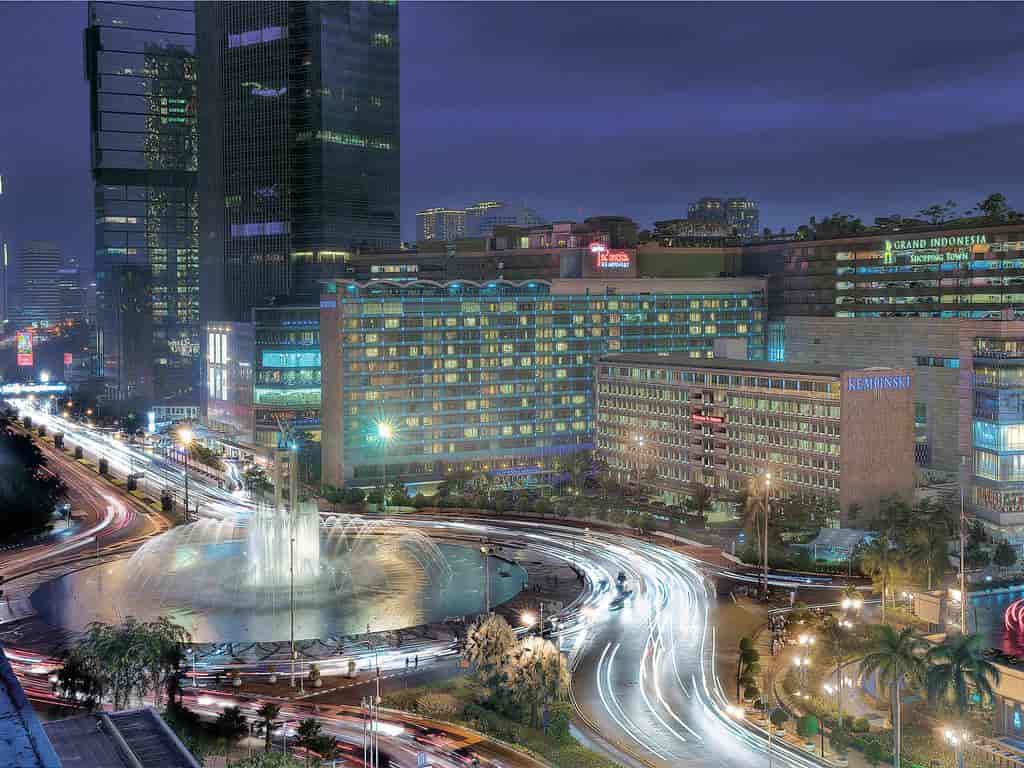
As the pioneer of five-star luxury hospitality in Indonesia, Hotel Indonesia holds a monumental place in the nation’s modern history. Located in the heart of Jakarta, the hotel was commissioned by President Sukarno in the late 1950s to prepare the capital for the upcoming 1962 Asian Games IV. Constructed in part utilizing reparations funds from World War II following the Japanese occupation, the property was envisioned as a national showcase—a symbol of a young nation stepping confidently onto the international stage.
Upon its official inauguration in 1962, Hotel Indonesia stood as the tallest building in Jakarta, dominating the urban skyline and setting an unprecedented benchmark for domestic luxury. Its architectural design combined modernist principles with Indonesian cultural motifs, reflecting the national identity politics of the post-independence era. Over the decades, the hotel has hosted countless heads of state, international diplomats, and global celebrities.
A testament to its enduring diplomatic significance occurred in March 2020, when King Willem-Alexander and Queen Máxima of the Netherlands chose the historic property as their official residence during their state visit to Indonesia. The royal couple stayed in the hotel’s premier suite, which was specially equipped with enhanced security measures, including bulletproof glass. Today, managed by the prestigious European hotel chain Kempinski, the property seamlessly blends its rich historical legacy with contemporary luxury amenities. Room rates generally start around IDR 2.98 million per night, varying according to seasonal demand, currency fluctuations, and booking platforms such as Agoda.
2. Hotel Majapahit Surabaya (East Java)
Originally established in 1910 by the Sarkies Brothers—a prominent family of Armenian hoteliers renowned for founding several luxury hotels across Southeast Asia—Hotel Majapahit in Surabaya is deeply embedded in the military and political history of Indonesia. Throughout the Dutch colonial period, the property operated under the name Hotel Oranje, functioning as a premier social and residential hub for European elites residing in East Java.
During the Japanese occupation of Indonesia (1942–1945), the hotel was commandeered and renamed Hotel Yamato, serving as a regional administrative and military facility. However, the most pivotal moment in the property’s history occurred on September 19, 1945, shortly after Indonesia proclaimed its independence. In an incident that catalyzed the historic Battle of Surabaya, Indonesian nationalists stormed the hotel to protest the hoisting of the Dutch flag (red-white-blue) by colonial loyalists. Amidst tense negotiations between Indonesian representatives and the Dutch colonial leadership—represented by W.V.Ch. Ploegman—the situation deteriorated. In the ensuing chaos, Indonesian youths climbed the roof of the hotel and tore away the blue section of the flag, transforming the Dutch tricolor into the red-and-white Indonesian national flag.
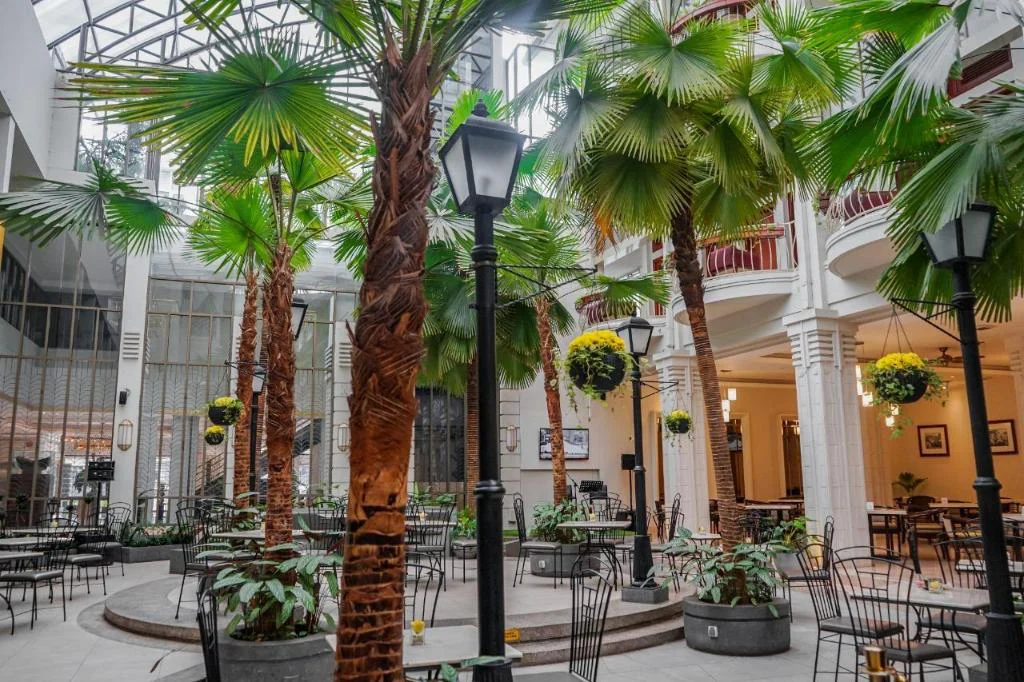
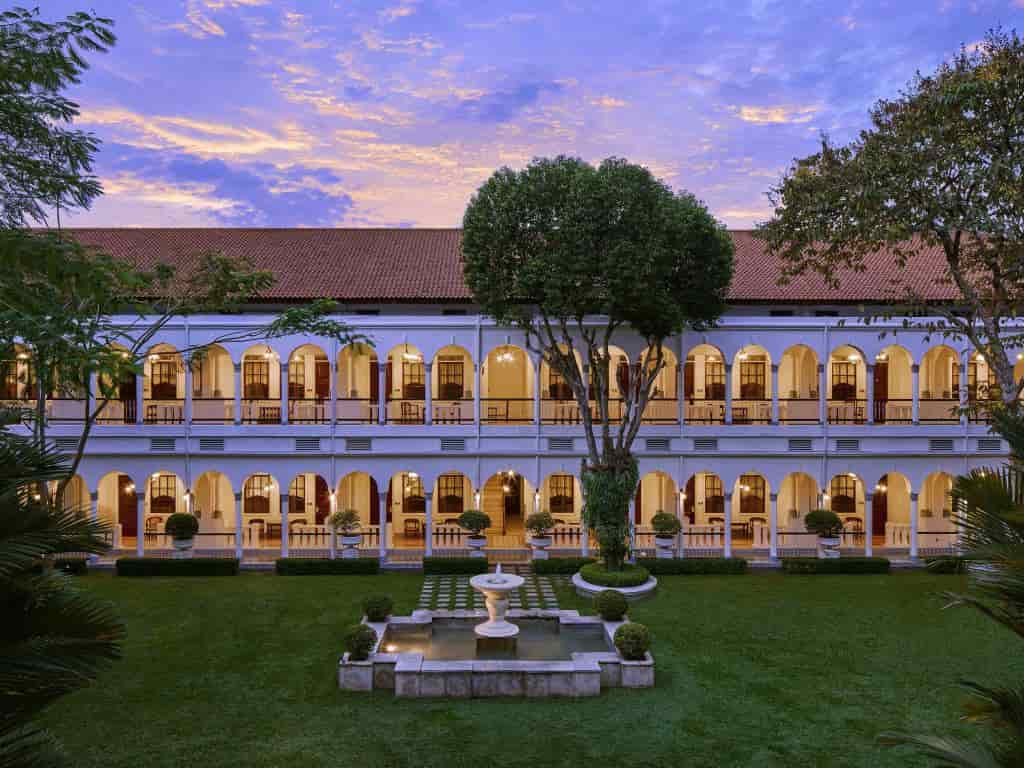
Today, Hotel Majapahit operates under the Accor hotel group, functioning as a luxury heritage hotel that meticulously preserves its original 20th-century colonial architecture, sprawling tropical gardens, and classic interior courtyards. Room rates at this historic Surabaya landmark begin at approximately IDR 985,125 per night, offering guests an immersive journey into the turbulent yet heroic events of Indonesia’s independence struggle.
3. Royal Ambarrukmo Yogyakarta (Special Region of Yogyakarta)
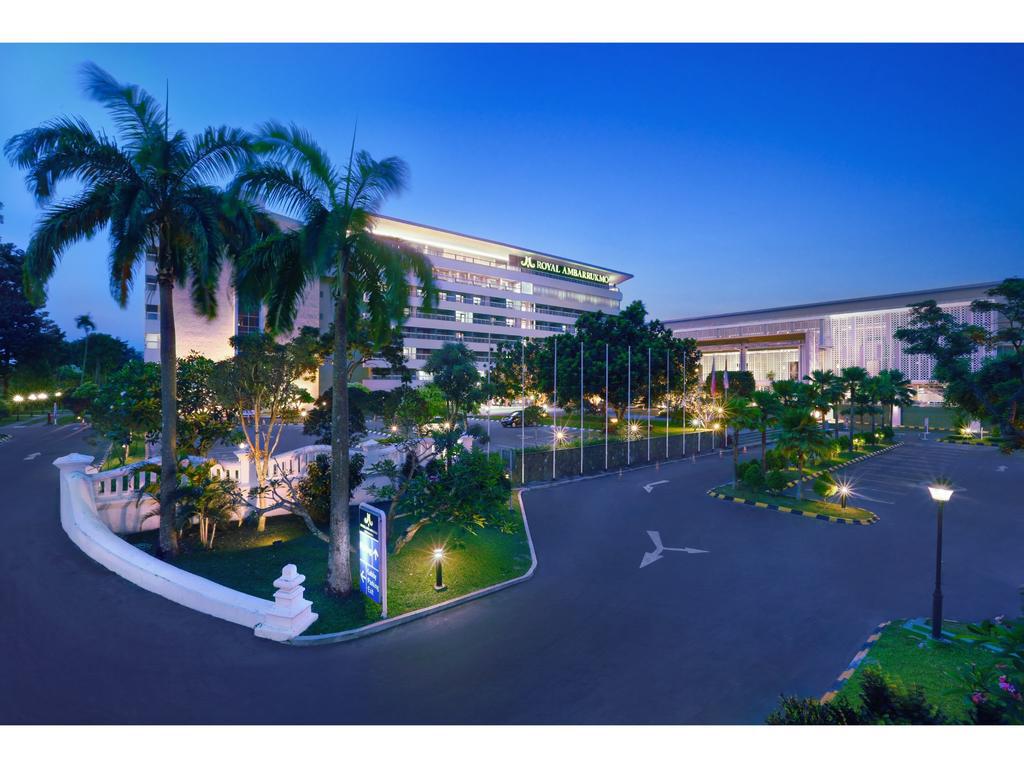
Situated along Jalan Laksda Adisucipto in Yogyakarta, Royal Ambarukmo occupies grounds of profound historical and cultural significance. The property originated as the Pesanggrahan Ambarrukmo, a royal palace complex and resting retreat originally constructed by Sultan Hamengku Buwono V and later expanded by Sultan Hamengku Buwono VII in the 19th century. The site served as a private sanctuary for the royal family of the Sultanate of Yogyakarta before being transitioned into a modern hospitality venue.
In 1966, following Indonesia’s transition into the New Order era, President Sukarno designated Royal Ambarukmo as one of the country’s four premier international hotels, aimed at boosting foreign tourism and showcasing traditional Javanese royal heritage to the world. The modernization project transformed the royal grounds into a luxury resort while preserving vital historical structures, including the royal Loji (administrative building) and the Pendopo Agung (grand ceremonial pavilion), which features intricate classical Javanese woodcarvings and architecture.
As a contemporary five-star establishment, Royal Ambarukmo offers guests a unique fusion of royal Javanese traditions and modern luxury amenities, including an outdoor swimming pool, extensive gardens, wellness spas, and fine dining venues. Accommodation rates start at approximately IDR 911,250 per night, making historical royal living accessible to travelers seeking cultural immersion combined with high-end comfort.
4. Hotel Savoy Homann Bandung (West Java)
Located strategically on Jalan Asia-Afrika in Bandung—a thoroughfare globally renowned for hosting the historic 1955 Asia-Afrika Conference—Hotel Savoy Homann is an architectural masterpiece of the early 20th century. The property traces its origins back to the 1870s when it was established as a modest family-run hotel by the Homann family, German expatriates who gained regional fame for introducing authentic European rijsttafel dining prepared by Mrs. Homann.
As Bandung grew into the intellectual and cultural capital of the Dutch East Indies—often referred to as the "Paris of Java"—the original structure was completely demolished and rebuilt in 1939. The redesign was commissioned to the prominent Dutch architect Albert Aalbers, who conceived the building in the striking Ocean-liner Art Deco style, characterized by sweeping horizontal curves reminiscent of a luxury cruise ship. In 1940, the hotel was officially renamed Hotel Savoy Homann to reflect its elevated status as a world-class luxury destination.
Over the decades, the hotel has welcomed a prestigious roster of international guests, artists, and statesmen. Most notably, the legendary British comedic actor Charlie Chaplin stayed at the Savoy Homann during his travels through Southeast Asia in the 1930s. Today, the hotel remains an architectural icon of Bandung, operating as a functional heritage hotel with room rates starting around IDR 390,880 per night, depending on the season and booking platform.
5. Inna Bali Heritage Hotel (Denpasar, Bali)
As the pioneer of luxury accommodation on the island of Bali, the Inna Bali Heritage Hotel represents the dawn of modern tourism in a destination that is now globally celebrated. Opened on August 22, 1927, the hotel was established to accommodate the growing influx of foreign tourists arriving in Bali via the steamships of the Royal Packet Navigation Company (Koninklijke Paketvaart-Maatschappij or KPM).
Located in the heart of Denpasar, the hotel was originally built to provide Western travelers with comfortable lodging as they explored Bali’s vibrant arts, traditional ceremonies, and scenic landscapes. The colonial administration strategically developed Denpasar and its surrounding infrastructure to facilitate cultural tourism, positioning the hotel as the administrative and social epicenters for early visitors.
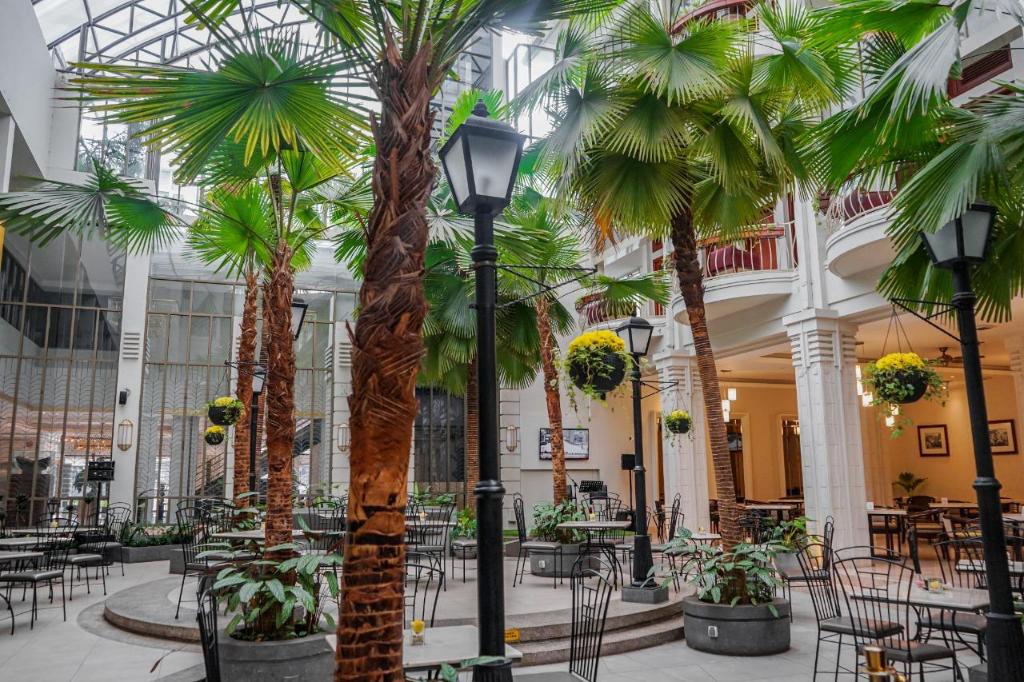
Operating today as a three-star heritage property, Inna Bali Heritage Hotel retains its classic 1920s architectural layout, featuring expansive tropical gardens, traditional courtyards, an outdoor swimming pool, and an on-site restaurant and café. Despite decades of rapid tourism development across Bali—marked by the proliferation of ultra-luxury international resorts—this historic property remains a cherished landmark. Accommodation rates are remarkably accessible, starting at approximately IDR 270,000 per night during low-season periods.
Economic Implications and Preservation Challenges
The continued operation of these colonial-era hotels presents a complex set of economic, architectural, and cultural implications for Indonesia’s modern tourism sector. On one hand, these properties serve as powerful marketing assets, enabling hospitality groups to market authentic heritage tourism experiences that differentiate Indonesia from neighboring regional competitors. Cultural tourists and history enthusiasts increasingly seek accommodations that offer narrative depth, architectural distinction, and historical resonance rather than standardized, cookie-cutter modern resorts.
However, operating a century-old building entails significant financial and logistical challenges. Structural preservation mandates adherence to strict heritage conservation guidelines, which often limit modern architectural expansions or significant structural modifications. Property owners must continuously balance the high costs of structural maintenance, plumbing and electrical upgrades, and historical preservation with the market demand for competitive room pricing.
Furthermore, room rates for these historic hotels—ranging from IDR 270,000 at the Inna Bali Heritage Hotel to nearly IDR 3 million at the Hotel Indonesia Kempinski—fluctuate significantly based on macroeconomic factors. Seasonal demand, national and international inflation rates, local government tax policies, and currency exchange volatility directly influence pricing structures. Industry analysts consistently advise travelers to plan bookings during low-season periods to secure optimal rates and to verify final charges directly with platforms like Agoda or hotel management prior to confirmation.
Ultimately, these five hotels transcend their commercial function as mere places of lodging. They stand as enduring physical archives of Indonesia’s complex historical trajectory—surviving colonial rule, world wars, national revolution, and rapid modernization. By continuing to open their doors to travelers from around the globe, they ensure that the rich tapestry of Indonesia’s past remains an accessible, living part of its dynamic future.
