
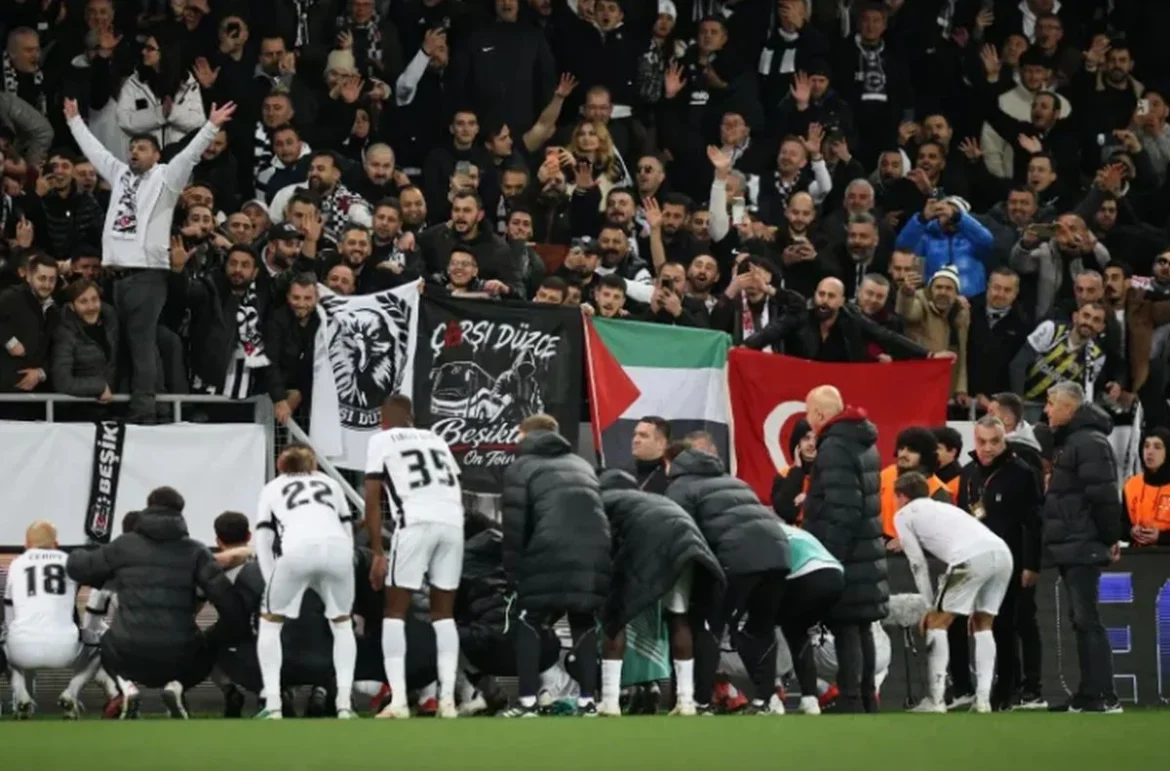
The Europa League fixture between Turkish powerhouse Besiktas and Israeli side Hapoel Beer-Sheva in Batumi, Georgia, descended into chaos on Friday, November 27, 2026, as a peaceful display of political solidarity escalated into a violent confrontation between visiting supporters and local law enforcement. The match, which was intended to be a celebration of European football, became the stage for a geopolitical flashpoint after fans in the Besiktas section unfurled Palestinian flags, triggering an aggressive intervention by Georgian security forces that resulted in a prolonged match suspension and international condemnation.
Chronology of the Incident
The tension began to simmer early in the first half of the match. According to eyewitness accounts and stadium surveillance, a group of Besiktas supporters began waving Palestinian flags in the 26th minute as a show of support amid the ongoing humanitarian crisis in the Middle East. While the display of flags is a common occurrence in football stadiums globally, the response from the local authorities in Batumi was immediate and heavy-handed.
Within minutes of the flags being displayed, security personnel—supported by local police—entered the stands, attempting to forcibly remove the banners. The attempt to seize the flags was met with resistance from the supporters, leading to a physical altercation. Reports from Turkish media outlets covering the match indicate that police utilized pepper spray and batons to clear the area, causing panic among the spectators and forcing fans in adjacent sections to retreat.
Danish referee Morten Krogh, observing the deteriorating safety conditions in the stands, made the decision to halt the game in the 26th minute. With the score deadlocked at 0-0, players from both sides were ushered to the locker rooms as the stadium atmosphere shifted from competitive to hostile. The suspension lasted approximately 30 minutes, during which time stadium officials, match delegates, and security leads held emergency consultations to determine if the game could safely resume.
The Resumption and Match Result
Following a period of deliberation, order was partially restored, and the match resumed. Despite the psychological toll of the earlier violence, the Besiktas players maintained their focus. The match eventually concluded with a 2-1 victory for the Istanbul-based club, a result that solidified their standing in the group stage. However, the post-match discourse was almost entirely dominated by the off-field violence rather than the sporting achievement.
Official Responses and Condemnations
The fallout from the incident was swift. Besiktas JK issued a formal statement shortly after the final whistle, expressing outrage at the treatment of their traveling supporters. The club’s statement, which was corroborated by accounts from Al Jazeera, characterized the actions of the Georgian police as a disproportionate use of force.
"We condemn in the strongest possible terms the excessive and unwarranted force used by security forces against our fans," the club stated. "The safety of our supporters is paramount, and we are working to ensure that those who were injured receive the necessary medical and legal support."
The Turkish Football Federation (TFF) echoed these sentiments, releasing a sharp rebuke on social media platform X (formerly Twitter). The TFF described the treatment of the supporters as an act of "discrimination" and a violation of the rights of fans to express their views. The Federation further pledged to submit a formal complaint to UEFA, the governing body of European football, and to demand an independent investigation into the security protocols employed by the Batumi stadium authorities.
The incident sparked a wave of solidarity across the Turkish Super Lig. A coalition of clubs, including perennial rivals Fenerbahce, Galatasaray, and Trabzonspor, as well as Basaksehir, Erzurumspor, and Samsunspor, issued a joint condemnation of the violence. This rare moment of unity among the fierce rivals underscored the national indignation felt in Turkey regarding the perceived targeting of their citizens abroad.

Historical and Political Context
The intersection of football and geopolitics is a well-documented phenomenon in European competition. UEFA regulations have historically been complex regarding the display of political symbols. While Article 16(2)(e) of the UEFA Disciplinary Regulations prohibits the use of "gestures, words, objects or any other means to transmit a provocative message," the definition of what constitutes a "political" message versus a humanitarian expression remains a subject of ongoing debate.
In the context of the Israeli-Palestinian conflict, stadiums across Europe have often served as proxies for political protests. Clubs with strong local fan bases often use the platform of international matches to draw global attention to ongoing crises. However, when matches involve teams from countries with complex diplomatic relations with the parties involved in the conflict, the risk of security incidents increases significantly.
Georgia, which maintains a delicate geopolitical position, often faces challenges in hosting high-stakes international matches. The decision to employ riot control tactics within the confined space of a stadium terrace has drawn criticism from civil liberties groups, who argue that such measures endanger the lives of all fans, including those not involved in the original protest.
Implications for UEFA and Future Hosting
The incident in Batumi presents a significant challenge for UEFA’s security delegates. As the governing body, UEFA is responsible for ensuring that host nations provide a safe environment for all participants and spectators. The use of pepper spray inside a crowded stadium is widely regarded by safety experts as a "worst-case scenario" due to the risk of stampedes and the potential for severe respiratory distress among the crowd.
The demand for an investigation is likely to focus on several key areas:
- Security Training: Were the local security forces trained in crowd management specifically for high-tension sporting events?
- Proportionality: Was the intervention justified by an immediate threat to life, or was it a preventative measure that escalated into violence?
- UEFA Compliance: Did the stadium management follow UEFA’s pre-match security protocols, which emphasize de-escalation over confrontation?
If UEFA finds that the security protocols were breached, the Georgian FA could face significant fines, or, in extreme cases, be restricted from hosting future UEFA-sanctioned matches. Furthermore, this incident may lead to stricter policies regarding the vetting of security personnel for international fixtures involving teams from regions with high political sensitivities.
The Human Cost
Beyond the administrative and political fallout, the human impact remains the primary concern. Social media footage from the match showed fans suffering from the effects of chemical irritants, with many requiring assistance from paramedics stationed at the venue. The psychological impact on the supporters, many of whom traveled across borders to support their team, is equally significant. The sense of vulnerability created by being caught in a crossfire between security forces and protesters has left a lasting impression on the visiting contingent.
Conclusion: A Turning Point for Fan Safety?
The violence in Batumi serves as a stark reminder of the volatility inherent in modern football. While the game of football is designed to unite, it remains deeply susceptible to the currents of global politics. As the investigation into the events of November 27 begins, the broader footballing community will be watching closely to see if accountability is served.
The incident has reignited the debate over the rights of fans to engage in political expression versus the need for stadium security to maintain order. Whether or not this event leads to a change in policy or a shift in how international matches are policed, one thing is clear: the image of a football pitch marred by pepper spray and police intervention is one that UEFA and football stakeholders across the globe will be eager to avoid in the future. For now, the focus shifts to the diplomatic channels between Ankara and Tbilisi, as both nations attempt to manage the fallout of an evening that transformed a Europa League match into a significant international incident.
