
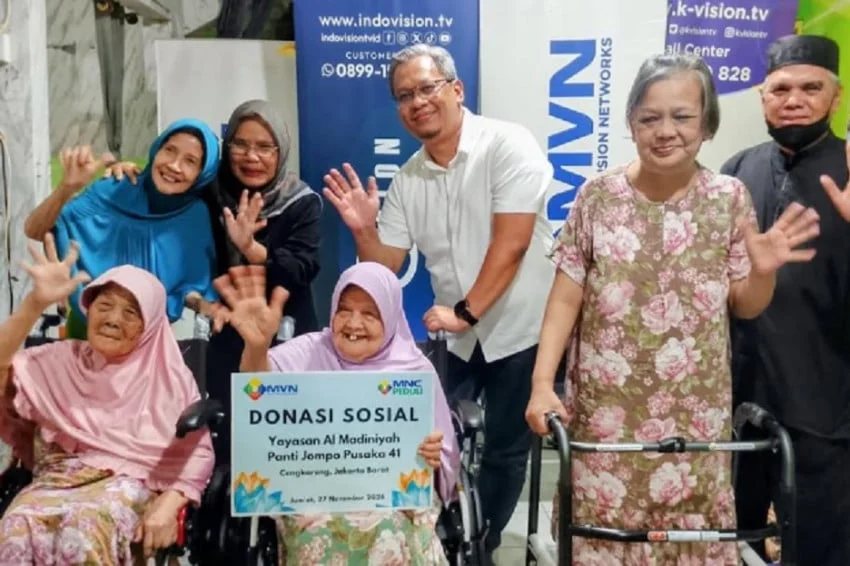
The commitment to corporate social responsibility and eldercare received a significant boost in West Jakarta as PT MNC Vision Networks Tbk, operating under the umbrella of MNC Peduli, extended much-needed logistical support to the elderly residents of Panti Jompo Pusaka 41, located within the Al-Madiniyah Foundation complex in Cengkareng. The initiative, officially finalized and celebrated on Friday, November 27, 2026, addressed a critical operational shortfall at the charitable institution, providing six wheelchairs and six specialized walking aids to enhance the daily mobility and independence of elderly residents.
This philanthropic handover represents more than a simple corporate donation; it highlights the ongoing challenges faced by private and foundation-run care facilities in urban centers across Indonesia. As life expectancy gradually increases, urban social welfare organizations face rising operational pressures, making corporate partnerships vital to maintaining an acceptable quality of life for society’s most vulnerable populations.
Chronology of the Handover Event
The formal handover ceremony took place on the premises of Panti Jompo Pusaka 41 in Cengkareng, West Jakarta. The event was designed to be intimate yet impactful, bringing together corporate leadership and the frontline caregivers who manage the day-to-day operations of the foundation.
Ferry Aryanto, serving in his capacity as Director of PT MNC Vision Networks Tbk, traveled to the facility to personally oversee the transfer of goods and interact with the residents and management. The ceremony commenced in the morning, featuring a symbolic presentation of the equipment, followed by a guided tour of the facility to allow corporate representatives to witness firsthand the living conditions and immediate challenges faced by the caregivers.
Iis Ismawati, the head and owner of Panti Jompo Pusaka 41 under the Al-Madiniyah Foundation, received the donation on behalf of the residents. During the proceedings, she expressed profound gratitude, emphasizing that the timing of the delivery could not have been more critical. According to foundation administrators, the facility had been operating at a deficit regarding mobility equipment, forcing caregivers to constantly manage shortages and ration the use of existing devices among residents with severe mobility impairments.
Addressing the Critical Need for Mobility Aids in Senior Care Facilities
Mobility is widely recognized by geriatric specialists as a cornerstone of independent living, psychological well-being, and physical health among the elderly population. Without appropriate tools such as wheelchairs and walkers, senior citizens are often confined to their beds or seating areas, leading to rapid muscle atrophy, pressure ulcers, depression, and a general decline in overall health.
At Panti Jompo Pusaka 41, the demographic profile of the residents demands continuous infrastructural and equipment support. Many of the residents—affectionately referred to as "nenek-nenek" (grandmothers) by the staff—suffer from age-related degenerative conditions, including severe osteoporosis, osteoarthritis, stroke recovery complications, and general physical frailty associated with advanced age.
Prior to the intervention by MNC Peduli and PT MNC Vision Networks Tbk, the facility’s management struggled with a severe shortage of functional mobility hardware. Many of the older units showed significant wear and tear from years of continuous usage. The introduction of six new wheelchairs and six durable walking aids immediately alleviates this burden, ensuring that every resident requiring mobility assistance can access the appropriate device without unnecessary delay.
Official Reactions and Statements
The success of the corporate social responsibility program was underscored by heartfelt statements from the leadership of both the foundation and the corporate sponsor. Iis Ismawati emphasized the long-term, sustainable value of the equipment provided during her interview at the facility.
"Thank you very much, this is extraordinary because this assistance has a very long-term value," Iis stated during the handover event. She highlighted the practical lifecycle of the equipment in a residential care setting, noting, "So these can be used interchangeably; when one resident passes away, the equipment can be reallocated to others. It is truly extraordinary and fits the exact needs of our facility."
Iis further elaborated on the psychological and physical boost the equipment provides to the residents, noting that physical independence directly correlates with a renewed will to live and engage with their environment. "This is something extraordinary because we truly lacked wheelchairs and walkers here. This greatly supports our grandmothers in having a stronger desire to live longer," she added, capturing the emotional resonance of the initiative.
Corporate Social Responsibility in Action: The Role of MNC Peduli
The involvement of MNC Peduli in this initiative reflects a broader corporate strategy focused on community empowerment, educational support, environmental awareness, and health welfare across Indonesia. As the philanthropic arm of MNC Group, MNC Peduli routinely channels corporate resources into targeted community interventions, bridging the gap between corporate profitability and social accountability.
In recent years, corporate social responsibility (CSR) initiatives in Indonesia have evolved from sporadic, symbolic charity work into structured, needs-based programs. Companies are increasingly recognizing that sustainable development requires active engagement with grassroots institutions that operate outside the purview of extensive government funding.
The collaboration between PT MNC Vision Networks Tbk and MNC Peduli in supporting Panti Jompo Pusaka 41 serves as a model for how corporate entities can effectively direct their resources. By coordinating with facility administrators prior to the donation, the organizers ensured that the items delivered were neither redundant nor superficial, but rather high-priority essentials required for daily operations.
Broader Socio-Economic Implications for Elderly Care in Indonesia
The demographic landscape of Indonesia is undergoing a profound transformation. According to data from Statistics Indonesia (BPS), the proportion of elderly citizens (aged 60 and above) has been steadily rising, moving the nation toward an aging population structure. This demographic shift presents massive socio-economic challenges, particularly regarding healthcare infrastructure, pension systems, and social welfare provisions.
While familial support has traditionally served as the primary social safety net for the elderly in Indonesian culture, rapid urbanization, changing family structures, and economic pressures have placed immense strain on traditional care models. Consequently, charitable institutions, foundations, and private nursing facilities like Panti Jompo Pusaka 41 play an indispensable role in absorbing the overflow of abandoned, neglected, or destitute seniors who lack family support systems.
However, these institutions often operate on razor-thin budgets, relying heavily on public donations, volunteerism, and corporate philanthropy. Government subsidies, while helpful, rarely cover the full spectrum of operational costs, especially specialized medical and mobility equipment required for long-term geriatric care.
In this context, the contribution made by PT MNC Vision Networks Tbk highlights the vital stabilizing role that the corporate sector can play in the national social welfare ecosystem. When corporations invest in institutional infrastructure—even on a micro-scale such as providing twelve pieces of mobility equipment to a single West Jakarta facility—they alleviate systemic pressures that municipal and national governments alone cannot fully manage.
Looking Ahead: Sustainability and Future Collaboration
Following the successful execution of the handover on November 27, 2026, representatives from PT MNC Vision Networks Tbk and MNC Peduli expressed their intention to continue monitoring the needs of charitable institutions within the Jakarta area. Sustainable CSR programs often involve follow-up visits, maintenance checks on donated equipment, and further expansions of aid depending on institutional requirements.
For Panti Jompo Pusaka 41, the immediate future looks considerably more manageable. The newly acquired wheelchairs and walkers will be integrated into the daily routine immediately, undergoing regular sanitization and maintenance protocols managed by the foundation’s dedicated staff.
As urban centers continue to grapple with the complexities of population aging, initiatives such as this set a constructive precedent. They demonstrate that meaningful social impact does not always require massive capital outlays, but rather a targeted, empathetic understanding of the specific needs on the ground. Through the combined efforts of compassionate foundation leadership and responsive corporate citizenship, the elderly residents of Cengkareng have been granted not only enhanced mobility, but also renewed dignity and care in their golden years.
