
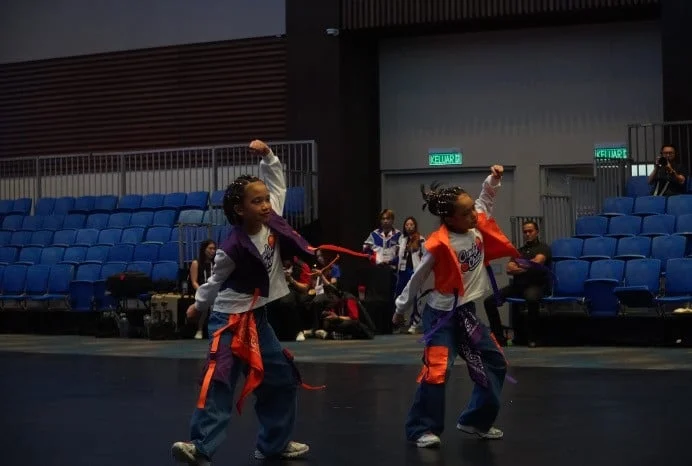
The landscape of competitive cheerleading in Southeast Asia witnessed a significant moment of promise as Indonesia’s young athletes made their mark on the international stage. During the Cheer Out Loud (COL) 2026 championships held in Putrajaya, Malaysia, eight-year-old Ailin Micha Andika, representing the Candy Caramel team, secured a bronze medal in the Group Stunt Pee Wee Beginner division. This achievement serves as a testament to the burgeoning talent pool within Indonesian youth athletics and underscores the country’s increasing integration into the global cheerleading circuit.
The event, which took place from October 16 to 18, 2026, was a comprehensive gathering of global cheerleading talent. Hosted in the administrative hub of Malaysia, the competition occurred in parallel with the prestigious International Cheer Union (ICU) Asian Cheerleading Championship (ICU ACC) and the Asia Pacific Cheerleading Cup (APCC). The convergence of these three major events turned Putrajaya into a focal point for cheerleading excellence, drawing participation from over 13 nations across the Asia-Pacific region and beyond.
A Rigorous Path to the Podium
The journey to the podium in Malaysia was far from instantaneous. For Ailin Micha Andika and the members of Team Candy Caramel, the victory was the result of a disciplined, long-term training regimen. Cheerleading, particularly at the competitive level, requires a unique synthesis of gymnastic ability, rhythmic coordination, and intense psychological focus.
Training sessions were structured to ensure not only physical endurance but also the seamless synchronization required for group stunts. In the Pee Wee category, where athletes are at a developmental age, the primary focus of coaches is to instill fundamental safety protocols alongside technical proficiency. Micha, reflecting on the preparation process, noted that the intensity of the training occasionally induced fatigue. However, the prospect of competing on an international stage served as a primary motivator, driving the young team to refine their routines repeatedly until each movement was performed with muscle memory and precision.
The mental aspect of the competition was perhaps the most challenging hurdle for the young athletes. On the day of the event, the atmosphere inside the venue—characterized by high-intensity music, cheering crowds, and the presence of elite competitors—provided a high-pressure environment for children as young as eight. Micha described the pre-performance nerves, often referred to as "stage fright," which are common even among seasoned professional athletes. Yet, the transition from anxiety to performance occurred the moment the music began, highlighting the effectiveness of their training in fostering focus under pressure.
Contextualizing the Cheer Out Loud 2026 Championships
The Cheer Out Loud 2026 event is a significant fixture in the regional sports calendar. By hosting the COL alongside the ICU Asian Cheerleading Championship and the Asia Pacific Cheerleading Cup, organizers aimed to create a tiered competition structure that accommodates various skill levels, from beginners to elite international squads.
The inclusion of the Pee Wee division is part of a broader global movement to professionalize cheerleading from a young age. As cheerleading continues to pursue recognition within the Olympic movement—having gained provisional recognition from the International Olympic Committee—the development of youth pipelines has become a priority for national federations. Indonesia’s participation in the 2026 event demonstrates a strategic alignment with these global trends. By sending athletes to compete in diverse divisions, Indonesia is building a foundation that could eventually lead to higher-tier podium finishes in future Asian and global championships.
Technical Analysis of the Performance
The bronze medal won by Team Candy Caramel in the Group Stunt Pee Wee Beginner category is a notable achievement when analyzed against the backdrop of the 13-country field. Competition in the Pee Wee division is often judged on execution, choreography, and the difficulty of the stunts. Judges look for clean landings, synchronized transitions, and the complexity of the pyramid or stunt structures.
Technical experts observe that the Indonesian team’s ability to remain composed while executing complex group stunts suggests a high level of coaching quality. The "Beginner" classification does not imply a lack of rigor; rather, it indicates the specific developmental stage of the athletes. Achieving a top-three finish in an international field of this size implies that the Indonesian team met international standards for safety and technical execution, effectively placing them among the top tier of youth cheerleading teams in the region.
The Broader Impact on Indonesian Youth Sports
The success of Ailin Micha Andika and her team carries implications that extend beyond the individual medal. In the Indonesian sporting context, cheerleading has historically been viewed as a peripheral activity. However, in the last decade, there has been a shift toward treating it as a legitimate athletic pursuit.
The presence of young Indonesian athletes in Malaysia serves as an inspiration for the next generation of cheerleaders in the country. It demonstrates that with the right coaching, dedication, and international exposure, Indonesian athletes can successfully navigate the complexities of global competition. Furthermore, the exposure to teams from 13 different nations provides invaluable experience. Observing the training techniques, choreography styles, and professional conduct of teams from nations like Japan, South Korea, and Australia allows the Indonesian delegation to benchmark their own progress and identify areas for improvement.
Official Responses and Future Outlook
While official statements from national sporting bodies are still pending, the narrative surrounding the team’s return has been overwhelmingly positive. Observers within the cheerleading community suggest that this success will likely lead to increased investment in club-level training programs.
"The goal is always to improve," noted a spokesperson close to the team’s training program. "We have seen what the other nations are capable of, and it serves as a roadmap for our future development. The focus now shifts from the thrill of the medal to the sustainability of the program."
For Micha, the experience has clearly ignited a passion for the sport. Her expressed desire to secure a gold medal in future competitions reflects the competitive spirit that the training has cultivated. As she prepares for upcoming regional tournaments, her focus remains on increasing the technical difficulty of her routines and maintaining the synergy that proved successful in Putrajaya.
Timeline of the 2026 International Cheer Circuit
The 2026 calendar for competitive cheerleading has been exceptionally dense, with the Putrajaya leg serving as a mid-year highlight. The timeline for the Indonesian team involved:
- Early 2026: Selection of the squad and initiation of the high-intensity training block.
- Mid-2026: Regional preparatory competitions in Indonesia to refine choreography and stunt sequences.
- October 16, 2026: Arrival in Putrajaya and preliminary acclimatization.
- October 17, 2026: Competition day for the Group Stunt Pee Wee division, resulting in the bronze medal finish.
- October 18, 2026: Closing ceremonies and observation of elite-level divisions to facilitate knowledge transfer.
Challenges and Opportunities for Growth
Despite the success, the path forward for Indonesian cheerleading involves overcoming significant structural challenges. These include securing consistent funding for international travel, accessing high-quality training facilities, and ensuring that coaching staff are updated on the latest safety regulations established by the International Cheer Union.
The reliance on private club funding is a common hurdle for youth athletes. However, the performance in Malaysia provides a strong argument for increased institutional support. As more Indonesian athletes compete on the international stage, the visibility of the sport will naturally increase, potentially attracting corporate sponsorships and government interest.
The psychological growth observed in athletes like Micha is perhaps the most significant outcome of this event. Learning to handle the pressure of an international arena at such a young age provides these children with resilience, time management skills, and a global perspective that will benefit them in all areas of life, not just athletics.
Conclusion
The success of the Indonesian team at the Cheer Out Loud 2026 championships in Putrajaya is a milestone in the nation’s sporting history. By balancing the technical requirements of the sport with the developmental needs of young athletes, Team Candy Caramel has set a high standard for future participants. As Indonesia continues to integrate into the global cheerleading community, the focus will undoubtedly remain on nurturing this talent, expanding training programs, and continuing to represent the nation with the same poise and determination displayed by Ailin Micha Andika and her teammates on the mat in Malaysia. The bronze medal is not merely a trophy; it is a catalyst for the future of Indonesian youth cheerleading.
