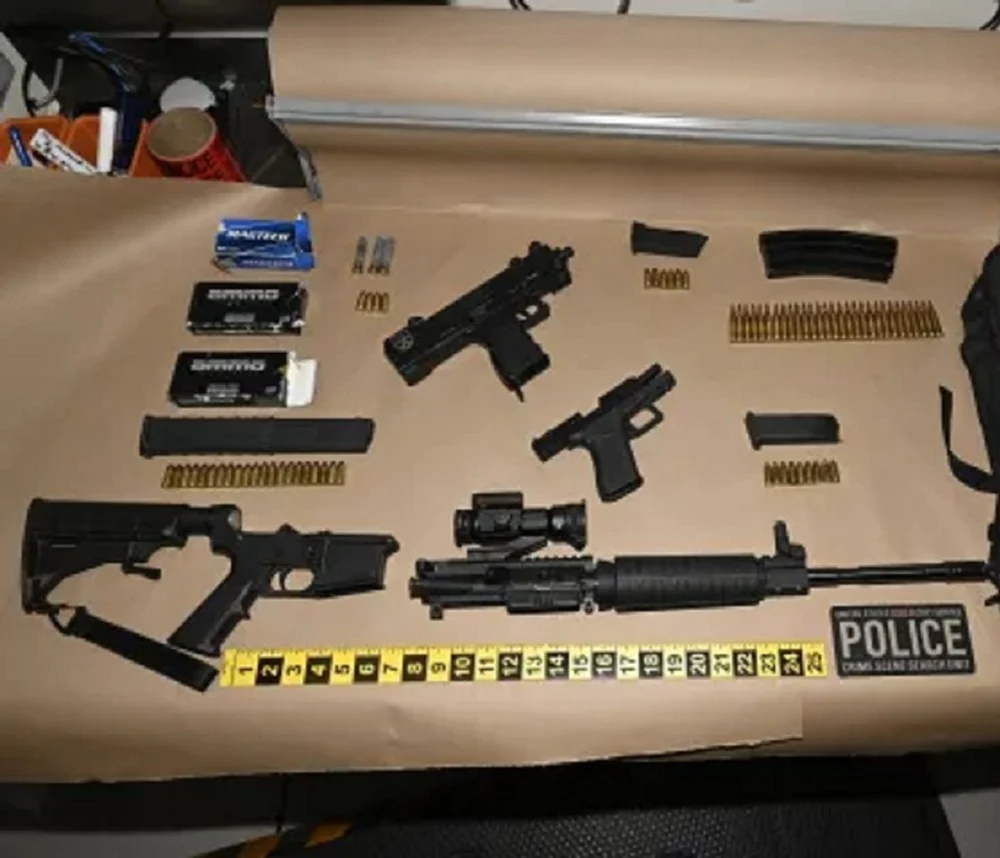
WASHINGTON — A high-stakes security incident unfolded in the heart of the American capital on Thursday evening, November 5, 2026, when law enforcement officers apprehended an armed Venezuelan national in close proximity to the White House. The suspect, identified by the Department of Homeland Security (DHS) as 33-year-old Ronny Yordrix Guanipa Chirinos, was taken into custody after an encounter on Constitution Avenue that officials described as a potential attempt on the life of President Donald Trump.
The incident, which occurred under the watchful eyes of the United States Secret Service, has ignited a firestorm of debate regarding border security protocols, the vetting of migrants, and the persistent threat environment surrounding the highest office in the United States.
Chronology of the Arrest
The situation began late Thursday night when Secret Service personnel, performing routine surveillance and perimeter security, identified a vehicle parked in a suspicious manner along Constitution Avenue. The location, which serves as a major thoroughfare bordering the White House complex, is subject to stringent security monitoring.
Upon approaching the vehicle, agents engaged with the sole occupant, later identified as Chirinos. During the initial interaction, the suspect reportedly made alarming statements to the officers. According to official reports, Chirinos claimed that he had been hearing auditory hallucinations—specifically, "voices" in his head—commanding him to travel to Washington, D.C., to assassinate President Trump.
Acting on these statements and noting the suspicious nature of the vehicle, the agents conducted a search of the automobile. The investigation revealed that the vehicle had been reported stolen. More critically, the interior of the car contained a cache of high-powered weaponry. The inventory of seized items included a semi-automatic AR-15 rifle, a MAC-10 submachine gun, a Glock 43X pistol, and substantial quantities of ammunition.
Chirinos was immediately detained and transported to a secure facility. As of the latest update, he remains in the custody of the United States Marshals Service.
Charges and Legal Proceedings
The legal repercussions for Chirinos are extensive. While the Department of Justice has yet to formally charge him with an attempted assassination of a federal official—a process that often requires a more extensive investigation into intent and capability—he is currently facing a litany of felony charges.
According to documents released by the DHS and local authorities, the charges include:
- Illegal transportation of firearms across state lines.
- Possession of unregistered firearms and ammunition.
- Carrying a pistol without a valid permit.
- Motor vehicle theft.
- Unauthorized use of a motor vehicle.
Legal analysts suggest that federal prosecutors are likely conducting a thorough forensic analysis of the suspect’s digital footprint, communications, and mental health history to determine if additional charges related to domestic terrorism or threats against a protected person are warranted.
Immigration Background and Policy Context
The arrest of Chirinos has reignited long-standing political tensions surrounding the United States’ immigration policies. Records indicate that Chirinos crossed the U.S.-Mexico border near Texas in March 2024. At the time of his entry, he was apprehended by U.S. Border Patrol agents.
Under the policies in effect during the administration of former President Joe Biden, Chirinos was processed and subsequently released into the interior of the United States while awaiting immigration court proceedings. The revelation that an individual apprehended at the border was later involved in a high-profile security threat against the President has prompted immediate scrutiny of the vetting processes used during that period.
Immigration and Customs Enforcement (ICE) has since issued a detainer against Chirinos, ensuring that should he complete his legal proceedings in the criminal justice system, he will be transferred into federal custody for potential deportation. The case serves as a focal point for lawmakers advocating for stricter enforcement and more rigorous background checks for individuals entering the country.
Security Implications for the White House
The presence of an individual with an arsenal of weapons just blocks from the White House highlights the persistent challenges faced by the Secret Service. The agency has been under intense pressure in recent years following several high-profile security lapses.
Former Secret Service officials, speaking on condition of anonymity, noted that the interception of Chirinos represents a "success of the perimeter defense." However, they also warned that the incident demonstrates the unpredictable nature of threats facing the President. "When you have individuals acting on perceived ‘voices’ or radicalized impulses, the traditional threat detection models—which look for organized plots or suspicious travel patterns—can sometimes be bypassed," one expert stated.
The White House has declined to provide specific details regarding the President’s schedule at the time of the incident, citing security protocols. However, the incident has undoubtedly led to a review of security measures in the immediate vicinity of the executive mansion, including the potential for increased patrols and advanced surveillance technology along the perimeter.
Data on Threat Assessments
The rise in threats against public officials in the United States has been documented by various security agencies. According to reports from the Capitol Police and the Secret Service, the number of "concerning statements" and threats directed at high-ranking government officials has seen a marked increase over the past five years.
Factors contributing to this rise include:
- Political Polarization: Increased hostility in the national discourse, which can act as a catalyst for individuals with underlying mental health issues.
- Ease of Access to Firearms: The proliferation of semi-automatic weapons has increased the lethality of potential attackers.
- The "Lone Wolf" Phenomenon: Individuals operating without direct ties to organized groups are statistically harder to identify before they act.
Analysis: The Intersection of Mental Health and Security
Medical professionals and security analysts alike point to the intersection of mental health and national security as a primary concern. The suspect’s reported claim of hearing "voices" suggests a possible underlying psychiatric condition, such as schizophrenia or severe psychosis.
While the legal system treats mental health as a factor in criminal intent, it does not mitigate the danger posed to public safety. "The challenge for law enforcement," explains Dr. Elena Vance, a security consultant specializing in behavioral analysis, "is distinguishing between a genuine, actionable threat and a mental health crisis. In this case, the presence of the weapons converted a potential psychiatric emergency into an immediate, lethal threat to the President."
Broader Impact and Legislative Reactions
The arrest of Chirinos has already begun to ripple through the halls of Congress. Republican lawmakers have seized on the incident as evidence of what they describe as "failures in border security." Several members of the House Judiciary Committee have already called for a formal inquiry into the circumstances surrounding Chirinos’ initial entry into the U.S. in 2024.
"The fact that a foreign national who entered our country illegally was able to procure an arsenal of weapons and threaten the President is an unacceptable breach of national security," said a spokesperson for a prominent conservative caucus.
Conversely, some advocates for immigration reform have cautioned against using the incident to justify broad, sweeping policies that might penalize the vast majority of migrants who are not involved in criminal activity. They argue that the focus should be on improving the efficiency of background checks and ensuring that mental health services are integrated into the immigration process.
Conclusion
As the investigation into Ronny Yordrix Guanipa Chirinos continues, the incident serves as a stark reminder of the complexities of modern security. The synthesis of border control, mental health monitoring, and protective intelligence remains a daunting task for U.S. authorities.
The trial of Chirinos, when it eventually commences, will likely be a closely watched affair, potentially setting a precedent for how the judicial system handles cases involving foreign nationals who commit violent acts while suffering from severe mental health episodes. For now, the Secret Service and the Department of Homeland Security remain on high alert, working to ensure that the events of November 5th do not repeat themselves in a more tragic fashion.