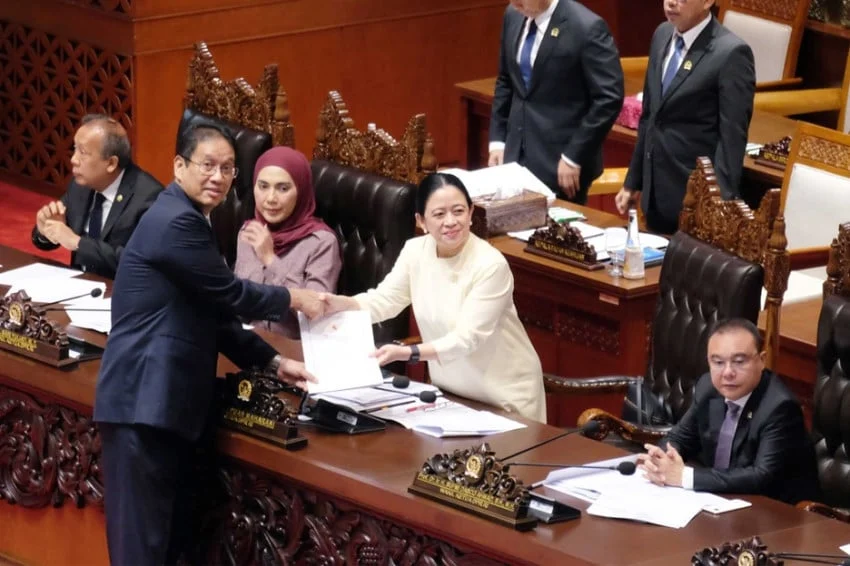
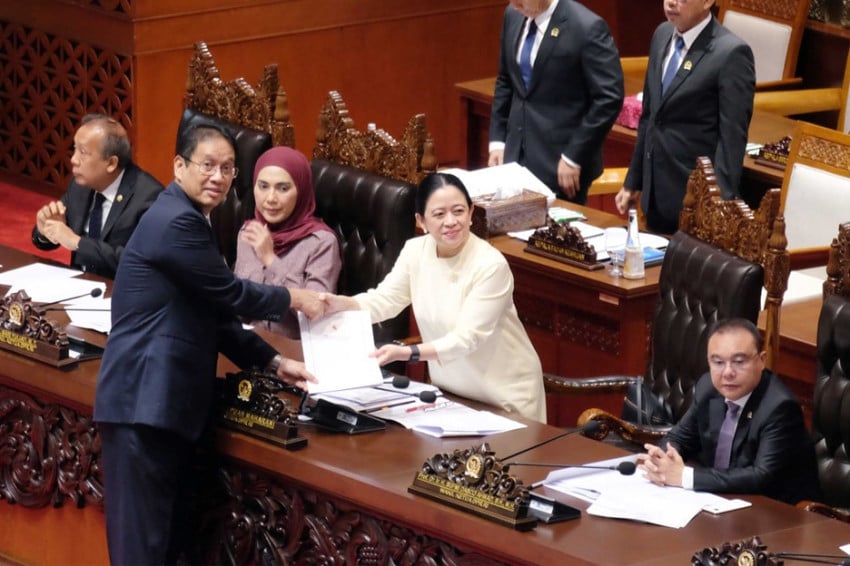
The Indonesian House of Representatives (DPR RI) officially enacted the Indonesian International Financial Center (PFII) Law on Tuesday, July 21, 2026, marking a significant milestone in the nation’s ambitious drive to fortify its financial ecosystem and enhance its global economic footprint. During the 26th Plenary Session of the 5th Sitting Period of the 2025-2026 Legislative Year at the Parliament Complex in Senayan, Jakarta, Finance Minister Purbaya Yudhi Sadewa formally submitted the government’s official response documents to DPR Speaker Puan Maharani, symbolizing the culmination of extensive legislative efforts. This legislative act is widely regarded as a strategic move to position Indonesia as a formidable player in the global financial landscape, attracting foreign investment, and fostering domestic economic growth.
The enactment of the PFII Law has been met with considerable optimism from economic observers and policymakers alike. Iwan Setiawan, Executive Director of Political Review (IPR), underscored the law’s importance, stating that it "demonstrates the seriousness of the government and DPR in presenting regulations that support the strengthening of the national financial ecosystem." Setiawan emphasized that the PFII is not merely about establishing a new institution or a specific zone but represents a comprehensive policy instrument designed to equip Indonesia to navigate future economic challenges and bolster international confidence. This commitment to regulatory certainty is seen as a crucial factor in building trust among various stakeholders, both domestic and international, regarding the government’s economic policies.
Background and Rationale: Indonesia’s Economic Ambitions
Indonesia, Southeast Asia’s largest economy and a G20 member, has long harbored aspirations of becoming a leading global economic power, with its "Golden Indonesia 2045" vision targeting top-five global GDP status. Achieving this requires not only robust domestic growth but also deeper integration into the global financial system and a significant influx of foreign direct investment (FDI). For years, Jakarta has sought to emulate the success of regional financial hubs like Singapore and Kuala Lumpur, which have leveraged their strategic locations and investor-friendly regulations to become magnets for international capital and financial expertise.
The concept of establishing an international financial center in Indonesia is not new. Discussions have periodically surfaced over the past two decades, often highlighting the need for a dedicated hub that could offer a conducive environment for international financial institutions and high-value financial activities. However, previous attempts faced hurdles related to regulatory complexities, infrastructure readiness, and the challenge of competing with well-established regional players. The renewed impetus behind the PFII Law reflects a confluence of factors, including a more stable political environment, sustained economic growth, and a growing recognition of the need for a unified and internationally competitive financial regulatory framework.
The government’s strategic vision for the PFII is multifaceted. Firstly, it aims to diversify Indonesia’s economy beyond its traditional reliance on commodities, fostering growth in high-value services. Secondly, by attracting global financial players, the PFII is expected to facilitate knowledge transfer, introduce advanced financial technologies, and enhance the skill sets of Indonesia’s workforce in the financial sector. Thirdly, it seeks to deepen Indonesia’s capital markets, making them more liquid and attractive for both domestic and international investors. Finally, the PFII is envisioned as a crucial mechanism for mobilizing long-term capital to fund the nation’s ambitious infrastructure development projects and green economy initiatives.
The Legislative Journey: A Chronology of Deliberation
The path to the PFII Law’s enactment was a methodical process that spanned several months, if not years, of preparatory work. The initiative for the law is understood to have originated from the Ministry of Finance, working in close collaboration with the Financial Services Authority (OJK) and Bank Indonesia, reflecting a consensus among key economic policymakers on the necessity of such a framework.
- Initial Drafting and Consultation (Early 2025): Technical teams from relevant ministries and agencies began drafting the initial bill. This phase likely involved extensive consultations with legal experts, economists, and representatives from the financial industry to ensure the proposed legislation was comprehensive, effective, and aligned with international best practices.
- Government Submission to DPR (Mid-2025): Following internal approvals, the government formally submitted the draft PFII bill to the DPR for legislative review. This marked the official commencement of its journey through the parliamentary process.
- Committee Review (Late 2025 – Early 2026): The bill was assigned to relevant DPR commissions, primarily Commission XI (Finance, Planning and Banking) and potentially Commission III (Law, Human Rights and Security) due to its legal and regulatory implications. These commissions conducted in-depth reviews, held public hearings with stakeholders, and solicited input from experts. Debates focused on various aspects, including the scope of the financial center, its governance structure, proposed incentives, and mechanisms for dispute resolution.
- Inter-Commission Discussions and Harmonization (Early 2026): As is typical for complex legislation, discussions likely extended to inter-commission meetings to harmonize different perspectives and ensure consistency across the bill’s provisions. Amendments and refinements were made based on feedback received during public consultations and internal parliamentary deliberations.
- Approval at Commission Level (Mid-2026): After thorough review and refinement, the relevant commissions approved the bill, recommending its passage to the full plenary session.
- Plenary Session Vote and Enactment (July 21, 2026): The culmination of this process occurred at the 26th Plenary Session of the 5th Sitting Period, where the bill was put to a vote and subsequently passed into law. The ceremonial handover of government response documents by Finance Minister Purbaya Yudhi Sadewa to DPR Speaker Puan Maharani underscored the executive and legislative branches’ unified commitment to this strategic initiative.
Key Provisions and Scope of the PFII Law
While the full details of the enacted PFII Law will emerge with its official publication, it is anticipated to establish a framework that encompasses several critical elements:
- Designated Zone: The law is expected to designate a specific geographical area as the Indonesian International Financial Center. This zone would likely benefit from a distinct legal and regulatory regime tailored to attract international financial businesses. While the exact location is yet to be widely disclosed, urban centers with established infrastructure and connectivity, such as parts of Jakarta, are strong candidates.
- Independent Regulatory Authority: A cornerstone of successful international financial centers is an independent and robust regulatory body. The PFII Law is likely to establish or empower an existing entity with the authority to oversee operations within the PFII, ensuring stability, integrity, and compliance with international standards (e.g., anti-money laundering, counter-terrorism financing). This authority would be crucial for streamlining licensing, supervision, and enforcement.
- Favorable Legal and Tax Framework: To attract global players, the law is expected to introduce a competitive legal and tax environment. This could include reduced corporate income tax rates, exemptions on certain financial transactions, simplified immigration procedures for highly skilled foreign professionals, and a robust framework for contract enforcement and dispute resolution, potentially involving international arbitration.
- Scope of Financial Activities: The PFII is envisioned to facilitate a broad range of financial services, including but not limited to:
- Investment Banking and Asset Management: Attracting global fund managers and investment banks.
- Islamic Finance: Capitalizing on Indonesia’s large Muslim population to become a hub for Sharia-compliant financial products and services.
- Fintech and Digital Assets: Fostering innovation in financial technology, including blockchain and digital currency services, under a regulated environment.
- Insurance and Reinsurance: Developing specialized insurance products and attracting international reinsurers.
- Green Finance: Positioning Indonesia as a center for financing sustainable development projects and green bonds.
- National Interest Safeguards: Crucially, the law is expected to balance the drive for international competitiveness with the protection of national interests. This would involve provisions to prevent capital flight, ensure financial stability, and mandate adherence to local labor laws and other relevant national regulations.
Expert and Official Responses
The Finance Minister, Purbaya Yudhi Sadewa, is expected to elaborate on the economic benefits of the PFII Law, highlighting its potential to drive increased foreign investment, create high-value employment opportunities, and facilitate technology transfer. He would likely emphasize the law’s role in enhancing Indonesia’s macro-economic stability and positioning the country as a trusted and reliable partner in the global financial system. The Minister’s remarks are anticipated to convey a strong sense of commitment to the law’s effective implementation, ensuring that the PFII contributes tangibly to Indonesia’s long-term economic vision.
DPR Speaker Puan Maharani, representing the legislative branch, would likely underscore the collaborative effort between the executive and parliament in crafting this landmark legislation. Her statements are expected to emphasize the DPR’s support for economic reforms that are crucial for national development and prosperity. She would likely highlight the rigorous legislative process undertaken to ensure the law is robust, equitable, and serves the best interests of the Indonesian people.
From the business community, there is an overarching sense of anticipation and cautious optimism. Industry leaders are expected to welcome the regulatory clarity and potential incentives offered by the PFII Law, viewing it as a catalyst for new business opportunities and expansion. However, they will also likely emphasize the importance of effective implementation, transparent governance, and the continuous development of a skilled talent pool to fully realize the PFII’s potential. Foreign investors, while acknowledging Indonesia’s vast market potential, have often cited regulatory unpredictability as a significant hurdle. The PFII Law aims to address this by providing a dedicated, stable, and internationally aligned framework.
Economists, including Iwan Setiawan of IPR, further argue that the law signifies a forward-looking approach to economic policy. "This is not just about building a physical center, but about creating an ecosystem that fosters innovation, attracts top talent, and integrates Indonesia more deeply into global financial networks," Setiawan noted. Analysts suggest that the PFII could contribute to a marginal increase in GDP growth in the medium to long term, improve Indonesia’s balance of payments through increased capital inflows, and enhance the competitiveness of its domestic financial institutions.
Broader Implications and Potential Challenges
The implications of the PFII Law are far-reaching, potentially reshaping Indonesia’s economic landscape:
- Economic Diversification and Growth: By attracting international financial services, Indonesia can diversify its economy, reducing reliance on natural resources and manufacturing, and fostering growth in high-value-added sectors. This will contribute to a more resilient and balanced economic structure.
- Increased Foreign Direct Investment (FDI): A dedicated international financial center with clear regulations and incentives is a powerful magnet for FDI. This capital can be channeled into various sectors, boosting productivity, job creation, and economic expansion.
- Job Creation and Talent Development: The establishment of the PFII will create thousands of high-skilled jobs in finance, legal services, compliance, technology, and related support industries. It will also necessitate investments in education and training programs to develop a local talent pool capable of competing in a sophisticated international financial environment.
- Technological Advancement and Innovation: The influx of international financial firms and fintech companies will accelerate the adoption of advanced financial technologies, fostering innovation and improving the efficiency of Indonesia’s financial markets. This could position Indonesia as a regional leader in areas like digital finance and blockchain applications.
- Enhanced Regional Competitiveness: The PFII will allow Indonesia to compete more effectively with established financial centers in Asia, strengthening its position as a key economic player in the ASEAN region and beyond.
- Deepening Capital Markets: Greater participation from international investors and financial institutions will deepen Indonesia’s capital markets, making them more liquid, efficient, and capable of funding large-scale public and private projects.
Despite the significant potential, the successful implementation of the PFII Law will face several challenges:
- Effective Implementation and Governance: The true test of the law lies in its execution. Establishing an efficient, transparent, and responsive regulatory body, ensuring bureaucratic efficiency, and consistently upholding the rule of law will be critical. Any perceived inconsistencies or delays could undermine investor confidence.
- Talent Pool Development: Indonesia needs to rapidly develop a large pool of highly skilled professionals in specialized financial areas, legal services, and compliance. This requires significant investment in education, vocational training, and potentially attracting foreign expertise in the initial phases.
- Competition from Established Hubs: The PFII will operate in a highly competitive regional and global landscape. Differentiating itself from mature centers like Singapore, Hong Kong, and Dubai, which offer decades of established infrastructure, regulatory stability, and international recognition, will require sustained effort and unique value propositions.
- Risk Management and Regulatory Integrity: Maintaining robust anti-money laundering (AML), counter-terrorism financing (CTF), and cybersecurity frameworks is paramount to prevent illicit financial flows and uphold the integrity of the financial center. Adherence to international standards is non-negotiable for gaining global trust.
- Infrastructure Development: While Jakarta boasts significant infrastructure, continuous investment in physical infrastructure (e.g., transportation, utilities) and digital infrastructure (e.g., high-speed data networks, secure data centers) will be essential to support the demands of a world-class financial center.
In conclusion, the enactment of the Indonesian International Financial Center (PFII) Law on July 21, 2026, represents a landmark achievement and a decisive step in Indonesia’s journey towards economic prominence. It underscores a serious and coordinated effort by the government and DPR to build a robust and globally integrated financial ecosystem. While the path ahead will undoubtedly present challenges, the PFII Law lays a critical foundation for attracting significant foreign investment, fostering innovation, creating high-value jobs, and ultimately strengthening Indonesia’s position as a dynamic and influential force in the global economy. The successful realization of this vision will depend on unwavering commitment to transparent governance, effective implementation, and continuous adaptation to the evolving global financial landscape.