
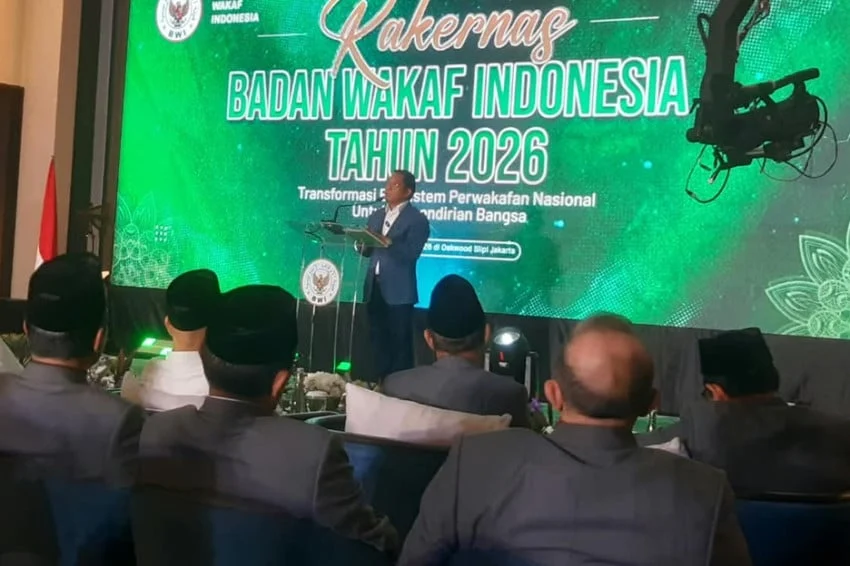
The institutional landscape of Islamic philanthropy in Indonesia is poised for a significant transformation as the Indonesian Waqf Board, known nationally as Badan Wakaf Indonesia (BWI), intensifies its advocacy for a comprehensive revision of Undang-Undang Nomor 41 Tahun 2004 tentang Wakaf (Law Number 41 of 2004 on Waqf). Announced during the high-profile National Working Meeting (Rakernas) held in Jakarta, this strategic push aims to modernize the legal architecture governing waqf assets, shift the paradigm from traditional consumption-based practices to high-yield productive investments, and ultimately leverage these religious endowments as a formidable pillar for national poverty alleviation and economic redistribution.
The urgency of this legislative overhaul was underscored by BWI Chairman Kamaruddin Amin during his keynote address to regional delegates, policymakers, and religious stakeholders. As Indonesia navigates complex post-pandemic economic recoveries and structural wealth disparities, the leadership of BWI argues that the two-decade-old legal framework no longer corresponds to the dynamic needs of modern Islamic finance, corporate governance, and large-scale asset development.
Legislative Aspirations and the Prolegnas 2027 Roadmap
At the core of BWI’s legislative agenda is the inclusion of the revised Waqf Law in the priority list of the National Legislation Program (Program Legislasi Nasional or Prolegnas) for the year 2027. Securing a spot in the Prolegnas is a critical preliminary step in the Indonesian legislative process, ensuring that the bill receives formal backing from the House of Representatives (DPR RI) and the executive branch.
Kamaruddin emphasized that the primary motivation behind the legislative push is not merely administrative adjustment, but a fundamental empowerment of BWI’s institutional mandate. Under the current legal parameters established in 2004, BWI operates primarily as an independent state-affiliated body tasked with developing and managing waqf assets nationally. However, practitioners and institutional leaders argue that its current regulatory powers, supervisory reach, and capital-raising capacities are severely constrained, preventing the organization from intervening effectively in systemic economic challenges.
"One of the most crucial points of this revision is how BWI can evolve into a robust institution equipped with broader statutory authority," Kamaruddin stated during the Jakarta assembly. "Our ultimate objective is clear: to build an institutional apparatus powerful enough to systematically assist vulnerable populations and eradicate extreme poverty through sustainable economic instruments."
Diagnosing the Limitations of the 2004 Waqf Law
Enacted during an era when Islamic finance in Indonesia was still in its infancy, Law Number 41 of 2004 marked a historic milestone by shifting waqf administration away from purely decentralized, traditional practices toward formal legal recognition. It formally introduced the concept of cash waqf (wakaf uang) and established BWI as an independent coordinator.
However, two decades of implementation have revealed structural bottlenecks. Economic analysts and waqf administrators frequently highlight several critical limitations in the current statute:
- Restricted Regulatory Enforcement: BWI currently lacks robust supervisory and punitive authority over independent nazirs (waqf managers), leading to fragmented oversight and, in some cases, neglected or idle waqf properties.
- Conservative Asset Management: The law historically encouraged a preference for fixed, non-commercial assets. Consequently, vast tracts of land—estimated by the Ministry of Religious Affairs to span hundreds of thousands of hectares across the archipelago—remain locked in traditional uses such as cemeteries, mosques, and basic Islamic schools, generating zero commercial return.
- Limited Capital Access: The existing framework does not adequately facilitate large-scale institutional partnerships, blended finance models, or capital market integration, restricting waqf growth to small-scale community donations.
Envisioning the State Nazir Model and Productive Waqf Transformation
To overcome these structural impediments, BWI’s proposed amendments introduce the bold concept of transforming the agency into a functional "state nazir" (nazir negara). This model envisions BWI acting not just as a regulatory supervisor, but as an active, well-capitalized institutional investor capable of pooling state-backed guarantees, land banks, and private-sector capital to develop mega-projects.
Under this envisioned framework, idle waqf land could be converted into commercial real estate, modern agricultural hubs, renewable energy installations, or healthcare facilities. The financial returns generated by these productive enterprises would then be channeled directly into social welfare programs, educational scholarships, and micro-business capital injections for low-income families.
This transition aligns with broader global trends in Islamic social finance, where organizations in countries like Malaysia, the Gulf states, and Turkey have successfully integrated waqf assets with sovereign wealth initiatives and Islamic capital markets (sukuk). By modernizing the legal definition of waqf assets and introducing modern corporate governance standards, Indonesia could unlock an estimated economic potential running into hundreds of rupiah trillions.
Contextualizing the Rakernas 2026: A Critical Turning Point
The setting for this major policy announcement, the 2026 National Working Meeting in Jakarta, served as a strategic confluence for religious leaders, government officials, academics, and financial regulators. The event was designed to evaluate the progress of the Indonesia Waqf Awakening movement initiated in the early 2020s and to formulate a unified roadmap leading up to the structural milestones of the late decade.
Throughout the multi-day conference, participants reviewed comprehensive data regarding the current state of national waqf registration. Despite significant strides made through the National Land Agency (BPN) certification drives—which have successfully secured tens of thousands of previously undocumented waqf plots—the monetization and productive utilization rates remain dismally low. Industry experts at the Rakernas concurred that without a top-down legislative overhaul spearheaded by BWI, piecemeal local initiatives would fail to achieve the critical mass required for macroeconomic impact.
Economic Implications and Broad Societal Impact
The macroeconomic implications of a successfully revised Waqf Law are profound. Indonesia, as the world’s largest predominantly Muslim nation, possesses an unmatched philanthropic base. However, traditional giving has historically leaned heavily toward zakat (mandatory alms) and sadaqah (voluntary charity), which are primarily consumption-oriented and designed for immediate relief rather than long-term wealth creation.
Waqf, by its inherent permanent nature, represents a unique mechanism for sustainable capital accumulation. If BWI is granted the expanded authorities it seeks, the socio-economic impacts could manifest across several critical sectors:
- Poverty Alleviation and Social Safety Nets: Productive waqf yields can establish permanent endowment funds to finance universal healthcare access, tuition subsidies, and vocational training for marginalized youth, reducing reliance on state budgetary allocations.
- SME Empowerment: Capital generated from corporate waqf ventures can be deployed as zero-interest or low-margin revolving funds for millions of micro, small, and medium enterprises (MSMEs), which form the backbone of the Indonesian economy.
- Infrastructure and Public Goods: Institutional-grade waqf management can partner with municipal governments to develop public infrastructure, affordable housing, and disaster-relief staging centers.
Stakeholder Responses and Legislative Outlook
While the proposal to revise Law Number 41 of 2004 has garnered widespread enthusiasm among religious scholars and Islamic economists, observers note that the path through the national legislature will require intensive lobbying and cross-party consensus. Lawmakers in the DPR RI are expected to scrutinize the proposed expansion of BWI’s powers to ensure appropriate checks and balances, transparency, and compatibility with existing civil and commercial codes.
Financial sector regulators, including Bank Indonesia (BI) and the Financial Services Authority (OJK)—both of which have actively collaborated with BWI on digital cash waqf platforms—are anticipated to support provisions that enhance transparency and introduce professional risk-management standards for waqf institutions.
As the political machinery prepares for the 2027 Prolegnas deliberations, BWI’s leadership faces the dual task of advancing its legislative agenda in Jakarta while continuing grassroots campaigns to build public trust in modern, productive waqf management. The outcome of this legislative push will likely determine whether Indonesia can successfully unlock the sleeping economic giant of religious philanthropy, transforming centuries-old traditions into a modern engine of equitable national prosperity.
