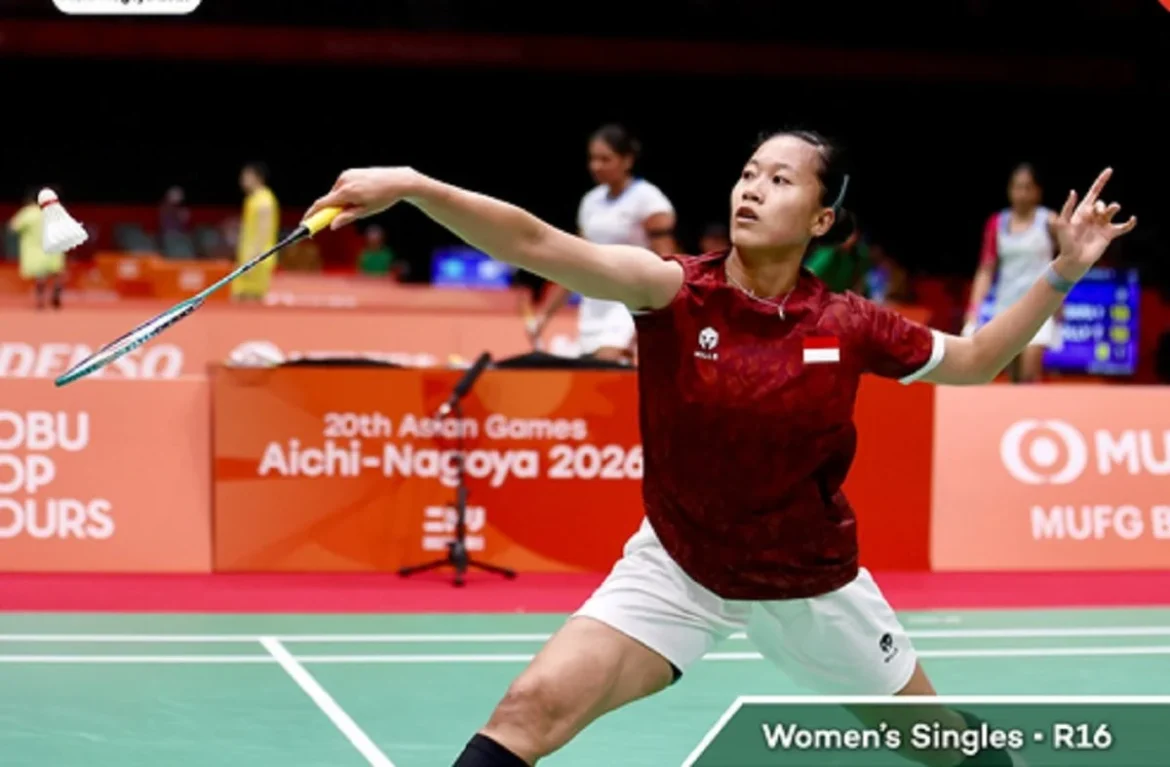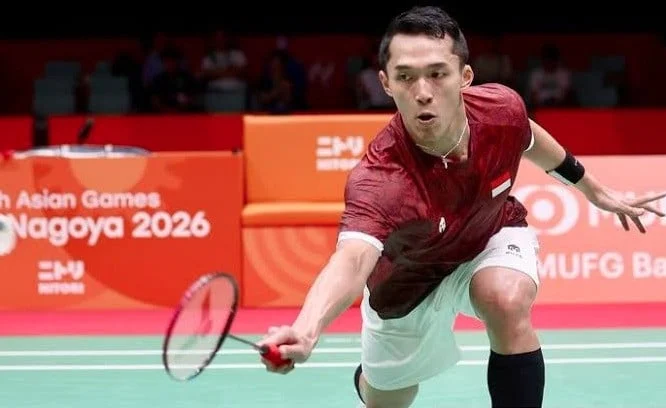
The badminton tournament at the 2026 Asian Games in Aichi-Nagoya, Japan, reached a pivotal juncture on Saturday, September 26, 2026, as the individual events transitioned from the opening rounds into the highly competitive Round of 16. Held at the Ichinomiya City Municipal Gymnasium, the day’s proceedings saw a mixed bag of results for the Indonesian contingent, which saw three out of four athletes successfully navigate their respective matches to advance in the tournament.
The Indonesian delegation, carrying the expectations of a nation with a rich badminton pedigree, showcased both technical dominance and the harsh realities of international competition. While the veteran and emerging stars of the men’s singles category maintained their composure to secure comfortable victories, the women’s singles draw provided a stark contrast between experience and the steep learning curve of major continental games.
A Dominant Display in Men’s Singles
The men’s singles competition witnessed two of Indonesia’s most promising talents, Jonatan Christie and Alwi Farhan, assert their authority on the court. For Jonatan Christie, the match against Tajikistan’s Saidov Dhzumaboi was a matter of professional clinical execution. Christie, who has been a mainstay in the Indonesian national squad for years, demonstrated a vast disparity in skill levels, dispatching his opponent in a swift encounter that concluded with a 21-3, 21-3 scoreline.
The match lasted only a fraction of the time typically expected for a major tournament fixture, underscoring the gap in international experience between the seasoned Christie and the representative from Tajikistan. By restricting his opponent to mere single digits in both games, Christie preserved his physical energy—a critical factor in the grueling schedule of the Asian Games, where recovery time is often limited between matches.
Following this, the spotlight turned to Alwi Farhan, who faced a significantly more daunting challenge against the host nation’s representative, Kenta Nishimoto. In a match where local support for the Japanese athlete was expected to be a factor, Farhan displayed remarkable maturity. Rather than succumbing to the pressure of the crowd at the Ichinomiya City Municipal Gymnasium, the young Indonesian controlled the tempo of the rallies from the outset.
Farhan’s ability to neutralize Nishimoto’s aggressive baseline play proved to be the deciding factor. He secured the victory in straight games, 21-12, 21-10. This win is particularly significant for the Indonesian camp, as defeating a Japanese opponent on home soil serves as a psychological boost for the younger generation of players who are looking to cement their status on the continental stage.
Mixed Fortunes in Women’s Singles
The women’s singles category provided a snapshot of the current state of Indonesian women’s badminton. Putri Kusuma Wardani continued her ascent in the international rankings with a commanding performance against Pakistan’s Shahzad Mahoor. Similar to Christie’s performance, Wardani was never troubled, dismantling her opponent 21-5, 21-11. Her court coverage and precision in shot placement were evident, as she successfully moved Mahoor around the court to create openings for winners.
However, the day was not without its disappointments. Thalita Ramadhani Wiryawan, who had carried high hopes into the tournament, faced a formidable opponent in Vietnam’s Nguyen Thuy Ling. The match proved to be a difficult test for the Indonesian, who struggled to establish any rhythm against the tactical consistency of the Vietnamese player. Despite her best efforts to rally, Wiryawan fell in straight games, 15-21, 10-21. This exit marks the end of her individual campaign in Aichi-Nagoya, leaving the technical staff with areas for review regarding her defensive transitions under pressure.
Contextualizing the 2026 Asian Games Badminton Tournament
The 2026 Asian Games in Aichi-Nagoya represent a major milestone in the global badminton calendar. As the continent continues to be the epicenter of the sport, hosting the games in Japan—a nation that has seen a meteoric rise in badminton prowess over the last decade—adds layers of prestige and challenge.
For Indonesia, these games are not merely about medal accumulation but are a strategic assessment of the country’s depth ahead of the 2028 Olympic cycle. The selection of athletes for the individual events was based on a rigorous performance analysis, taking into account current BWF world rankings, recent tournament form, and physical fitness data.
The Ichinomiya City Municipal Gymnasium has been optimized for high-level international play, with lighting and airflow conditions designed to mirror those found in World Tour Super 1000 events. The significance of these conditions cannot be overstated, as elite players must adjust their shuttle speed management accordingly.
Analytical Outlook: Implications for the Indonesian Squad
From a strategic standpoint, the progression of Christie, Farhan, and Wardani into the Round of 16 keeps Indonesia’s medal hopes alive in three distinct categories.
- Psychological Momentum: The ease with which Christie and Wardani advanced allows them to enter the next round without the fatigue typically associated with long, three-game matches. In a tournament setting, conserving stamina is paramount to longevity.
- Tactical Versatility: Alwi Farhan’s victory over a top-tier Japanese player suggests that the technical training implemented by the Indonesian national coaching staff is yielding results, particularly in neutralizing the "fast-paced" style of play favored by East Asian competitors.
- The Learning Curve: The defeat of Thalita Ramadhani Wiryawan highlights the volatility of the women’s singles landscape in Asia. As smaller badminton nations continue to invest in their programs, the gap between top-seeded players and the rest of the field is narrowing. Indonesia will likely need to re-evaluate its tactical preparation for players facing defensive-counterpunchers like Nguyen Thuy Ling.
Reaction and Next Steps
While no official press conferences were held immediately following the matches, sources close to the Indonesian team indicated that the coaching staff remains focused on the "one match at a time" philosophy. The primary concern in the coming days will be recovery and injury prevention.
"The objective remains clear: to ensure every athlete is at their physical peak before they step onto the court for the Round of 16," a source noted. "While we are pleased with the performance of the three who advanced, the tournament is only going to get tougher from here. We are analyzing the match videos of the next opponents to devise specific game plans."
For the fans back in Indonesia, the success of these three athletes provides a sense of continuity. Badminton remains the country’s most reliable source of international sporting pride. The upcoming Round of 16 matches will be critical tests. As the draw progresses, the level of competition is expected to rise exponentially, with the introduction of top-seeded players who received byes in the first round.
Looking Ahead to the Round of 16
As the tournament moves into the latter stages, the focus will shift to how the Indonesian representatives handle the increased pressure of being one of the final 16 contenders. The psychological fortitude required to advance in the Asian Games is vastly different from the World Tour circuit, given the national pride and the scale of the multisport event.
The supporters in Indonesia and the global badminton community will be watching closely as these athletes vie for a place in the quarterfinals. The results on Saturday have laid a solid foundation, but the journey toward the podium is far from over. With the competition intensifying, the ability of these players to adapt, refine their tactics, and maintain their physical conditioning will ultimately determine who secures a spot in the history books of the 2026 Aichi-Nagoya Asian Games.
The badminton competition in Aichi-Nagoya is set to continue with the remaining matches of the Round of 16, where the tactical nuances and sheer endurance of the participants will be tested to their absolute limits. The Indonesian team, with three survivors, remains well-positioned to make a significant impact on the final medal count as the tournament heads into its most critical phase.