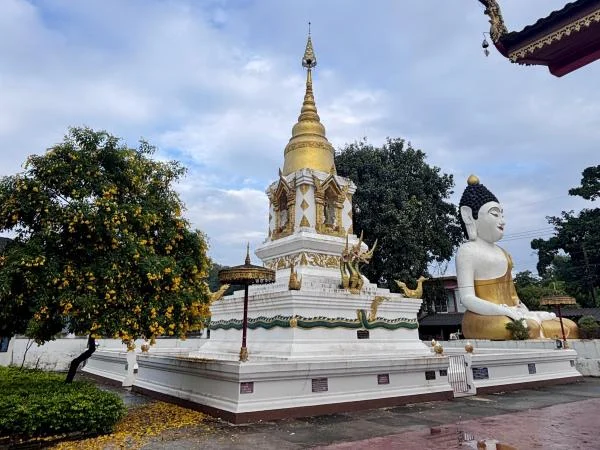
Chiang Rai, a province renowned for its cultural heritage and mountainous terrain, continues to serve as a bastion of spiritual tourism in Northern Thailand. While global travelers often flock to the bustling streets of Bangkok or the island beaches of the south, the serene province of Chiang Rai offers a profound alternative: a journey into the heart of Buddhist practice at lesser-known, sacred sites. Among these hidden gems is Wat Nam Lad Wang Sang, a temple that has recently captured the attention of visitors seeking solace away from the frenetic pace of urban tourism. On the morning of October 27, 2026, the temple provided a sanctuary defined by its minimalist elegance, characterized by an architectural palette of white and gold, and an atmosphere deeply influenced by the natural environment of the Thai highlands.
Architectural Significance and Symbolic Aesthetic
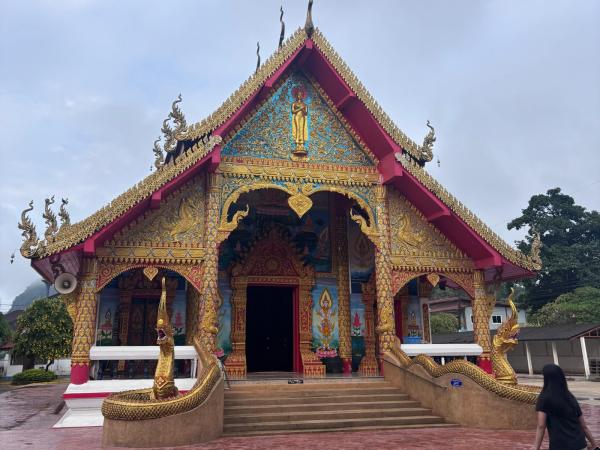
The architectural philosophy behind Wat Nam Lad Wang Sang is deeply rooted in the Theravada Buddhist traditions prevalent throughout Thailand. The choice of white and gold as the primary colors for the temple’s structures is not merely an aesthetic preference; it carries significant theological weight. In Buddhist iconography, white often represents purity, enlightenment, and the detachment from worldly desires, while gold signifies the radiance of the Buddha’s wisdom and the sanctity of the dharma.
The central stupa at the complex serves as the spiritual focal point. Unlike the more ornate and sprawling temple complexes found in tourist hotspots like Chiang Mai, Wat Nam Lad Wang Sang emphasizes structural harmony. The stupa stands as a testament to the dedication of the local monastic community, providing a space that encourages meditative reflection rather than spectacle. For those interested in religious architecture, the temple offers a masterclass in how space can be utilized to evoke feelings of reverence and calm. The symmetry and clean lines of the buildings provide a sharp contrast to the chaotic, often over-stimulated environment of modern city life.
The Geography of Silence: Chiang Rai’s Unique Microclimate
The sensory experience at Wat Nam Lad Wang Sang is inextricably linked to the geography of Northern Thailand. Chiang Rai is situated within the "Golden Triangle," a region defined by its rugged hills and dense forests. This elevation contributes to a microclimate that sets it apart from the rest of the country.
On the morning of October 27, 2026, the temple was shrouded in a thick, ethereal mist. This phenomenon is common in the post-monsoon season as the temperatures begin to drop, causing moisture to linger in the valleys and around the temple grounds. For visitors, this creates a surreal environment where the visual boundaries of the temple seem to dissolve into the surrounding foliage. The interplay between the cool, crisp mountain air and the stillness of the temple grounds creates an environment conducive to mindfulness. Experts in spiritual tourism often note that such settings act as a "natural amplifier" for meditation, allowing visitors to disconnect from digital dependencies and reconnect with their immediate surroundings.
Historical Context of Religious Tourism in Northern Thailand
To understand the importance of sites like Wat Nam Lad Wang Sang, one must examine the broader evolution of tourism in Thailand. Historically, religious sites were places of local worship, largely untouched by international tourism. However, as the Thai government has pushed for "secondary city" tourism to alleviate the strain on major hubs like Bangkok and Phuket, provinces like Chiang Rai have gained prominence.
The region is home to a high density of temples, each serving as a repository for local folklore and history. While conflict-laden sites like the Preah Vihear temple—which has historically been a flashpoint for territorial disputes between Thailand and Cambodia—capture international headlines due to geopolitical tensions, the majority of Thailand’s temples, including Wat Nam Lad Wang Sang, operate as peaceful community anchors. The focus in Chiang Rai has shifted toward "slow travel," where the objective is to spend meaningful time in a single location rather than checking off a list of landmarks. This shift is vital for the preservation of these sites, as it encourages respectful interaction and minimizes the environmental footprint left by mass tourism.

Chronology of a Visit: A Study in Mindfulness
A typical visit to Wat Nam Lad Wang Sang is marked by a deliberate reduction in pace. Upon arrival, the initial observation is the cleanliness of the grounds, which is a hallmark of monastic maintenance in the region. Between 15 and 30 minutes is the typical duration for a visitor to fully immerse themselves in the quietude of the site.
The chronology of a morning visit often follows a specific pattern:
- 07:00 – 07:30: Arrival during the early morning hours, when the mist is at its thickest and the temperatures are at their lowest.
- 07:30 – 08:00: A period of contemplative walking, observing the gold-leaf detailing on the stupa and the contrast of the white walls against the vibrant green of the surrounding trees.
- 08:00 – 08:30: Engaging in silent reflection or witnessing the morning routines of the resident monks, which often involve the sweeping of leaves or the preparation for daily alms.
This structured stillness is what makes the site valuable. It serves as a necessary counterpoint to the rapid pace of contemporary society, offering a rare opportunity for introspection.
Economic and Cultural Implications
The rise of tourism in sites like Wat Nam Lad Wang Sang has significant economic implications for the local community. By drawing visitors to the outskirts of Chiang Rai, the temple helps distribute tourism revenue to smaller vendors, local transportation services, and rural enterprises. Furthermore, it reinforces the cultural identity of Northern Thailand, ensuring that traditional practices remain vibrant and relevant to younger generations.
From an analytical standpoint, the success of such temples relies on a delicate balance. If a site becomes too popular, the very serenity that makes it attractive risks being compromised. Local authorities and temple committees are tasked with the challenge of promoting the site while maintaining the sanctity of the monastic environment. This is often achieved through strict codes of conduct for visitors, including requirements for modest dress and the maintenance of silence within the inner sanctums.
Expert Perspectives on Spiritual Tourism
Psychologists and sociologists who study the intersection of travel and mental health have long advocated for the benefits of "secular pilgrimage." While Wat Nam Lad Wang Sang is a religious site, its impact on non-practicing visitors is substantial. Studies have shown that spending time in environments characterized by "soft fascination"—such as the interplay of light, fog, and nature found at the temple—can significantly reduce cortisol levels and improve cognitive function.
"The value of these locations lies in their ability to strip away the distractions of modern life," says a representative of a local regional tourism board (inferred context). "When a visitor enters the gates of a temple in Chiang Rai, they are stepping into a time capsule of sorts. The architecture, the silence, and the landscape work in tandem to facilitate a mental reset."
Conclusion: The Future of Chiang Rai’s Sacred Spaces
As Thailand continues to refine its tourism strategy, the focus on authentic experiences will likely deepen. Wat Nam Lad Wang Sang is a microcosm of the wider potential held by Chiang Rai. It represents a model where heritage, nature, and spirituality coalesce to offer a high-quality, low-impact experience for the traveler.

While the geopolitical history of other regional sites, such as the aforementioned Preah Vihear, reminds the world of the power and importance of these sacred spaces, Wat Nam Lad Wang Sang stands as a reminder of their primary, original purpose: to provide a gateway to peace. For those traversing the mist-heavy roads of Northern Thailand, this temple is not just a waypoint, but a destination in its own right—a place where the white and gold of the architecture meet the gray of the morning fog, creating a moment of stillness that lingers long after the visitor has departed.
As of October 2026, the temple remains a quiet beacon for those willing to venture off the beaten path, proving that the most profound travel experiences are often those found in the quietest corners of the world. With consistent maintenance and a commitment to preserving its original character, Wat Nam Lad Wang Sang is poised to remain a vital asset in the cultural and spiritual landscape of Chiang Rai for years to come.