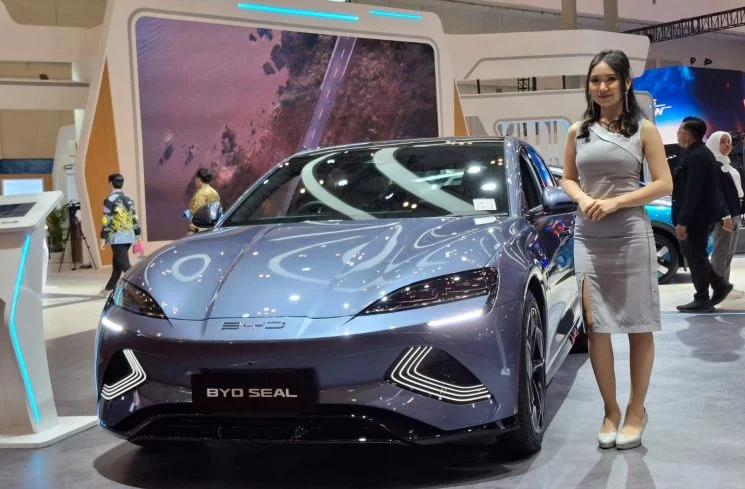
The Indonesian government has officially unveiled a strategic roadmap designed to transform the nation from a mere assembly hub for electric vehicles (EVs) into a robust, self-sustaining manufacturing powerhouse. At the heart of this policy is a rigorous mandate for the local content requirement, known as the Tingkat Komponen Dalam Negeri (TKDN), which is set to scale up to 80 percent by 2030. This initiative, championed by the Ministry of Industry, aims to deepen the domestic industrial structure, incentivize the growth of local component suppliers, and integrate Indonesia more deeply into the global EV supply chain.
The announcement was formalized by Minister of Industry Agus Gumiwang Kartasasmita during the inauguration of the BYD manufacturing facility in Subang, West Java. The event served as a symbolic launchpad for the government’s next phase of industrial policy, emphasizing that foreign investment in the automotive sector must contribute to local technological transfer and the development of a resilient domestic supply chain ecosystem.
A Phased Approach to Industrial Localization
The government’s strategy is not an overnight requirement but a carefully calibrated, time-bound roadmap. By establishing clear thresholds, the Ministry of Industry aims to provide manufacturers with enough time to localize their supply chains while ensuring that the industry remains competitive.
The timeline for the TKDN mandate is structured as follows:
- 2024–2026: A baseline requirement of 40 percent local content is mandatory. This period focuses on initial localization of chassis, body components, and interior parts.
- 2027–2029: The requirement increases to 60 percent. During this phase, the government expects significant domestic production of critical EV components, including motor controllers and charging systems.
- 2030 and beyond: A target of 80 percent local content. This final stage aims to encompass high-value components, including advanced battery management systems and specialized electronics, effectively finalizing the transition to a localized manufacturing ecosystem.
Minister Gumiwang Kartasasmita noted that this "affirmative policy" is designed to prevent "assembly-only" investments. By forcing manufacturers to source parts domestically, the government intends to create a "multiplier effect" that benefits small and medium-sized enterprises (SMEs) specializing in automotive components.
Investment Landscape and Market Performance
The impact of this regulatory framework is already manifesting in the macroeconomic data. To date, 14 major automotive manufacturers have committed to domestic EV production, with total cumulative investments reaching IDR 24.131 trillion. This capital inflow supports an annual production capacity of 409,860 units, a figure that is expected to grow as more manufacturers establish regional hubs in West Java and Central Java.
The broader industrial sector has shown resilience, serving as the backbone of Indonesia’s economic performance. In the second quarter of 2026, the non-oil and gas processing industry grew by 5.32 percent year-on-year, outpacing the national economic growth rate of 5.29 percent for the same period. This outperformance underscores the manufacturing sector’s role as the primary engine of the Indonesian economy, contributing 16.83 percent to the nation’s Gross Domestic Product (GDP)—a value amounting to approximately IDR 1,102.88 trillion.
Manufacturing as an Economic Anchor
The government’s focus on manufacturing is a direct response to the volatility of global commodity markets. By prioritizing industrialization, Indonesia seeks to shift away from raw material exports toward higher-value-added products. This shift is clearly reflected in the trade balance data for the first half of 2026, where non-oil and gas commodities accounted for USD 115.50 billion in exports, representing 82.03 percent of the country’s total export value.
Furthermore, the manufacturing sector remains a vital pillar for social stability through job creation. As of early 2026, the non-oil and gas manufacturing sector provided employment for 19.99 million workers nationwide. This labor-intensive growth is essential for absorbing the country’s demographic bonus and reducing reliance on the informal economy.
Global Competitiveness and the MVA Metric
Indonesia’s progress is not just recognized domestically but is also gaining traction in international rankings. The World Bank’s Manufacturing Value Added (MVA) metric, which measures the net output of the manufacturing sector after adding up all outputs and subtracting intermediate inputs, highlights Indonesia’s rising stature.
In 2025, Indonesia’s MVA reached USD 275.61 billion, propelling the nation to the 12th position globally, up from 13th. This ranking solidifies Indonesia’s position as the leading manufacturing hub in Southeast Asia, with an MVA more than double that of Thailand, which currently occupies the second spot in the region. On a continental scale, Indonesia now stands as the fifth-largest manufacturing power in Asia, trailing only global giants China, Japan, India, and South Korea.
Implications for the EV Supply Chain
The transition to 80 percent TKDN carries profound implications for the global automotive industry. Multinational corporations operating in Indonesia must now reconsider their supply chain strategies. Rather than importing ready-made components from their home countries, manufacturers are being encouraged to build partnerships with Indonesian tier-two and tier-three suppliers.
Industry analysts suggest that this policy will likely lead to a "clustering" effect in industrial estates such as Subang and Karawang. By concentrating production facilities, component manufacturers, and raw material processors in these zones, the logistics costs are expected to decrease, further enhancing the price competitiveness of Indonesian-made EVs.
However, the policy is not without challenges. To meet the 80 percent target by 2030, Indonesia must address gaps in advanced technology and specialized labor. While the assembly of vehicle bodies is well-established, the domestic production of high-grade semiconductors and specialized software for vehicle automation remains a hurdle that requires significant R&D investment and international technology transfers.
The Path Forward: Challenges and Opportunities
As Indonesia approaches the 2027 milestone, the government is expected to continue offering fiscal incentives, such as tax holidays and import duty exemptions for capital goods, to assist manufacturers in meeting the stringent TKDN requirements. The Ministry of Industry has also indicated that it will work closely with the Ministry of Research and Technology to foster domestic innovation in battery technology.
The ultimate goal of this policy is not merely to increase the number of EVs on the road but to build a self-reliant industrial base that can withstand external economic shocks. By anchoring the automotive industry in local expertise and local resources, Indonesia aims to secure its position as a global player in the green energy transition.
In conclusion, the mandate to reach 80 percent TKDN by 2030 is an ambitious, multi-faceted strategy that combines industrial regulation, trade policy, and economic development. With over IDR 24 trillion already invested and a clear, phased roadmap in place, the government has set the stage for a decade of rapid industrial transformation. As the manufacturing sector continues to outperform the national average and capture a larger share of the global market, Indonesia is positioning itself to become a key architect of the future of electric mobility in Asia. The success of this policy will depend on the continued cooperation between the state, foreign investors, and the domestic private sector in navigating the complexities of high-tech manufacturing and sustainable industrial growth.