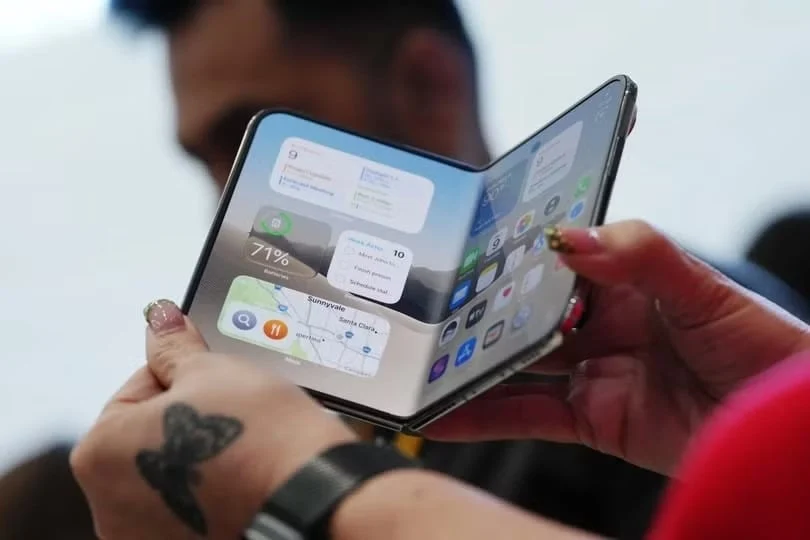
Apple’s foray into the foldable smartphone market, widely rumored under the moniker iPhone Duo, has sparked intense scrutiny regarding one of the most persistent technical hurdles in the industry: the visibility and degradation of the screen crease. During recent technical briefings, high-ranking Apple executives have addressed these concerns head-on, asserting that the device’s proprietary hinge architecture and screen material composition are engineered to prevent the crease from becoming more pronounced over extended periods of usage. As the company prepares to enter a segment currently dominated by competitors like Samsung and Google, the durability of the display remains the central pillar of its market strategy.
The Engineering Challenge of Foldable Displays
The fundamental physics of a foldable smartphone necessitates a flexible display substrate, typically made of Ultra-Thin Glass (UTG) or advanced polymer layers. As these materials are folded and unfolded, the stress applied to the central axis can lead to microscopic deformations. In many existing foldable devices on the market, users have reported that the "crease"—the physical indentation where the screen bends—becomes more prominent as the mechanical integrity of the polymer layers shifts with repetitive motion.
Apple, known for its rigorous testing standards and preference for refined user experiences, has reportedly spent years iterating on its mechanical design. According to Tom Marieb, Apple’s Vice President of Hardware Engineering, the company is confident that its engineering approach will mitigate the degradation that has plagued early-generation foldable phones. When confronted with the common industry concern regarding long-term screen fatigue, Marieb emphasized that the company welcomes real-world verification, signaling a high level of confidence in the hardware’s durability.
Chronology of the Foldable Smartphone Market
The evolution of the foldable market began in earnest around 2019, when early pioneers attempted to solve the hinge and display durability paradox.
- 2019: The inaugural wave of foldables, including the original Samsung Galaxy Fold, faced significant public scrutiny due to screen fragility and hinge failures. These initial setbacks forced the entire mobile industry to pivot toward more robust mechanical designs.
- 2020–2022: Competitors refined their designs by introducing "teardrop" hinges, which allow the screen to curve in a wider radius, thereby reducing the sharp stress point that creates a crease.
- 2023: Foldable technology matured, with manufacturers introducing improved screen-layer bonding techniques that allow for greater resistance to physical wear and tear.
- 2024: Apple’s development of the iPhone Duo represents the culmination of these industry-wide lessons. By observing the failure points of early iterations, Apple appears to be targeting a market entry that prioritizes longevity over the novelty of the form factor.
Technical Solutions: Beyond the Hinge
The structural integrity of the iPhone Duo relies on a two-pronged engineering strategy: the mechanical hinge and the display surface treatment. Unlike traditional flat-screen smartphones, which utilize a rigid chassis, the iPhone Duo incorporates a multi-link hinge mechanism. This mechanism is designed to distribute force evenly across the fold line, preventing the concentration of pressure that typically causes permanent creasing.
Furthermore, Apple’s approach to the display involves a sophisticated layering process. By integrating a specialized protective film over the UTG, the company aims to provide a surface that is both flexible and resilient against the indentations caused by daily interactions, such as stylus usage or accidental pressure. Engineering experts suggest that if Apple utilizes a proprietary polymer blend that can return to its original shape after being compressed, they may effectively render the crease nearly invisible to the naked eye.
Industry Data and Comparative Analysis
Data from market research firms such as IDC and Counterpoint Research suggest that while the foldable market is still a niche segment, it is projected to grow at a compound annual growth rate (CAGR) of over 20% through 2027. However, consumer surveys consistently highlight "screen durability" as the primary barrier to adoption.
In controlled laboratory environments, manufacturers test these devices using robotic arms that simulate years of folding—often exceeding 200,000 to 400,000 cycles. While a device may function perfectly after these tests, the aesthetic degradation of the crease remains a subjective but critical metric for premium smartphone consumers. If the iPhone Duo can maintain a "flat" display profile after 200,000 folds, it would set a new industry benchmark for hardware endurance.
Official Responses and Competitive Positioning
Apple’s stance, as articulated by Marieb, is notably calm compared to the defensive posturing often seen in the tech industry. By inviting users to verify the claims themselves, Apple is leaning into its brand identity of "it just works." This move is calculated to reassure prospective buyers who have been hesitant to switch from the stable, flat-screen iPhone ecosystem to a foldable alternative.
Competitors have also been quick to respond to the changing landscape. Samsung, currently the market leader in the foldable space, continues to refine its "Flex Hinge" technology, focusing on minimizing the gap between the two screen halves. Meanwhile, Chinese manufacturers such as Honor and Huawei have pushed the boundaries of thinness, creating foldables that are barely thicker than traditional flagships. Apple’s entry is expected to force a consolidation of these technologies, likely driving the entire industry toward a unified standard of display longevity.
Implications for the Smartphone Industry
The arrival of the iPhone Duo, and Apple’s bold claims regarding its screen crease, carries significant implications for the smartphone industry at large.
- Standardization of Quality: If Apple succeeds in delivering a truly crease-free or crease-resistant foldable, it will inevitably force other OEMs (Original Equipment Manufacturers) to raise their standards. The "crease" will no longer be an accepted trade-off for a larger screen.
- Consumer Trust: Trust is the currency of the premium smartphone market. By addressing the crease concern early and transparently, Apple is positioning the iPhone Duo as a mature, professional-grade tool rather than a fragile experimental gadget.
- Market Expansion: The move could trigger a massive influx of iOS users into the foldable category. Currently, many users remain tethered to the iPhone 15 or 16 series due to ecosystem integration. A foldable iPhone that retains the reliability of the standard model could provide the necessary incentive for mass adoption.
- Supply Chain Innovation: The demand for such high-precision components will likely drive further innovation in materials science. Suppliers of thin-film transistors, UTG, and mechanical hinge components will be under pressure to scale production to Apple’s exacting tolerances.
Fact-Based Analysis of Future Prospects
As the launch date for the iPhone Duo approaches, the conversation has shifted from "if" it will fold to "how well" it will fold. While Apple’s executives are confident, the final verdict will ultimately lie in the hands of the consumers. Historical data shows that even the best-engineered devices can exhibit unforeseen issues when exposed to extreme environmental variables, such as cold temperatures—which are known to make foldable screens brittle—and dust infiltration.
Apple’s success will likely hinge on its ability to marry its signature software optimization with this new hardware form factor. If the user interface can leverage the screen real estate of the iPhone Duo without relying on the crease as a focal point, the device will be viewed as a success. Conversely, if the crease remains a visual distraction, it could potentially undermine the brand’s reputation for industrial design perfection.
Ultimately, the focus on the crease is symptomatic of a broader quest for the "perfect" device: one that offers the portability of a pocket-sized phone and the productivity of a tablet, without sacrificing the durability of a standard glass screen. Apple’s willingness to subject its latest innovation to public scrutiny suggests that they are not merely launching a product, but attempting to define the next decade of mobile computing. The engineering hurdle of the crease is the final frontier in this endeavor, and if Apple’s claims hold true, it may well represent the final barrier to the widespread normalization of foldable technology.
In conclusion, while the industry remains cautious, the rhetoric coming out of Cupertino suggests a paradigm shift. By focusing on the structural longevity of the iPhone Duo, Apple is not just challenging its competitors; it is responding to the fundamental concerns of the modern consumer. Whether this will lead to a new standard of display excellence or serve as a humbling lesson in the limitations of physics remains to be seen. However, one thing is certain: the eyes of the global technology market are firmly fixed on the hinge of the upcoming iPhone Duo.