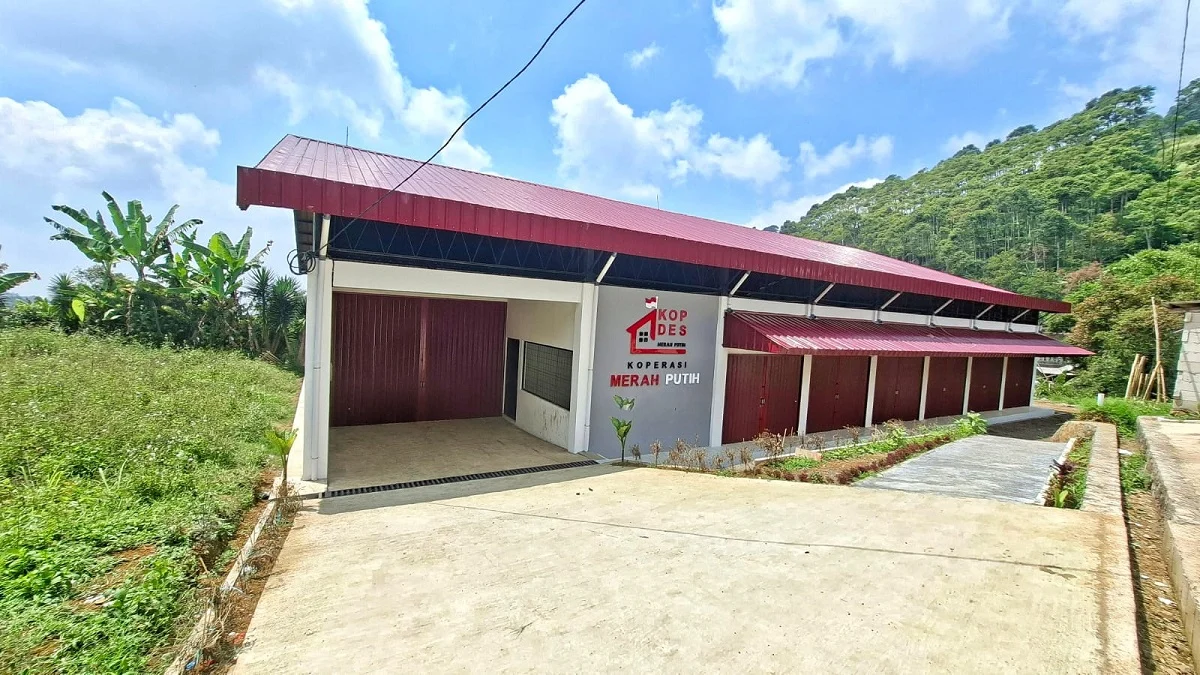
The Koperasi Desa/Kelurahan Merah Putih (KDKMP) has officially commenced nationwide operations as of October 1, 2026, marking a significant milestone in the Indonesian government’s strategy to decentralize economic activity and strengthen rural supply chains. The launch follows an intensive period of infrastructure development that culminated in the successful completion of 26,661 physical retail outlets across the archipelago by the end of the third quarter of 2026. This initiative, overseen by state-owned enterprises (BUMN), is designed to bridge the gap between rural producers and urban markets while ensuring price stability for essential goods.
The Scale of the Infrastructure Rollout
The rollout of the KDKMP network represents one of the most ambitious logistical undertakings in the country’s modern economic history. According to data provided by PT Agrinas Pangan Nusantara (Persero), the parent operational entity tasked with managing the program, the completion of over 26,000 units is only the first phase of a broader plan to revitalize village-level commerce.
Joao Angelo De Sousa Mota, President Director of PT Agrinas Pangan Nusantara (Persero), confirmed the operational status during a briefing in Jakarta. "There are 26,661 Merah Putih village/kelurahan cooperatives that have reached 100 percent completion," Mota stated. The construction phase, which accelerated significantly throughout 2026, utilized a standardized design to ensure efficiency in procurement, distribution, and inventory management. Each unit is positioned to serve as a hub for local agricultural cooperatives, allowing farmers and micro-entrepreneurs to aggregate their produce for regional distribution.
Chronology of Implementation
The inception of the KDKMP program traces back to early 2026, when the government identified persistent inflationary pressures on basic food commodities (pangan) as a barrier to rural development. The strategy focused on shortening the supply chain—often plagued by excessive middlemen—by empowering local cooperatives to serve as both collection points for farmers and retail outlets for local consumers.
- Q1 2026: Initial planning and selection of pilot provinces were finalized. The government allocated budgetary resources to BUMNs to spearhead the logistical framework.
- May 2026: The pilot phase was launched in East Java, where 1,081 cooperative units were inaugurated by the President. This served as the "proof of concept" phase to test the centralized inventory management system.
- Q2-Q3 2026: Rapid expansion phase. Construction crews worked across various regions to scale the East Java model to the national level.
- September 30, 2026: The final audit confirmed that 26,661 units were fully operational and stocked, meeting the target set for the transition into the fourth quarter.
- October 1, 2026: Official nationwide opening and commencement of full-scale retail operations.
Performance Indicators and Pilot Results
The success of the East Java pilot serves as a critical indicator for the potential trajectory of the national program. By mid-2026, the 1,081 units in East Java had already begun to demonstrate the viability of the KDKMP model. Joao Angelo De Sousa Mota noted that, as of the start of October, these pilot units were generating daily transaction volumes reaching Rp31 billion.
This financial performance is significant, as it suggests that the cooperatives are successfully capturing consumer spending that might otherwise have flowed to private retail chains or traditional markets with higher markup structures. The integration of digital payment systems within the KDKMP network has also facilitated real-time data tracking, allowing the central management body to monitor supply-demand imbalances and adjust distribution logistics accordingly.
The Role of BUMN and Economic Integration
The participation of state-owned enterprises is central to the KDKMP’s sustainability. PT Agrinas Pangan Nusantara (Persero) acts as the bridge between the central government’s economic policies and the localized needs of the village cooperatives. By leveraging the logistical assets of existing BUMNs, the program aims to lower the "distribution cost" of goods, which is historically high in Indonesia due to the country’s geography.

Economic analysts observe that the KDKMP model serves a dual purpose: it acts as a price stabilizer for the rural population and as an aggregator for local farmers. When agricultural yields are high, the cooperatives purchase the surplus from local farmers at fair prices. These goods are then distributed through the same network, ensuring that consumers in other regions receive fresh produce at prices that are not artificially inflated by long, multi-layered supply chains.
Implications for National Economic Policy
The launch of over 26,000 units is expected to have a cascading effect on rural inflation. By creating a direct link between the farm gate and the retail shelf, the government is effectively targeting the volatility of food prices, which often constitutes a major component of the Consumer Price Index (CPI).
Furthermore, the initiative is projected to boost employment at the village level. Each KDKMP unit requires personnel for operations, inventory management, and logistics, effectively creating tens of thousands of jobs in rural areas where employment opportunities are typically limited.
However, challenges remain. Economists point out that the sustainability of these cooperatives will depend on three key factors:
- Inventory Management: Maintaining fresh supply lines across such a vast network requires sophisticated cold-chain logistics, which must be consistently funded and maintained.
- Managerial Competency: The transition from a state-led pilot to a fully operational, independent cooperative requires training local managers to handle finances, procurement, and customer service effectively.
- Market Competition: The KDKMP must coexist with existing traditional markets (pasar tradisional) and private convenience stores. The goal, according to government directives, is not to eliminate competition but to provide a foundational market floor that prevents price gouging.
Future Outlook and Expansion
While 26,661 units are now operational, the government has hinted that this is not the end of the expansion. The ultimate goal is to ensure that every village and kelurahan across Indonesia—many of which are in remote or isolated areas—has access to a KDKMP unit.
The success of the next six months will be measured by the stability of prices for essential commodities such as rice, cooking oil, and sugar within the cooperative network compared to national averages. The Ministry of Cooperatives and SMEs, in coordination with the Ministry of State-Owned Enterprises, is expected to release a comprehensive performance review at the end of the year, which will likely determine the pace of future unit openings.
As of October 1, 2026, the KDKMP stands as a centerpiece of the government’s efforts to strengthen the domestic economy from the bottom up. By prioritizing the village as the fundamental unit of trade, the administration aims to ensure that economic growth is felt not just in urban centers, but in every corner of the nation. The coming weeks will provide the first real-world test of whether this massive logistical apparatus can sustain its momentum and deliver on the promise of affordable, accessible goods for all citizens.
The government continues to emphasize that the transparency of the transaction data, currently being monitored by central authorities, is the key to preventing the corruption and inefficiency that have plagued similar cooperative programs in previous decades. With real-time reporting now the standard, the KDKMP represents a modern, digitized approach to rural economic management that could serve as a template for other developing economies facing similar logistical challenges.