The resilience of local communities is frequently tested by natural and man-made disasters, testing the limits of human endurance and the strength of social safety nets. In the historic heart of Lombok Tengah, Nusa Tenggara Barat (NTB), the iconic Desa Adat Sade faced a profound tragedy last August when a devastating fire tore through the traditional settlement. While structural damage is inherently heartbreaking, the true gravity of the disaster extended far beyond scorched timber and traditional thatched roofs. For the artisans and micro-entrepreneurs who call the village home, the flames consumed their primary engines of economic survival—their looms, raw materials, and storefronts.
As the community embarks on the long and arduous road to recovery, ensuring that these vulnerable families can regain their economic independence has emerged as an urgent priority. Financial institutions, grassroots organizations, and humanitarian networks have mobilized to restore not just the physical infrastructure of the village, but the livelihoods of the women who sustain its cultural and economic pulse. Among those stepping forward to bridge the gap between despair and renewal is Permodalan Nasional Madani (PNM), specifically through its Mekaar program, which has long championed grassroots women’s empowerment across Indonesia.
The Anatomy of the Disaster: More Than Just Material Loss
Desa Adat Sade is globally renowned as a living museum of Sasak culture, attracting international and domestic tourists eager to witness traditional weaving techniques passed down through generations. The local economy relies heavily on cultural tourism and the meticulous production of hand-woven Ikat fabrics. When the fire swept through the village in August, it did not discriminate between residential quarters and cottage industries.
For many residents, the loss of their homes meant an immediate cessation of income. In traditional communities like Desa Adat, household economics are deeply integrated with domestic spaces. The porch or the living room frequently doubles as a workshop where women spin yarn, set up traditional backstrap looms, and display finished textiles for visiting tourists.

When these spaces were reduced to ash, the artisans lost their tools of the trade. Without equipment or capital to purchase new raw materials, the cycle of poverty threatened to swallow families that had previously achieved a degree of financial self-sufficiency. The psychological toll matched the material devastation; artisans who took immense pride in their craftsmanship suddenly found themselves idle, stripped of the ability to provide for their dependents.
Voices from the Ground: Personal Narratives of Loss and Resilience
Among the many residents affected by the disaster is Heppy Susanti, a dedicated artisan and local entrepreneur who has spent years perfecting her craft. For Heppy, the fire represented an existential threat to her family’s stability.
"The most difficult part was not just losing our home or our selling space. We lost our place to work. Yet it is precisely from weaving and selling these textiles that our daily family needs are fulfilled," Heppy shared, reflecting on the bleak days immediately following the catastrophe.
Heppy is not a newcomer to the realm of financial empowerment; she has been a proud client of the PNM Mekaar program for five consecutive years. Before the fire, her enterprise was thriving, contributing meaningfully to the local tourism economy and securing her household’s financial independence. When the flames reduced her property to ashes, that hard-won stability vanished in minutes, leaving her grappling with a profound sense of hopelessness.
In moments of profound crisis, however, institutional support can serve as a vital lifeline. For Heppy and her neighbors, the speed of the initial response provided the first glimmer of optimism in an otherwise bleak environment. Rather than leaving the community to navigate the aftermath alone, support structures activated almost immediately.

"I was deeply moved when PNM arrived just two days after the fire and immediately provided emergency assistance," Heppy recalled. "Now, PNM has returned with even more meaningful support. Thank you for embracing us from the very beginning until now."
The Role of PNM Mekaar in Crisis Recovery
The intervention by PNM Mekaar in Desa Adat Sade highlights a broader evolution in microfinance: the shift from purely transactional lending to holistic community development and crisis management. PNM Mekaar (Membina Ekonomi Keluarga Sejahtera) is specifically designed to empower underprivileged women through group-based lending, capacity building, and continuous mentorship.
In disaster-affected regions, standard financial protocols often fail to address the immediate human needs of borrowers. Recognizing this, organizations like PNM often deploy emergency relief measures, offering temporary debt relief, psychological support, and rapid-response grants or restructured micro-loans to help clients restart their businesses.
The strategy focuses on restoring the productive capacity of women entrepreneurs as quickly as possible. By providing targeted capital injections and replacement equipment, these programs ensure that borrowers do not fall into predatory debt traps or permanent economic inactivity. In Desa Adat Sade, the assistance goes beyond monetary aid; it represents a reaffirmation of trust in the capabilities of Sasak women entrepreneurs.
Broader Implications for Micro-Enterprise and Women’s Empowerment in Indonesia
The situation in Lombok Tengah mirrors a larger national narrative regarding the vulnerability of micro-enterprises to localized disasters and the critical role of institutional backing. Small and medium enterprises (SMEs) and micro-businesses form the backbone of the Indonesian economy, contributing significantly to the Gross Domestic Product (GDP) and absorbing the vast majority of the national workforce. Within this sector, women-led micro-enterprises represent a particularly dynamic, albeit vulnerable, segment.

Recent strategic initiatives across Indonesia have sought to institutionalize and strengthen this ecosystem. Programs such as the Laksmi initiative—launched jointly by PNM and the Ministry of Micro, Small, and Medium Enterprises (MSMEs)—exemplify the growing emphasis on synergistic empowerment. These programs aim to scale up the capabilities of women entrepreneurs through digital literacy, enhanced market access, and resilient financial planning.
When disasters strike cultural heritage sites like Desa Adat Sade, the implications extend beyond individual economic loss. There is a tangible risk of cultural attrition. If traditional weavers are forced to abandon their craft due to economic displacement, centuries-old techniques, indigenous designs, and intangible cultural heritage face the threat of permanent erasure. Therefore, economic rehabilitation initiatives in such regions serve a dual purpose: they revitalize family finances while preserving national heritage.
Chronology of Recovery and Future Outlook
- August: A sudden and destructive fire breaks out in Desa Adat Sade, Lombok Tengah, destroying residential structures, traditional workshops, and local micro-businesses.
- Post-Incident (Within 48 Hours): Grassroots support networks mobilize. PNM field officers visit the site to assess the damage and deliver initial emergency relief supplies to affected Mekaar clients.
- Weeks Following the Disaster: Authorities and local stakeholders evaluate infrastructural damages. Financial institutions formulate targeted recovery packages tailored to artisans who lost their working capital and tools.
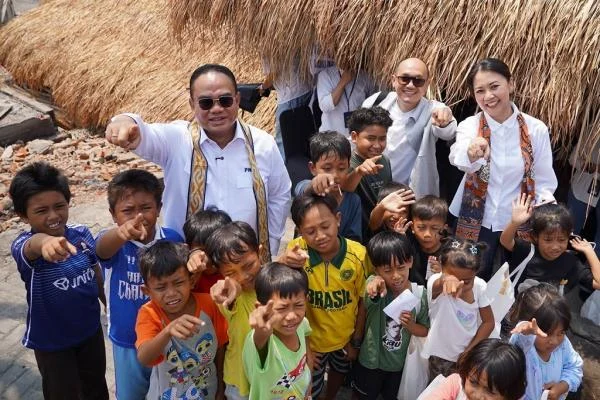
- Current Phase: PNM provides secondary, comprehensive assistance to key clients like Heppy Susanti, focusing on the replacement of productive assets and the resumption of traditional weaving activities.
As Desa Adat Sade steadily rebuilds its physical structures, the focus is shifting toward long-term sustainability. Experts emphasize that disaster risk reduction strategies for cultural villages must incorporate insurance schemes for micro-businesses, fire-resistant traditional construction techniques, and diversified income streams for artisans.
For now, the immediate priority remains clear: getting the looms back in operation. Through the combined resilience of local artisans and the targeted intervention of support organizations like PNM Mekaar, the weavers of Desa Adat Sade are slowly weaving their way back to stability, ensuring that their ancient cultural traditions continue to survive and thrive in the modern era.