The global energy landscape is witnessing a remarkable demonstration of logistical resilience as crude oil exports from the Middle East have surged back to approximately 98 percent of their pre-war volumes. This recovery, documented in recent market analysis by J.P. Morgan, highlights the effectiveness of adaptive infrastructure and alternative routing strategies employed by major Gulf producers. Following the escalation of hostilities between the United States and Iran, which commenced on February 28, the primary maritime chokepoints in the region faced severe disruptions. However, by leveraging an intricate network of transcontinental pipelines, secondary port facilities, and sophisticated ship-to-ship transfer operations, nations like Saudi Arabia and the United Arab Emirates have successfully navigated the geopolitical volatility to maintain the flow of energy to global markets.
The Chronology of Disruption and Adaptation
The catalyst for the current volatility began on February 28, when the formalization of the U.S.-Iran conflict immediately threatened the transit of tankers through the Strait of Hormuz. As the world’s most critical oil chokepoint—through which roughly one-fifth of the world’s petroleum consumption passes—the closure or restriction of this waterway sent shockwaves through energy futures markets.
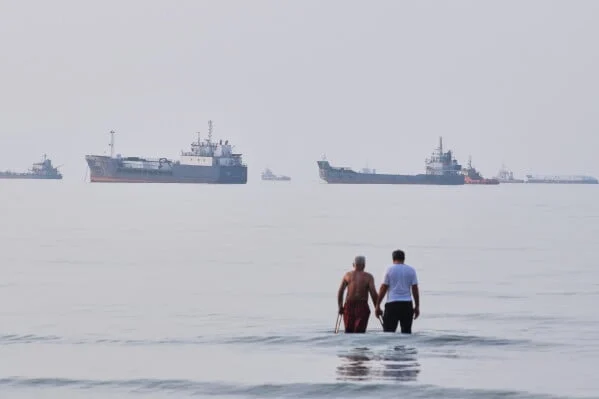
In the immediate aftermath of the conflict’s outbreak, maritime insurance premiums for vessels traversing the Persian Gulf skyrocketed, and several shipping conglomerates temporarily suspended operations in the area. By mid-March, export volumes from the region had plummeted by nearly 30 percent, creating a significant supply-side deficit that forced refineries in Asia and Europe to scramble for alternative sources of crude.
The period between March and July was defined by a frantic race to bypass the Strait of Hormuz. Saudi Arabia, operating as the de facto leader of OPEC, accelerated the utilization of the East-West Pipeline, which transports crude from the oil-rich Eastern Province to the Red Sea coast. Concurrently, the UAE expanded its utilization of the Habshan-Fujairah pipeline, which allows for the export of crude directly into the Gulf of Oman, bypassing the Hormuz corridor entirely. By August, these adaptive measures had begun to stabilize the flow, leading to the current recovery observed in late September.
Data-Driven Insights into the Recovery
According to data compiled by J.P. Morgan and corroborated by reports from Goldman Sachs, the average crude export volume from the Middle East reached 17.5 million barrels per day (bpd) over the ten-day period ending September 30, 2026. This figure is a testament to the agility of regional energy infrastructure.
Further analysis from Goldman Sachs indicates that total oil exports from the Gulf region—inclusive of refined products—reached a staggering 19 million bpd as of September 28. Notably, crude oil accounted for nearly 90 percent of the total export recovery observed in September. The data underscores a critical trend: while the Strait of Hormuz remains a primary artery, its relative importance as a "single point of failure" is being systematically mitigated by producers investing in land-based transit and diversified maritime terminals.
The Geopolitical and Security Landscape
Despite the successful rebound, the operational environment remains fraught with peril. The recovery has occurred in the face of ongoing security threats, including targeted strikes against critical energy infrastructure and the presence of non-state actors affiliated with Iranian interests who have repeatedly harassed commercial shipping.
The incident regarding the U.S. seizure of Iranian oil assets—valued at approximately Rp10 trillion—has further complicated diplomatic efforts. The legal controversy surrounding the application of ancient "spoils of war" statutes has drawn international scrutiny, with several nations expressing concern over the implications of such seizures on maritime law and international trade norms. Analysts suggest that such actions by the United States act as a deterrent to Iranian maritime aggression, yet they also provoke retaliatory posturing, creating a cycle of tension that keeps regional energy security on a knife-edge.
Strategic Implications for Global Markets
The ability of Middle Eastern producers to maintain nearly full export capacity despite active conflict carries profound implications for the global economy. Firstly, it prevents a sustained price shock that would have likely plunged the global economy into a deep recession. Had the Middle East been unable to circumvent the Hormuz blockage, energy analysts project that crude oil prices could have sustained levels exceeding $150 per barrel, leading to hyper-inflationary pressures on energy-importing nations.
Secondly, this event has forced a permanent shift in how multinational energy corporations assess risk. The reliance on the Strait of Hormuz is now viewed as an unsustainable vulnerability. Consequently, there is an accelerated trend toward regional investment in "bypassing infrastructure." Projects that were previously considered cost-prohibitive, such as expanded pipeline capacity across the Arabian Peninsula, are now being fast-tracked to ensure that energy flows remain insulated from localized maritime conflicts.
Official Responses and Future Outlook
While government officials in the Gulf Cooperation Council (GCC) have remained largely tight-lipped regarding the specific mechanics of their current logistics, private statements from energy ministries suggest a commitment to "market stability at all costs." A spokesperson for a leading Gulf energy firm noted, "Our mandate is to ensure that our customers have uninterrupted access to energy. We have invested billions into redundant systems, and those systems are now proving their worth."
International observers, including representatives from the International Energy Agency (IEA), have expressed cautious optimism. While the recovery of export levels is a positive sign for market equilibrium, they emphasize that the security of the region remains fragile. The IEA has called for renewed diplomatic channels to ensure the safety of critical energy infrastructure, warning that the "workarounds" currently in place are not a long-term substitute for a stable, open-sea trade environment.
Looking ahead, the market is expected to remain in a state of "high-alert equilibrium." While production volumes have stabilized, the cost of exporting has increased due to higher security expenditures, specialized insurance premiums, and the operational costs of maintaining alternative transit routes. For the end consumer, this means that while supply shortages have been averted, the era of low-cost energy transport may be coming to a definitive end.
Analysis: The Resilience of the Global Supply Chain
The broader lesson of this crisis is the inherent adaptability of the global oil market. Unlike commodities that rely on specific, immobile infrastructure, the crude oil market has developed a high degree of "liquidity" in its logistics. When one port is threatened, the global shipping fleet—comprised of thousands of Very Large Crude Carriers (VLCCs)—demonstrates an ability to re-route on short notice.
Furthermore, the integration of real-time satellite monitoring and advanced data analytics allows producers to optimize their shipping routes in real-time. The recovery to 98 percent of pre-war levels is not merely a reflection of physical output, but a reflection of a sophisticated, high-tech supply chain that can withstand significant regional shock.
As the conflict continues, the focus of the international community will likely remain on three key pillars: the enforcement of maritime law, the security of inland pipeline networks, and the diplomatic containment of the U.S.-Iran dispute. For now, the global market can breathe a sigh of relief as the vital flow of energy continues to sustain the engines of industry across the globe. However, this rebound serves as a potent reminder that in the 21st century, energy security is inextricably linked to both technical ingenuity and the complex, often volatile, realm of international power politics.
In conclusion, while the immediate danger of an oil supply crisis has been mitigated by the strategic actions of Gulf producers, the underlying geopolitical tensions remain unresolved. The energy sector has successfully navigated the first phase of this conflict, but the long-term sustainability of these logistical workarounds will depend on the continued absence of major, successful attacks on the newly utilized transit corridors. The coming months will be critical, as the world watches whether this fragile recovery can be maintained in an environment that remains, at its core, profoundly unstable.