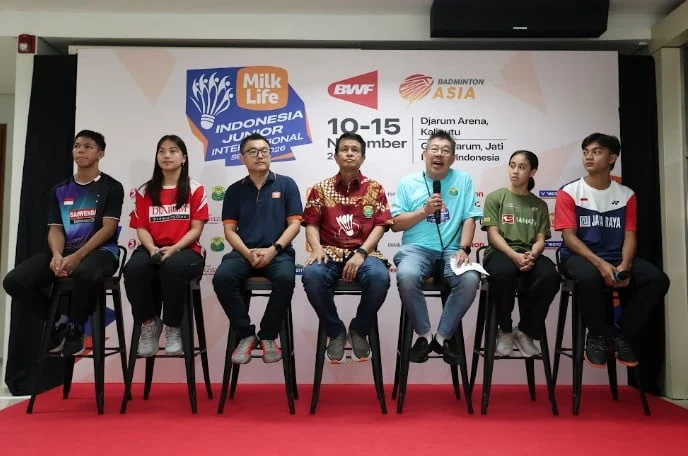
The badminton landscape in Indonesia is set for a monumental resurgence as the MilkLife Indonesia Junior International Series 2026 officially kicks off in Kudus, Central Java. From November 10 to 15, 2026, the GOR Djarum Jati and Djarum Arena will host a massive contingent of 972 young athletes representing eight different nations. This high-stakes tournament marks a significant return to the international circuit, ending a six-year hiatus for this specific series in Indonesia, and serves as a critical developmental bridge for the next generation of badminton stars.
A Global Gathering in the Heart of Java
The tournament’s scope is truly international, drawing talent from Indonesia, Malaysia, the Philippines, Singapore, Chinese Taipei, Austria, France, and the United States. This geographical diversity underscores the event’s prestige and its status as a recognized fixture on the Badminton World Federation (BWF) calendar. The presence of players from outside the Asian badminton powerhouse regions—namely Austria, France, and the United States—signals the growing global reach of youth development initiatives sponsored by organizations like MilkLife in partnership with the Persatuan Bulu Tangkis Seluruh Indonesia (PBSI).
The competition is structured to cater to a wide spectrum of developmental stages, encompassing four distinct age categories: U-13, U-15, U-17, and U-19. By providing a platform for these age brackets, organizers are ensuring a consistent pipeline of talent. The inclusion of both boys’ and girls’ singles and doubles across these categories makes it one of the most comprehensive youth events in the region.
The Six-Year Journey Back to the Court
The decision to host the series after a six-year absence was not made lightly. Following the global disruptions of the early 2020s, international youth badminton saw a period of contraction. The re-establishment of the MilkLife Indonesia Junior International Series represents a deliberate effort by the BWF and national associations to revitalize the grassroots competitive environment.
Bambang Roedyanto, representing Badminton Asia and serving as the event’s chairman, highlighted the strategic importance of this return. "The vacuum of six years was significant for the development of our junior athletes," Roedyanto noted during the opening proceedings. "We are now tasked with re-integrating these young players into the international rhythm. This tournament is the catalyst for that process, providing the necessary pressure and competitive environment that local-only tournaments simply cannot replicate."
The Strategic Value of BWF Ranking Points
For the U-17 and U-19 cohorts, the stakes transcend the immediate podium finishes. The tournament is a BWF-sanctioned International Series event, meaning that performance directly translates into world ranking points. These points are the currency of professional badminton; they determine eligibility for the Asia Junior Championships and the World Junior Championships.
In the current global rankings, consistency is the key differentiator. Athletes who accumulate points through international series events gain higher seeds in larger tournaments, which in turn protects them from facing top-ranked opponents in the early rounds of major championships. By hosting the series in Kudus, Indonesian organizers are effectively providing a "home court" advantage for local talent to earn these crucial points without the financial and logistical burdens of traveling abroad.
Official Perspectives and Developmental Goals
The administrative support for the event is robust, involving a tripartite collaboration between MilkLife, the PBSI, and the BWF. This public-private partnership is often cited as the gold standard for sports development in Indonesia.
Akhmad Khafidz Basri Yusuf, Chairman of the Central Java PBSI, emphasized that the tournament should be viewed primarily as a diagnostic tool for national coaching staff. "We are not merely looking for gold medals," Basri Yusuf explained. "We are looking for evidence of successful training methodologies. When our athletes face players from Europe or other Asian nations, we can clearly identify the gaps in their technical, tactical, and mental conditioning. This data is invaluable for the future of our national training centers."
Furthermore, coaches and scouts from the participating countries are expected to use the week-long event to monitor the progress of their own national prospects, creating a high-pressure environment that mimics the intensity of adult professional tournaments.
Technical Infrastructure and Venue Logistics
The selection of Kudus as the host city is a strategic choice, given the town’s historical association with elite badminton development. The GOR Djarum Jati and Djarum Arena are world-class facilities, specifically designed to handle the logistical demands of a tournament hosting nearly a thousand athletes.
The tournament requires meticulous scheduling, with matches running concurrently across multiple courts to accommodate the volume of participants. The integration of advanced digital scoring systems and professional officiating teams provided by the BWF ensures that the tournament adheres to the highest standards of international competition. This operational excellence is essential for maintaining the tournament’s BWF accreditation and ensuring that the results are recognized globally.
Implications for Indonesian Badminton
Indonesia remains a global heavyweight in badminton, but the sport is becoming increasingly competitive as nations like France and the United States invest more heavily in their youth programs. The rise of new talent from non-traditional hubs suggests that the monopoly of the "Big Five" (Indonesia, China, Malaysia, Japan, and South Korea) is slowly being challenged.
By hosting 972 athletes, the MilkLife Indonesia Junior International Series provides a snapshot of the current state of youth development. Analysts suggest that the results of the 2026 series will likely dictate the composition of the national teams that will represent their respective countries in the 2028 and 2032 Olympic cycles. For the Indonesian athletes, the pressure to perform is significant; however, the long-term benefit of playing in such a diverse field far outweighs the stress of the competition.
Socio-Economic and Cultural Impact
Beyond the court, the tournament brings a surge of activity to Kudus. With participants, coaches, support staff, and family members converging on the city, the local economy experiences a notable uplift in the hospitality and service sectors. More importantly, the event serves as a cultural exchange, fostering international relations through the medium of sport.
The partnership with MilkLife also highlights the role of private enterprise in social development. By funding grassroots sports, corporations like MilkLife are contributing to the broader goal of healthy living and discipline among Indonesian youth. This model is being watched closely by other stakeholders in the sports industry as a sustainable way to fund amateur athletics without relying solely on government subsidies.
Looking Ahead: The Path to the Podium
As the matches progress throughout the week, the focus will shift from the sheer number of participants to the quality of the gameplay. The knockout stages, scheduled for the final days of the tournament, will be the true test of the young athletes’ mettle.
The tournament organizers have confirmed that the final rounds will be broadcast and analyzed, providing a template for future events. If the MilkLife Indonesia Junior International Series 2026 proves to be a success—both in terms of attendance and competitive quality—it is highly likely that the event will become a permanent fixture on the annual international calendar.
For the nearly 1,000 athletes in Kudus, this week represents the culmination of years of training. Whether they return home with a trophy or a loss, the experience of navigating the complexities of international play is a milestone in their professional development. As the sport of badminton continues to evolve, the importance of these junior tournaments cannot be overstated. They are the training grounds where the champions of tomorrow are forged, tested, and eventually, prepared for the global stage.
The tournament concludes on November 15, 2026, with the final medal ceremonies. By then, the badminton community will have a clearer picture of the emerging talents and the nations that have successfully navigated the challenges of the current youth development landscape. As the shuttlecocks fly across the courts in Kudus, one thing is certain: the future of international badminton is being written in real-time, and the competitive landscape is more vibrant and inclusive than it has been in years.