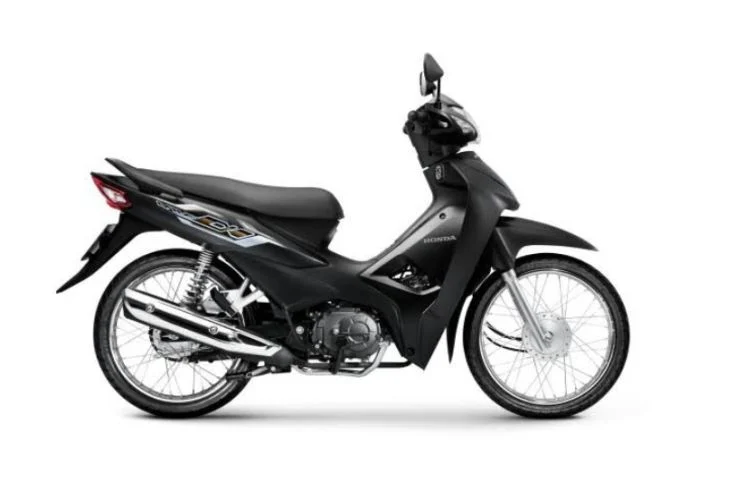
The landscape of small-scale commerce and operational logistics in developing economies has long been anchored by the reliability of underbone motorcycles, commonly known as "bebek." As business owners and freelance contractors seek to optimize their capital allocation, the secondary motorcycle market has emerged as a vital source of cost-effective mobility. With rising interest rates affecting new vehicle credit schemes, the preference for pre-owned units priced under Rp5 million (approximately $320 USD) has seen a marked increase. These vehicles are not merely modes of transport; they are essential capital assets that facilitate the daily distribution of goods, delivery services, and field operations. By prioritizing mechanical durability and low maintenance costs over aesthetic modernity, entrepreneurs can significantly improve their operational cash flow.
The Economic Case for Pre-Owned Utility Vehicles
For a small business, the acquisition of a new motorcycle often involves a multi-year financing agreement. These monthly obligations can place unnecessary strain on liquidity, particularly for startups or independent contractors with variable monthly income. In contrast, the secondary market for underbone motorcycles offers a "pay-as-you-go" advantage. A well-maintained older model often retains its market value, meaning that if a business chooses to upgrade or pivot its logistics strategy later, the depreciation hit on a Rp4 million motorcycle is significantly lower than the immediate loss in equity associated with a brand-new vehicle.
The inherent design of the underbone motorcycle—characterized by a lightweight steel frame and an exposed engine configuration—makes it uniquely suited for heavy-duty use. Unlike modern scooters with complex continuously variable transmissions (CVT) and plastic body panels that are costly to replace, traditional underbone bikes utilize chain drives and manual or semi-automatic transmissions. These components are not only more efficient in power transfer but are also easier for local mechanics to service, ensuring that downtime is kept to a minimum.
Market Analysis: Reliability Under $350
The following five models have been identified as the industry standard for cost-per-mile efficiency in the secondary market. These selections are based on long-term historical performance data regarding engine longevity, part availability, and total cost of ownership.
1. Honda Supra X 125 (2005–2010): The Industry Workhorse
The Honda Supra X 125 remains the benchmark for reliability in the Indonesian and broader Southeast Asian markets. Equipped with a 124.8cc SOHC engine, this model generates 10.1 PS of power, providing sufficient torque for navigating steep inclines, even when carrying a modest payload. Market data suggests that these units consistently achieve fuel efficiency figures of 45 to 50 kilometers per liter, a critical metric for businesses operating on thin margins. With an average market price between Rp3.5 million and Rp5 million, the Supra X 125 represents the most "turn-key" solution for immediate business deployment.
2. Honda Supra Fit (2004–2007): Precision and Economy
For businesses operating within extremely tight budgetary constraints, the Supra Fit serves as an entry-level professional tool. Powered by a 100cc engine, it is renowned for its extreme fuel efficiency, often exceeding 50 kilometers per liter in urban stop-and-go traffic. While it lacks the raw power of the 125cc variants, its simplicity is its greatest strength. Components are widely available in both original equipment manufacturer (OEM) and aftermarket formats, meaning that even a full top-end rebuild remains affordable. These units can often be found for as low as Rp2 million to Rp4.5 million.
3. Yamaha Vega R (2005–2010): Responsiveness for Logistics
The Yamaha Vega R has garnered a loyal following among delivery personnel due to its punchy low-end torque. The engine character is tuned to provide rapid acceleration, which is highly advantageous when navigating congested urban environments while loaded with goods. From a maintenance perspective, the Vega R benefits from parts compatibility with other Yamaha models of the same era, simplifying inventory management for business owners maintaining a small fleet of these bikes. It currently trades in the Rp3 million to Rp5 million range.
4. Suzuki Smash (2007–2011): The Structural Titan
Suzuki’s reputation for engine longevity is best exemplified by the Smash. What sets this model apart is its chassis rigidity; the frame is engineered to withstand higher-than-average structural stress, making it a preferred choice for those transporting heavy, bulky items. Despite its 110cc engine capacity, the bike is known for being "tahan banting" (virtually indestructible). With prices ranging from Rp4.7 million to Rp4.8 million, it represents a premium tier within the sub-5-million market, offering a superior return on investment through reduced frequency of major mechanical failures.
5. Yamaha Jupiter Z (2004–2010): The Legendary Performer
The Jupiter Z occupies a unique space as a performance-oriented utility bike. Its 110cc to 115cc carbureted engine is considered a legend in local motor culture for its durability and ease of tuning. Offering a balance between fuel efficiency (40–45 km/l) and reliable power delivery, it is well-suited for businesses that require speed and agility. Priced between Rp2.5 million and Rp4.2 million, it provides a balance of performance that few other bikes in this price bracket can replicate.
Technical Implications and Maintenance Strategy
The decision to purchase a used motorcycle requires a shift in mindset from "consumer" to "fleet manager." The primary risk in the secondary market is the presence of latent mechanical issues. To mitigate these risks, industry experts recommend a standardized inspection protocol.
- Document Verification: The first step is the reconciliation of physical vehicle identification numbers (VIN) on the frame and engine with the official registration documents (BPKB and STNK). Discrepancies here are a red flag for stolen property or legal entanglements.
- Engine Health: A cold-start test is essential. Excessive blue or white smoke from the exhaust indicates worn piston rings or valve seals, which could lead to a significant repair bill shortly after purchase.
- Transmission and Clutch: In underbone bikes, the semi-automatic clutch system is a common point of wear. A "slipping" clutch—where engine RPMs rise without a corresponding increase in speed—indicates that a clutch plate replacement is imminent.
- Suspension and Frame Alignment: A quick test ride should focus on the stability of the steering stem and the effectiveness of the rear swingarm. Any vibration or "wandering" at speeds above 40 km/h suggests bent components or worn bushings.
The Broader Impact on Small Business Sustainability
The prevalence of these older models in the workforce has a ripple effect on the local economy. By keeping these motorcycles in circulation, local mechanics, spare parts retailers, and fuel stations maintain a steady stream of revenue. Furthermore, the accessibility of these vehicles empowers individuals from diverse socioeconomic backgrounds to enter the gig economy or start their own delivery businesses.
The transition toward electric vehicles (EVs) has dominated the discourse in urban mobility; however, for the vast majority of small-scale operators, the initial cost barrier of EVs remains insurmountable. Until battery-swapping infrastructure and affordable electric alternatives become as ubiquitous as the internal combustion underbone, these legendary machines will continue to serve as the backbone of local logistics.
Conclusion: Strategic Asset Management
The selection of a motorcycle for business use should be dictated by the specific requirements of the operation—whether that is fuel efficiency for long-distance deliveries or chassis durability for heavy loads. By opting for a high-quality, pre-owned underbone motorcycle, entrepreneurs can allocate their limited capital to other critical areas of their business, such as inventory or marketing, rather than locking it into a depreciating asset with high-interest debt.
Ultimately, the longevity of these models is a testament to the engineering of the early 2000s. With diligent maintenance and a clear understanding of the vehicle’s mechanical history, a motorcycle purchased for less than Rp5 million can provide years of reliable service. As the market for used vehicles continues to evolve, those who treat their operational assets with professional care will undoubtedly find themselves at a competitive advantage, turning a modest, budget-friendly bike into a catalyst for long-term business growth.