Depok stands today as a bustling, densely populated municipality within West Java Province, functioning as a vital buffer city for Indonesia’s capital, Jakarta. However, beneath its modern urban landscape and rapid developmental growth lies a fascinating and largely forgotten chapter of history. Long before it was officially designated as a sub-district within Bogor Regency in 1999, and decades prior to the proclamation of Indonesian independence, Depok operated as a quasi-independent state—complete with its own constitution, administrative governance, and a democratically elected president.
This unique historical anomaly traces its roots back to the late 17th century during the height of the Dutch East India Company (VOC) dominance in the archipelago. The evolution of Depok from a desolate wilderness into a private colonial estate, and subsequently into a self-governing republic, provides a compelling lens through which to examine the complexities of colonial-era land management, social engineering, and early democratic experimentation in Southeast Asia.
The Acquisition of the Wilderness: Cornelis Chastelein and the Birth of Depok
The history of modern Depok began in the closing decades of the 17th century, specifically in 1696, when a wealthy Dutch merchant and high-ranking VOC official named Cornelis Chastelein purchased a vast expanse of land spanning approximately 12.44 square kilometers. The acquisition cost Chastelein 2,400 rijksdaalders—a substantial sum at the time. Crucially, this land was acquired as private property (particuliere landerijen), meaning it operated largely outside the direct administrative jurisdiction of the Dutch colonial government in Batavia.
At the time of purchase, the territory that would become Depok was largely dense, untamed jungle. Recognizing the agricultural potential of the region, Chastelein set out to transform the wilderness into productive plantations. To accomplish this massive logistical feat, he relied on a sizable labor force consisting of enslaved people brought from various regions across the archipelago, including Bali, Sulawesi, Timor, and the Moluccas, as well as parts of mainland Southeast Asia.
Chastelein’s laborers systematically cleared the forests, establishing agricultural estates that cultivated crops such as coffee, indigo, and fruit orchards. The administrative boundaries of Chastelein’s private estate were remarkably extensive, stretching far beyond the borders of present-day Depok municipality. Historical records indicate that the estate’s influence and land claims encompassed areas that today form parts of South Jakarta, including Pasar Minggu, all the way up to central Jakarta regions near Gambir. The first inhabitants of Depok were thus these enslaved laborers, who lived and worked under the direct authority of the Dutch merchant.
From Estate to Republic: The Legacy of Cornelis Chastelein
Cornelis Chastelein was known as a devout Christian with a complex ideological stance regarding the institution of slavery. Despite participating in the colonial economic structures of his era, Chastelein held progressive religious views that ultimately shaped the destiny of the land and its people. Prior to his death on June 28, 1714, Chastelein drafted a comprehensive and radical last will and testament.

In his final testament, Chastelein granted absolute freedom to all his enslaved workers upon his passing. Furthermore, he bequeathed his vast landholdings, residential houses, livestock, and agricultural equipment directly to them. To prevent internal conflict, power struggles, and the fragmentation of the community among the newly freed individuals, Chastelein appointed a trusted manager named Jarong van Bali to oversee the estate and maintain social order during the transition.
As decades passed, the community grew, and the descendants of Chastelein’s freed laborers—often referred to historically as the Mardeka Depok or the "Depok Dutch" due to their unique cultural and religious assimilation—recognized the need for a formal administrative structure. Fearing potential power vacuums following the tenure of appointed managers, the community leadership decided to adopt a republican democratic model of governance.
The Presidency of Depok: Structure and Chronology (1913–1952)
In 1913, the community formalized its governance by establishing Het Gemeente Bestuur van Het Particuliere Land Depok (The Municipal Administration of the Private Land of Depok). This effectively turned the private estate into a self-governing administrative entity colloquially recognized by historians as a miniature republic.
The state was headed by a president who served simultaneously as the head of state and head of government. Uniquely for the early 20th century, the president was chosen through a democratic election process by the resident citizens of Depok. The political structure deliberately omitted the position of a vice president; instead, executive duties were supported by an appointed secretary. The legal and constitutional framework of this micro-state was formally drafted with the assistance of an attorney based in Batavia.
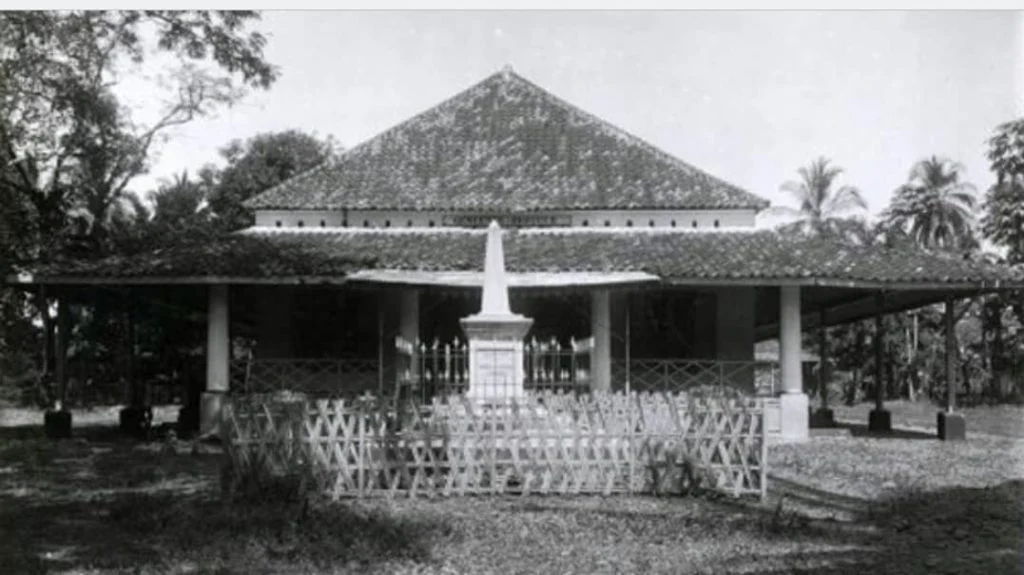
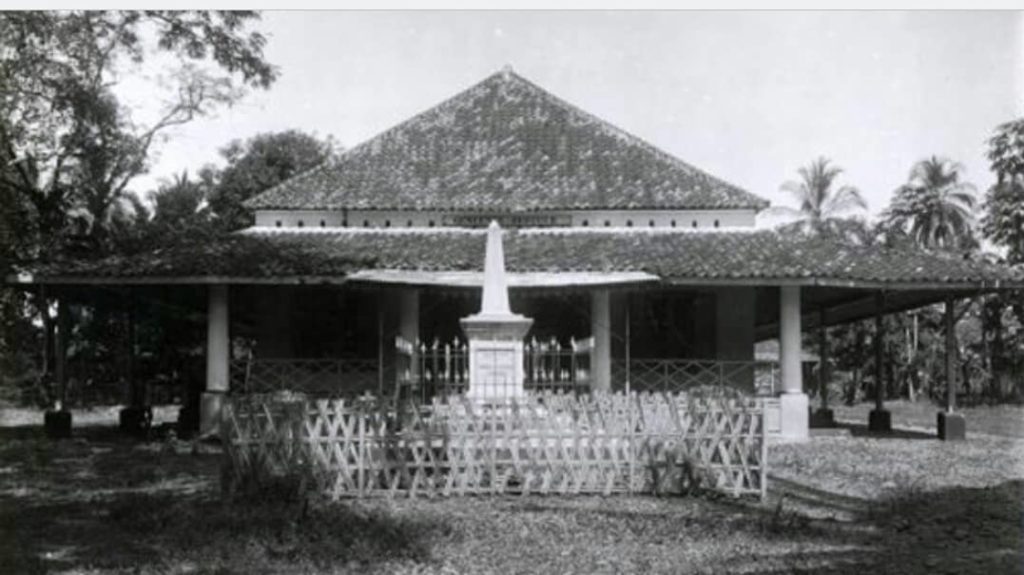
The administrative heart of this autonomous territory was established at what is now known as Kilometer 0 of Depok, prominently marked by the historic Depok Monument. Adjacent to this administrative center stood the primary government building, an architectural landmark that has survived through the decades and currently functions as the Harapan Hospital.
Historical archives document a succession of four presidents who led the autonomous administration of Depok over a span of nearly four decades, each serving a strict three-year term limit:
- Gerrit Jonathans (Took office in 1913 as the inaugural president)
- Martinus Laurens (Assumed office in 1921)
- Leonardus Leander (Assumed office in 1930)
- Johannes Matjis Jonathans (Assumed office in 1952 as the final president)
Despite the fascinating nature of this governance model, detailed day-to-day administrative records and legislative archives from each presidential term remain exceptionally scarce, leaving historians to piece together the socio-political dynamics primarily through colonial-era land deeds, legal documents, and community oral histories.
Dissolution and Integration into the Indonesian Republic
The unique status of Depok as a self-governing entity came to an end following the independence of the Republic of Indonesia in 1945. As the newly formed Indonesian government consolidated its territorial sovereignty and sought to abolish the colonial-era particuliere landerijen system—which granted private individuals quasi-sovereign control over land and populations—the autonomous administration of Depok became legally and politically untenable.
The transition of power culminated in 1952. The final president of Depok, Johannes Matjis Jonathans, formally relinquished the private land administration to the government of the Republic of Indonesia via an official deed of transfer. This legal act dismantled the municipal apparatus of Het Gemeente Bestuur, integrating the territory fully into the administrative structure of the West Java region.
For decades following the transfer, Depok functioned primarily as an administrative sub-district within Bogor Regency. It was not until April 27, 1999, that Depok officially attained autonomous municipal status (kotamadya), separating administratively from Bogor Regency to manage its own rapid urbanization and civic development.
Historical Analysis and Broader Implications
The history of Depok’s autonomous period offers profound insights into the complex socioeconomic layers of the colonial Dutch East Indies. Historians and sociologists note that the creation of the Mardeka Depok community represents a rare instance of social engineering where enslaved individuals were not only emancipated ahead of their time but were also endowed with property rights and self-determination capabilities.
However, the legacy of this era is also marked by social stratification. The community developed a distinct cultural identity, heavily influenced by Protestant Christianity and European social norms introduced by Chastelein, which occasionally set them apart from the surrounding indigenous Sundanese and Betawi populations. This insular identity persisted well into the 20th century before gradually dissolving into the diverse multicultural fabric of modern Jabodetabek (Jakarta-Bogor-Depok-Tangerang-Bekasi) metropolitan expansion.
While contemporary residents of Depok largely recognize their city through the prism of rapid suburbanization, university campuses like the University of Indonesia, and commuter transit lines, the city’s origins as a 17th-century private estate and a 20th-century presidential republic remain a remarkable testament to the unpredictable trajectories of Indonesian history.