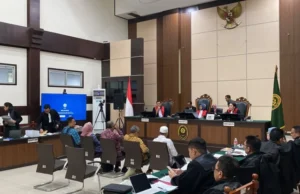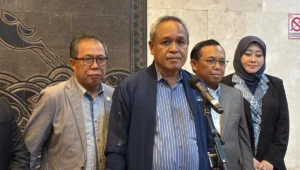
The Office of the Attorney General of the Republic of Indonesia has made a landmark breakthrough in its ongoing investigation into alleged corruption and money laundering within the nickel mining sector in Southeast Sulawesi, seizing IDR 55.8 billion in cash alongside 37.8 kilograms of gold bullion. The massive seizure represents a critical escalation in the state’s efforts to recover state losses and dismantle illicit financial networks tied to natural resource exploitation spanning over a decade, specifically focusing on the period between 2013 and 2025.
The operation, led by the Junior Attorney General for Special Crimes, culminated in the formal designation of PT BSJ Tbk as a corporate suspect, followed closely by the naming of Arif Kurniawan—widely recognized within industrial and commercial circles as the "Nickel King"—as an individual suspect in the case. Kurniawan, functioning as the ultimate beneficial owner of the company, now faces severe legal repercussions as investigators trace the extensive web of financial transactions allegedly designed to conceal illicit gains derived from un-procedural and environmentally damaging nickel extraction activities.
Comprehensive Investigation and Escalation of Charges
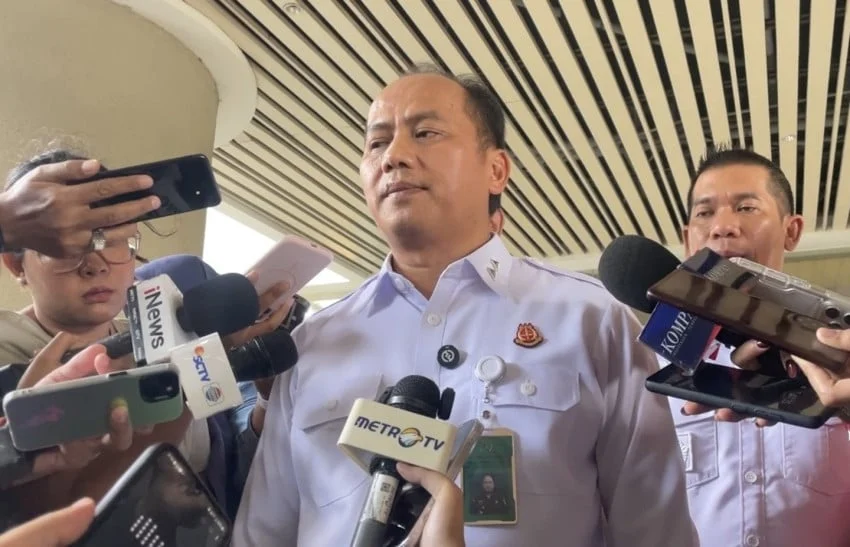
Announcing the developments during an official press briefing, the Head of the Legal Information Center at the Attorney General’s Office, Anang Supriatna, detailed the meticulous investigative measures undertaken by federal prosecutors. According to Supriatna, the determination of suspect status for both the corporation and its primary benefactor was not made lightly, but followed a thorough accumulation of incontrovertible evidentiary material gathered through deep, professional, and accountable investigative protocols.
"The investigative team within the Junior Attorney General for Special Crimes has successfully secured sufficient preliminary evidence through a series of thorough, professional, and accountable investigative actions, while consistently upholding the principles of prudence and the presumption of innocence based on legally acquired evidence," Supriatna stated during the media briefing.
The scope of the investigation spans a twelve-year operational window, covering 2013 through 2025, during which Southeast Sulawesi experienced a massive boom in nickel production driven by surging global demand for electric vehicle battery components and stainless steel manufacturing. Prosecutors allege that during this period, systemic circumvention of regulatory frameworks, illegal mining operations outside designated concession boundaries, and the falsification of operational documents facilitated massive capital accumulation, much of which was subsequently funneled through complex corporate structures to obscure its origins.
Chronology and Evidentiary Milestones
The current crackdown is the result of a protracted intelligence-gathering and investigative process conducted by specialized financial and mining crime units within the Attorney General’s Office. Although the public revelation of the seizures and high-profile suspect designations occurred recently, the investigative trajectory has evolved through several critical phases:
- Initial Intelligence and Sectoral Audit (2021–2023): Federal authorities, prompted by reports from environmental watchdogs and financial intelligence units regarding suspicious transactions in the mining sector, began scrutinizing nickel extraction permits, royalty payments, and export documentation in Southeast Sulawesi.
- Discovery of Corporate Irregularities (2024): Investigators identified severe anomalies in the operational practices of PT BSJ Tbk, noting discrepancies between reported production volumes, tax remittances, and environmental compliance records. Subsequent financial audits uncovered patterns characteristic of money laundering, including layered transactions and the use of shell companies to channel funds.
- Corporate Suspect Designation and Asset Tracing (Early 2025): The Attorney General’s Office formally named PT BSJ Tbk as a corporate suspect in the money laundering scheme. This designation paved the way for sweeping asset-tracing operations across multiple jurisdictions, leading to the identification of hidden bank accounts, safety deposit boxes, and physical assets.
- Identification of the Beneficial Owner (Mid-to-Late 2025): Deep forensic accounting revealed that Arif Kurniawan operated as the primary beneficial owner behind the corporate facade of PT BSJ Tbk. Intelligence reports subsequently tracked Kurniawan’s movements beyond national borders, prompting proactive legal measures, including coordination with international law enforcement and the preparation of formal travel restriction notices.
- Major Asset Seizure and Press Briefing (November 2026): Investigators executed simultaneous search and seizure operations, recovering IDR 55.8 billion in cash and 37.8 kilograms of gold bullion. The Attorney General’s Office officially announced these milestones, underscoring the severity of the ongoing prosecution.
To build an airtight case against the suspects, the prosecution team amassed a staggering volume of documentary and testimonial evidence. Supriatna revealed that investigators have recorded formal statements from approximately 60 witnesses, ranging from corporate insiders and former employees to regional regulatory officials and local community stakeholders.
Furthermore, the prosecution enlisted specialized expert witnesses, including forensic accountants tasked with calculating state financial losses and experts in anti-money laundering legislation to elucidate the mechanics of the alleged financial crimes. The evidentiary corpus further comprises approximately 4,000 distinct physical documents—spanning corporate ledgers, banking records, land titles, and export licenses—alongside 71 electronic evidence items, all of which have secured formal confiscation approval from the relevant district court.
International Dimensions and Border Enforcement
Complicating the pursuit of justice, recent intelligence assessments indicated that Arif Kurniawan was detected operating outside Indonesian jurisdiction as the legal net began to close. In response to the suspect’s overseas presence, the Attorney General’s Office has expedited administrative procedures to secure international cooperation and enforce strict travel prohibitions.
While extradition treaties and international police cooperation mechanisms are evaluated, Indonesian authorities have emphasized that the state remains fully committed to prosecuting financial crimes regardless of geographic obstacles. The designation of Kurniawan as a fugitive or a globally tracked individual underscores the government’s zero-tolerance stance toward white-collar criminals who attempt to evade domestic accountability by fleeing abroad.
Legal analysts have noted that the use of red notices through Interpol and direct bilateral diplomatic channels will likely play a crucial role in compelling the suspect’s return to face trial in Jakarta. In the interim, the physical and financial assets already seized within the country serve as a substantial buffer against the dissipation of proceeds derived from the alleged criminal enterprise.
Broader Economic and Industrial Implications
The legal action against PT BSJ Tbk and Arif Kurniawan carries profound implications for Indonesia’s burgeoning nickel industry. As the world’s leading producer of nickel, Indonesia has positioned itself at the epicenter of the global energy transition, attracting tens of billions of dollars in foreign and domestic investment for downstream processing facilities, smelters, and electric vehicle supply chains.
However, the rapid expansion of the sector has frequently outpaced regulatory oversight, leading to severe environmental degradation, social conflicts with indigenous populations, and widespread financial leakages through tax evasion, transfer pricing, and illegal mining. Industry observers and governance watchdogs have long argued that unchecked corruption within the mining licensing regime undermines the macroeconomic benefits that should rightfully accrue to the state.
The aggressive intervention by the Attorney General’s Office is viewed by economic analysts as a vital corrective measure designed to restore market integrity and investor confidence. By demonstrating that even prominent figures—such as the self-styled "Nickel King"—are not immune to the rule of law, the state sends a powerful signal to corporate actors operating within the natural resource sector.
The recovery of IDR 55.8 billion in cash and nearly 38 kilograms of gold directly contributes to the replenishment of state coffers, mitigating the fiscal damage inflicted by illicit practices. Moreover, the focus on money laundering charges enables prosecutors to dismantle the financial infrastructure that sustains illegal mining operations, making it significantly more difficult for perpetrators to launder and enjoy the fruits of their unlawful activities.
Outlook and Future Legal Proceedings
As the investigation progresses into its next phase, the Attorney General’s Office is expected to scrutinize other potential accomplices, including regulatory officials who may have facilitated the issuance of dubious mining concessions or turned a blind eye to environmental and financial non-compliance during the 2013–2025 period. The comprehensive nature of the witness testimonies and the sheer volume of confiscated documents suggest that additional suspects could be named as forensic audits of the seized electronic evidence yield further insights into the network’s operations.
The trial of PT BSJ Tbk and the eventual prosecution of Arif Kurniawan are anticipated to serve as a bellwether for future governance in Indonesia’s extractive industries. Legal experts emphasize that successful prosecution will depend on the prosecution’s ability to maintain the integrity of the chain of custody for the extensive digital and documentary evidence, as well as navigating the complexities of international law enforcement to secure the primary defendant’s presence in a domestic courtroom.
For now, the Attorney General’s Office remains steadfast in its mandate to protect state assets and ensure that the wealth generated from Indonesia’s natural resources serves the public interest rather than the illicit enrichment of a privileged few.