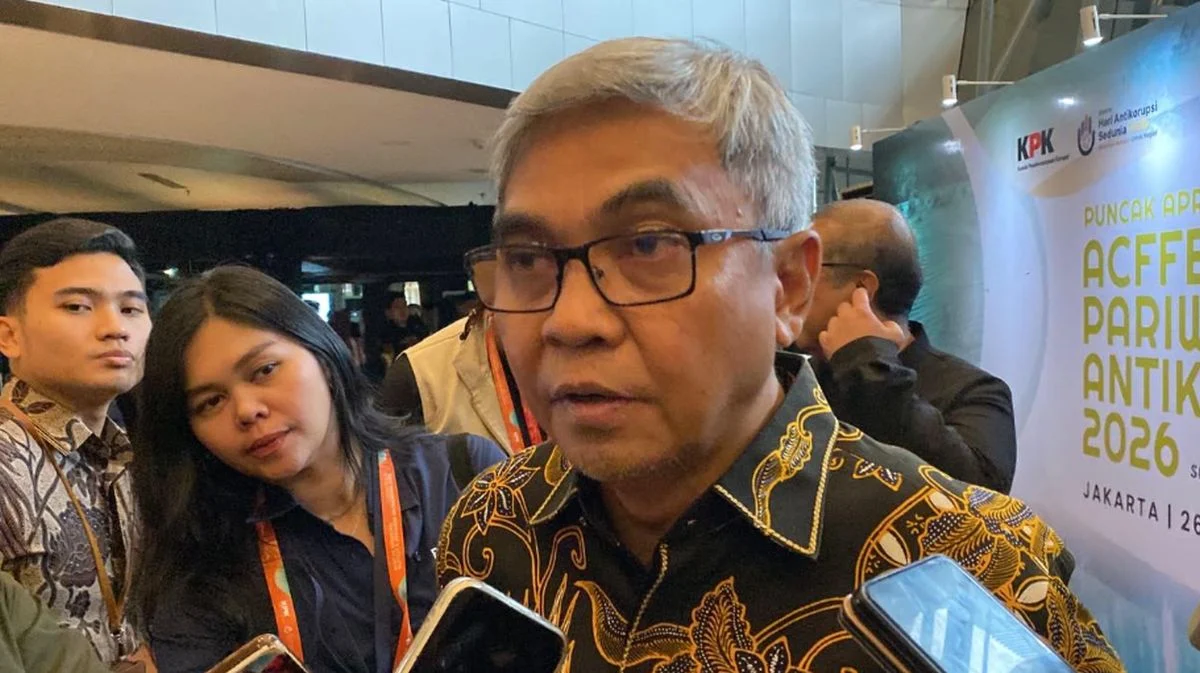
The Chairman of the Corruption Eradication Commission (KPK), Setyo Budiyanto, recently articulated a compelling perspective on the psychology of white-collar criminals during the Anti-Corruption Film Festival (ACFFEST) and the 2026 Anti-Corruption Advertising Festival held at the Taman Ismail Marzuki (TIM) complex in Jakarta. Addressing an audience of filmmakers, activists, and public figures on Thursday, November 26, 2026, Budiyanto underscored that despite the sophisticated nature of modern financial crimes, the perpetrators remain fundamentally vulnerable to the mechanisms of surveillance and public scrutiny. He distilled this vulnerability into three distinct entities: closed-circuit television (CCTV) cameras, the lenses of investigative journalists, and the ubiquitous presence of content creators.
The Psychology of Concealment
Budiyanto’s observations shed light on the clandestine nature of corruption in Indonesia. According to the KPK chairman, the inherent fear of being documented is the primary deterrent for individuals engaged in illicit financial activities. Corruption, by its very definition, relies on the exploitation of shadows—transactions conducted in private offices, backroom meetings, and encrypted digital channels.
"Corruption is rarely a public affair," Budiyanto remarked during his address. "Perpetrators go to great lengths to ensure their actions occur in ‘dark spaces’ where oversight is absent. They are hyper-aware of their surroundings, constantly scanning for the presence of surveillance equipment. If they can avoid the gaze of a CCTV camera, they will."
This psychological aversion to being captured on film serves as a critical entry point for anti-corruption strategies. The expansion of surveillance technology in public offices and corporate boardrooms has inadvertently created a "panopticon effect," where the mere possibility of being recorded forces potential offenders to reconsider their actions.
The Role of Media and Digital Vigilance
Beyond the mechanical eye of security cameras, Budiyanto highlighted the evolving role of the Fourth Estate and the burgeoning force of digital content creators. The traditional investigative journalist has long been a source of anxiety for corrupt officials, as their reports often serve as the precursor to formal investigations by the KPK.
However, the inclusion of "content creators" in this list of deterrents reflects a significant shift in the landscape of public accountability. With the proliferation of smartphones and social media platforms, ordinary citizens have become decentralized watchdogs. The ability of a content creator to record, document, and disseminate evidence of misconduct in real-time has fundamentally altered the risk-reward calculus for corrupt actors. What was once a closed-door deal can now be exposed to a global audience within minutes, stripping the perpetrator of the anonymity they rely upon.
Chronology and Context: ACFFEST 2026
The Anti-Corruption Film Festival (ACFFEST) and the Pariwara Antikorupsi 2026 represent the KPK’s strategic effort to leverage media as a tool for cultural change. Since its inception, ACFFEST has aimed to move beyond the punitive aspects of law enforcement to focus on preventive education through the medium of film. By engaging creators, the KPK seeks to foster a culture of integrity and transparency, effectively using the very tools that corruptors fear to highlight the consequences of graft.
The 2026 iteration of the event serves as a platform to discuss the intersection of technology and integrity. As Indonesia continues its digital transformation, the KPK has recognized that law enforcement alone is insufficient to curb corruption. The event emphasizes that the documentation of truth—whether through professional journalism or digital advocacy—is a form of civic participation that directly challenges the impunity enjoyed by the corrupt.
Supporting Data and Trends in Corruption
Data from the KPK’s recent performance reports indicates that while the number of arrests remains high, the complexity of cases is increasing. The shift toward digital financial trails has necessitated a change in investigative techniques. Despite this, the "low-tech" fear of being caught on camera remains a recurring theme in case files.
According to Transparency International’s Corruption Perceptions Index (CPI), Indonesia has faced fluctuating results in its efforts to combat graft. The KPK’s focus on the fear of surveillance is supported by studies on white-collar crime, which suggest that the perception of being watched is one of the most effective psychological deterrents against illegal activities. When individuals believe that the probability of detection is high, the motivation to engage in bribery or embezzlement decreases significantly.
The Institutional Stance: A Multi-Pronged Approach
Setyo Budiyanto’s remarks are not merely anecdotal; they reflect a broader institutional strategy. The KPK is increasingly integrating digital forensics and public-sourced information into its investigative framework. By acknowledging the role of journalists and content creators, the Chairman is signaling a shift toward a more inclusive, society-wide approach to oversight.
Legal experts and anti-corruption activists have largely welcomed this stance. By validating the role of the public and the media, the KPK is encouraging a climate where citizens feel empowered to record and report suspicious behavior. However, this also raises questions regarding the security of whistleblowers and the legal protections afforded to those who document corruption. The KPK has indicated that it is committed to working with the press to ensure that the information gathered by these "lenses" can be effectively translated into actionable evidence in court.
The Impact of Modern Surveillance on Public Policy
The fear of the "camera" has broader implications for governance. As government agencies move toward digitalization and e-procurement systems, the physical act of "under-the-table" transactions is becoming increasingly difficult to execute. The transition to digital platforms leaves an immutable audit trail, a digital equivalent to the CCTV camera that Budiyanto alluded to.
Furthermore, the rise of "citizen journalism" has placed an unprecedented level of scrutiny on public officials. Every public interaction is now subject to potential recording, forcing officials to maintain a higher standard of conduct even outside of formal settings. This constant visibility is the modern deterrent that the KPK hopes to foster to reduce the prevalence of corrupt practices across the archipelago.
Analytical Implications
The assertion that corruption is driven by a fear of exposure underscores the importance of transparency in public institutions. If the corrupt fear the camera, then the antidote to corruption is the light of public scrutiny. This analysis suggests three primary areas for future policy development:
- Technological Integration: Expanding the deployment of high-definition, tamper-proof surveillance in all government procurement and administrative offices.
- Protection of the "Watchdogs": Strengthening legal safeguards for journalists and citizens who document corruption to ensure they are not silenced by intimidation or strategic lawsuits against public participation (SLAPP).
- Digital Literacy and Advocacy: Continuing to support initiatives like ACFFEST, which empower the public to use digital media to hold power to account.
Conclusion: A New Era of Accountability
As Setyo Budiyanto concluded at the Taman Ismail Marzuki event, the fight against corruption is not only a matter of legal battles in courtrooms but a battle for the public consciousness. By identifying the specific tools that disrupt the comfort of the corrupt—the CCTV, the journalist, and the content creator—the KPK is effectively defining the front lines of the modern anti-corruption movement.
The message is clear: in an era of universal connectivity and digital documentation, the shadows in which corruption thrives are shrinking. The challenge for the KPK and the Indonesian public remains to ensure that these "eyes" are not only watching but are protected and empowered to see the process of reform through to its conclusion. As the digital landscape continues to evolve, the tools of accountability will only become more sophisticated, leaving those who choose to abuse their power with fewer places left to hide. The convergence of law enforcement and public vigilance, facilitated by the very technology that captures the truth, marks a significant development in Indonesia’s ongoing journey toward a transparent and accountable government.