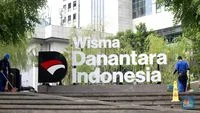
President Prabowo Subianto has lauded the establishment and rapid growth of Danantara, Indonesia’s inaugural sovereign wealth fund, as a monumental national achievement destined to be etched in history. With reported assets exceeding US$1 trillion, Danantara represents a paradigm shift in the management of state wealth, consolidating fragmented national assets into a powerful financial instrument designed to secure Indonesia’s economic future and foster intergenerational prosperity. The President underscored the fund’s transformative impact during a Cabinet Plenary Session held at the State Palace in Central Jakarta on Monday, July 20, 2026, emphasizing its role as a strategic reserve and a vital energy source for generations to come. "One of our achievements that will be remembered by history is that for the first time, the Indonesian nation has successfully built a sovereign wealth fund that we call Danantara," Prabowo declared. He elaborated that Danantara, an acronym for "Daya Anagata Nusantara," translates to "Future Energy of the Archipelago," symbolizing its crucial role as a foundational reserve and a driving force for the nation’s descendants. "This will be a reserve, the future energy for our children, grandchildren, and great-grandchildren. Alhamdulillah, we now have Danantara Indonesia, with an asset value exceeding US$1,000 billion," he affirmed, highlighting the fund’s impressive scale.
The Genesis of Danantara: A New Era for State Assets
The emergence of Danantara marks a pivotal moment in Indonesia’s economic governance, addressing long-standing challenges in the management of its vast state-owned assets. A sovereign wealth fund (SWF) is typically a state-owned investment fund comprised of money derived from a country’s surplus revenues, often from natural resources, or simply from state assets. Its primary purpose is to invest these funds globally and domestically for the long-term benefit of a country’s economy and its citizens. Globally, SWFs like Norway’s Government Pension Fund Global (GPFG), Singapore’s Temasek Holdings and GIC, or the Abu Dhabi Investment Authority (ADIA) have demonstrated remarkable success in diversifying national economies, generating substantial returns, and providing fiscal stability. For Indonesia, a nation endowed with abundant natural resources and a rapidly growing economy, the establishment of a robust SWF has been a subject of discussion for decades. Previous attempts and initiatives, such as the Indonesia Investment Authority (INA), laid important groundwork, primarily focusing on attracting co-investment into specific sectors. However, President Prabowo’s declaration emphasizes Danantara as the first comprehensive and successfully implemented sovereign wealth fund that truly consolidates and manages the nation’s diverse wealth on an unprecedented scale, thus fulfilling a long-held national aspiration.
The need for such a fund stemmed from a recognition that a significant portion of Indonesia’s national wealth, particularly its extensive network of State-Owned Enterprises (SOEs), was underperforming, fragmented, and lacked unified strategic oversight. These SOEs, often referred to as BUMNs (Badan Usaha Milik Negara), have historically played a crucial role in Indonesia’s economic development, spanning critical sectors from energy and mining to infrastructure, finance, and telecommunications. However, their sheer number, diverse mandates, and often overlapping operations led to inefficiencies, governance challenges, and a sub-optimal return on state assets. The vision behind Danantara was to create a centralized, professionally managed entity capable of streamlining these assets, enhancing their value, and directing investments towards strategic national priorities while also generating sustainable returns for future generations. Its formation in February 2025 signaled a decisive step towards achieving this ambitious goal.
Unlocking Hidden Wealth: The US$1 Trillion Revelation
President Prabowo’s remarks shed light on the startling realization regarding the true extent of Indonesia’s state wealth, much of which had previously remained "unmonitored and not understood." He recounted his own surprise during his tenure in President Joko Widodo’s cabinet, where he admitted to not fully grasping the figures related to state assets. His astonishment was palpable when he received reports indicating that the total number of BUMNs reached an staggering 1,077 entities, far exceeding his initial estimation of merely 300-350 companies. This discrepancy highlighted a complex web of parent companies, subsidiaries, sub-subsidiaries, and even further generational extensions, making comprehensive oversight and strategic management exceedingly difficult.
The revelation of Danantara’s asset value exceeding US$1 trillion places it among the largest sovereign wealth funds globally. To put this into perspective, the largest SWF, Norway’s GPFG, manages assets well over US$1.5 trillion, while others like China Investment Corporation (CIC) and ADIA also manage over US$800 billion. Indonesia’s entry into this exclusive club of trillion-dollar funds signifies a dramatic increase in its financial clout and strategic capabilities on the global stage. This immense wealth, now consolidated under Danantara, is not merely a number; it represents the collective potential of Indonesia’s natural resources, strategic industries, and future economic growth, meticulously identified and brought under a unified management framework for the first time. The meticulous process of uncovering and valuing these previously disparate assets required extensive auditing, financial restructuring, and a deep dive into the labyrinthine structures of Indonesia’s state-owned corporate empire.
Transforming the SOE Landscape: Danantara’s Consolidation Drive
A cornerstone of Danantara’s mandate and its most immediate impact has been the radical transformation of Indonesia’s State-Owned Enterprise landscape. The sheer number of SOEs, at over 1,000, presented a formidable challenge, often leading to market distortions, redundant investments, and a drag on overall economic efficiency. Many SOEs operated in similar sectors, competing with each other and often lacking clear strategic direction or robust corporate governance. This fragmentation hindered their ability to compete effectively, innovate, and contribute optimally to national development goals.
Danantara’s leadership has wasted no time in tackling this monumental task. In its initial 18 months of operation, the fund has successfully closed, consolidated, and merged an impressive 250 BUMNs. This rapid pace of reform underscores a strong political will and an efficient operational strategy. The ambitious target set by Danantara is to further streamline the number of SOEs to a maximum of 350 entities by the end of 2026. This aggressive consolidation strategy is expected to yield substantial benefits, including:
- Enhanced Efficiency and Competitiveness: By eliminating redundancies and fostering synergies, the remaining SOEs can operate more efficiently, reduce costs, and become more competitive both domestically and internationally.
- Improved Governance and Transparency: A smaller, more focused portfolio allows for stricter oversight, better accountability, and the implementation of best-practice corporate governance standards, reducing risks of corruption and mismanagement.
- Unlocking Value: Consolidated entities can achieve economies of scale, attract larger investments, and better leverage their assets, thereby unlocking significant latent value that was previously trapped in fragmented structures.
- Strategic Focus: A streamlined SOE sector can align more closely with national development priorities, directing resources towards critical infrastructure, strategic industries, and new growth sectors like renewable energy and digital technology.
- Fiscal Resilience: Better performing SOEs contribute more to the state budget through dividends and taxes, strengthening the nation’s fiscal position.
Economic analysts have largely welcomed this bold reform agenda. Many have long advocated for a leaner, more efficient state-owned sector, arguing that such reforms are crucial for Indonesia to realize its full economic potential. The consolidation drive under Danantara signals a strong commitment from the government to modernize its economic apparatus and foster a more dynamic business environment.
Leadership and Vision: Steering Indonesia’s Future Energy
The success of Danantara is inextricably linked to its leadership, which comprises experienced professionals from both the public and private sectors. The fund, established in February 2025, is spearheaded by Rosan Roeslani as its Chief Executive Officer (CEO). Roeslani brings a wealth of experience, having previously served as Indonesia’s Ambassador to the United States and as the Chairman of the Indonesian Chamber of Commerce and Industry (KADIN). His extensive network and understanding of both international finance and domestic business dynamics are invaluable in navigating Danantara’s complex mandate.
Supporting him are Dony Oskaria, who serves as the Chief Operating Officer (COO) and also heads the BUMN Management Board, overseeing the consolidation efforts. Oskaria’s background in state-owned enterprise management and corporate restructuring is critical for the intricate task of streamlining hundreds of entities. Completing the triumvirate is Pandu Sjahrir, the Chief Investment Officer (CIO), responsible for crafting and executing Danantara’s investment strategies. Sjahrir, known for his acumen in venture capital and technology investments, brings a forward-looking perspective crucial for identifying high-growth opportunities that align with Indonesia’s future economic trajectory.
Under their collective leadership, Danantara is not merely an asset manager but a strategic vehicle for national development. Its vision extends beyond generating financial returns to fostering long-term sustainable growth, promoting economic diversification, and building resilience against future economic shocks. The fund aims to channel investments into areas that will benefit future generations, aligning with its "Future Energy of the Archipelago" moniker. This includes supporting infrastructure development, investing in human capital, driving innovation in key industries, and championing environmental sustainability initiatives.
Strategic Mandate and Investment Outlook
Danantara’s strategic mandate is expected to be multi-faceted, encompassing both domestic and international investments. Domestically, a significant portion of its investments will likely focus on critical infrastructure projects, which are essential for enhancing connectivity, reducing logistics costs, and stimulating regional economic growth. This could include financing for new roads, ports, airports, and digital infrastructure, areas where Indonesia still faces substantial investment gaps. Furthermore, Danantara is poised to play a crucial role in advancing Indonesia’s green economy agenda, investing in renewable energy projects, sustainable agriculture, and conservation efforts, aligning with global climate goals and the nation’s commitment to a low-carbon future.
Internationally, the fund will likely diversify its portfolio across various asset classes, including public equities, fixed income, real estate, and private equity in developed and emerging markets. This global diversification is standard practice for major SWFs, aimed at mitigating risks, optimizing returns, and gaining exposure to global growth opportunities. By investing globally, Danantara can also bring back valuable expertise, technology, and market insights that can be leveraged for domestic development. The emphasis will be on prudent, long-term investments that prioritize sustainability, ethical governance, and strategic alignment with Indonesia’s national interests. The fund’s substantial capital will enable it to become a significant player in global capital markets, potentially partnering with other leading SWFs and institutional investors on large-scale projects.
Ensuring Robust Governance and Transparency
For an entity managing over a trillion dollars in state assets, robust governance and unwavering transparency are paramount. The success and legitimacy of Danantara will hinge on its ability to operate with the highest standards of accountability, free from political interference and undue influence. International best practices for sovereign wealth funds typically include:
- Clear Mandate and Investment Policy: A well-defined legal framework outlining the fund’s objectives, investment strategy, risk tolerance, and ethical guidelines.
- Independent Board of Directors: Comprising professionals with diverse expertise, operating independently of day-to-day political pressures.
- Strong Internal Controls: Robust auditing, compliance, and risk management systems to safeguard assets and prevent fraud.
- Regular Reporting and Disclosure: Transparent reporting on financial performance, asset allocation, investment activities, and governance practices to the public and relevant oversight bodies.
- Ethical Investment Guidelines: Adherence to environmental, social, and governance (ESG) principles in investment decisions.
The Indonesian government and Danantara’s leadership are expected to implement and strictly adhere to such frameworks to build and maintain public trust, attract credible international partners, and ensure the fund serves its long-term national purpose effectively. The emphasis on professionalism and meritocracy in its management structure, as evidenced by the appointment of experienced leaders, is a positive indicator in this regard.
Economic Implications and Global Standing
The establishment and successful operationalization of Danantara carry profound implications for Indonesia’s economy and its standing on the global stage.
- Domestic Economic Impact: Danantara is poised to become a powerful engine for domestic economic growth. By unlocking value from SOEs and strategically investing in key sectors, it can stimulate job creation, enhance productivity, and foster innovation. Its investments in infrastructure and strategic industries will improve the overall business environment, making Indonesia a more attractive destination for both domestic and foreign direct investment. Furthermore, by diversifying state revenues and building substantial reserves, the fund can provide greater fiscal stability, buffering the economy against commodity price fluctuations and global economic downturns.
- International Perception and Investor Confidence: The presence of a well-managed, trillion-dollar SWF significantly boosts Indonesia’s credibility and attractiveness to international investors. It signals a mature, responsible approach to economic management and a commitment to long-term sustainable growth. This could lead to improved credit ratings, lower borrowing costs for the government and Indonesian corporations, and increased foreign investment inflows. Indonesia’s economic influence in ASEAN and among G20 nations will undoubtedly grow, solidifying its position as a major emerging market power. The fund’s engagement with global markets will also foster greater financial integration and allow Indonesia to play a more prominent role in global economic governance.
Challenges and the Path Ahead
Despite the initial successes and immense potential, Danantara faces several challenges that will require vigilant management.
- Political Interference: Ensuring the fund’s independence from political cycles and short-term agendas will be crucial to its long-term success. Maintaining a clear separation between the fund’s investment decisions and political pressures is a constant battle for many SWFs globally.
- Market Volatility: Global financial markets are inherently volatile. Danantara’s investment strategies must be robust enough to withstand economic downturns and geopolitical shocks while still generating sustainable returns.
- Talent Acquisition and Retention: Managing a fund of this magnitude requires world-class talent in finance, investment management, and corporate governance. Attracting and retaining such expertise in a competitive global market will be an ongoing challenge.
- Public Scrutiny and Expectations: As a custodian of national wealth, Danantara will be under constant public scrutiny. Managing public expectations, transparently communicating its performance, and demonstrating its tangible benefits to the common citizen will be vital for maintaining trust and legitimacy.
- Completion of SOE Reform: The consolidation of SOEs is an enormous undertaking fraught with complexities, including labor issues, legal challenges, and integrating diverse corporate cultures. Sustaining the momentum and successfully completing the target by end-2026 will be a testament to Danantara’s operational capabilities.
In conclusion, President Prabowo Subianto’s enthusiastic endorsement of Danantara underscores its significance as a landmark achievement for Indonesia. As the nation’s first successfully established sovereign wealth fund with assets exceeding US$1 trillion, Danantara is more than just a financial institution; it is a strategic pillar for Indonesia’s future prosperity. By meticulously consolidating state assets, driving ambitious SOE reforms, and committing to long-term strategic investments, Danantara is poised to transform Indonesia’s economic landscape, strengthen its fiscal resilience, and elevate its standing in the global financial arena. Its journey ahead, while promising, will demand unwavering commitment to good governance, strategic foresight, and transparent execution to ensure that it truly serves as the "Future Energy of the Archipelago" for generations to come.