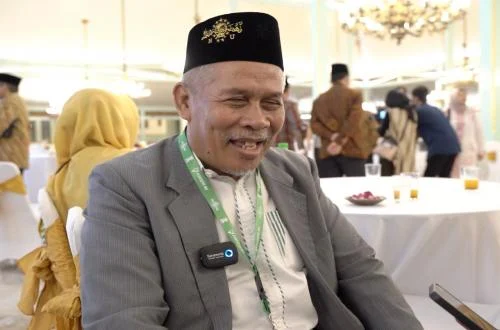
The political landscape of East Java is poised for a significant shake-up as the Partai Kebangkitan Bangsa (PKB) actively explores the possibility of nominating KH Marzuki Mustamar, the revered former Chairman of the Nahdlatul Ulama (PWNU) East Java Regional Board, for the upcoming 2024 gubernatorial election. This strategic move, if materialized, would set the stage for a high-stakes electoral battle against the formidable incumbent, Khofifah Indar Parawansa, the former Governor of East Java. The potential contest has already generated considerable buzz, highlighting the critical role of religious figures and grassroots support in one of Indonesia’s most populous and politically significant provinces.
The Strategic Importance of East Java in Indonesian Politics
East Java, with its vast population exceeding 40 million, stands as a pivotal electoral battleground in Indonesia. Its demographic composition, deeply intertwined with the Nahdlatul Ulama (NU), the largest Islamic organization in the world, makes it a unique political entity. The province contributes significantly to Indonesia’s national GDP and serves as a bellwether for national political sentiment. For political parties, securing victory in East Java is not merely a regional triumph but often a statement of national strength and influence. The gubernatorial election, or Pilkada, in East Java, is therefore meticulously strategized by major political factions, with a keen eye on the NU vote, which often holds the decisive sway. Historically, figures with strong ties to NU, whether directly from its organizational structure or through its cultural and social networks, have found considerable success in East Java’s political arena.
PKB’s Pursuit of a Prominent NU Figure
Abdul Halim Iskandar, the Chairman of PKB’s Pilkada Desk, publicly affirmed the party’s keen interest in KH Marzuki Mustamar during a press conference at the DPP PKB office in Central Jakarta on Wednesday, May 29, 2024. Iskandar detailed that the idea of nominating Marzuki Mustamar had been actively "rolling in the community," indicating significant grassroots support and public aspiration. "For East Java, today, KH Marzuki is a name circulating within the community, meeting with people to convey their aspirations to PKB," Halim Iskandar stated, underscoring the organic nature of this political movement.
PKB, a party with deep historical roots in Nahdlatul Ulama, views this public sentiment as a valuable asset. Iskandar expressed the party’s enthusiasm for such aspirations but stressed that the ultimate decision rests on the willingness of the esteemed cleric himself. "PKB is ready to embrace these aspirations, but the final touch will depend on Kiai Marzuki’s consent," he clarified. This highlights the delicate balance between party strategy and respecting the autonomy and stature of a revered religious leader. The party’s approach suggests a careful consideration of Marzuki Mustamar’s moral authority and his widespread appeal among the Nahdliyin community.
KH Marzuki Mustamar: A Profile of Influence and Controversy
KH Marzuki Mustamar’s potential entry into the gubernatorial race is particularly noteworthy given his recent history. Until March 2024, he served as the Chairman of PWNU East Java, a position that endowed him with immense influence and direct connection to millions of NU members in the province. His reputation as a knowledgeable and charismatic Kiai (Islamic scholar) has garnered him a large following, particularly among traditionalist Muslims.
However, his tenure at PWNU East Java concluded amidst controversy. He was abruptly dismissed from his position by the central executive board of Nahdlatul Ulama (PBNU). While the official reasons cited by PBNU included administrative issues and alleged violations of organizational procedures, many observers and members of the Nahdliyin community perceived the dismissal as politically motivated, possibly stemming from internal power struggles or differing alignments within the broader NU structure. This perception of "unfair treatment" (perlakuan-perlakuan yang tidak bagus), as alluded to by Halim Iskandar, inadvertently amplified Marzuki Mustamar’s popularity. Instead of diminishing his standing, the dismissal appeared to galvanize sympathy and support, transforming him into an even more prominent and endearing figure, an "icon NU Jatim yang luar biasa," in the words of Iskandar. His image as a principled leader, seemingly targeted by higher authorities, resonated deeply with many, particularly those who feel disenfranchised or critical of centralized power.
The Incumbent: Khofifah Indar Parawansa’s Formidable Position
On the other side of the potential contest stands Khofifah Indar Parawansa, a political veteran with an impressive track record. Having served as Governor of East Java from 2019 to 2024, Khofifah has built a strong political base and enjoys widespread recognition. Her political career spans decades, including ministerial positions in the national government, and she maintains deep connections within NU through her leadership of Muslimat NU, the women’s wing of the organization. Khofifah’s political machinery is already in motion, having secured endorsements from a broad coalition of major parties, including Gerindra, Golkar, Demokrat, PAN, PSI, and PBB. This multi-party backing provides her with substantial resources, organizational support, and a formidable electoral advantage. Her re-election bid, initially perceived by many as relatively straightforward, now faces a potentially serious challenge with Marzuki Mustamar’s emergence.
Chronology of Events Leading to the Current Speculation
The timeline leading to PKB’s current overtures to Marzuki Mustamar is crucial for understanding the political dynamics at play:
- Late 2023 – Early 2024: Whispers of dissatisfaction and internal disagreements within NU regarding the leadership of KH Marzuki Mustamar at PWNU East Java begin to surface.
- March 2024: PBNU officially dismisses KH Marzuki Mustamar from his position as Chairman of PWNU East Java. This decision sparks immediate reactions, with many questioning the timing and underlying motives.
- Post-Dismissal (March – May 2024): Public sympathy for Marzuki Mustamar grows. His public appearances and engagements are met with enthusiastic crowds, reinforcing his popularity despite no longer holding an official NU organizational position.
- April – May 2024: Within PKB circles, discussions intensify about potential candidates for the East Java Pilkada. Recognizing Marzuki Mustamar’s surging popularity and his deep roots in the Nahdliyin community, his name begins to emerge as a strong contender.
- May 29, 2024: Abdul Halim Iskandar of PKB formally announces the party’s consideration of KH Marzuki Mustamar, explicitly referencing the public aspirations and his increased popularity post-dismissal.
Statements and Reactions from Key Stakeholders
Abdul Halim Iskandar’s statement on behalf of PKB is the most direct official commentary on the matter. He underscored PKB’s commitment to respecting Marzuki Mustamar’s decision, even if it meant declining the offer. "Even though we are ready, if Kiai Marzuki says ‘oh, don’t,’ of course, we will not force him because he is also an extraordinary figure and icon of NU East Java, who has become even more popular after receiving unfavorable treatment following his dismissal by PBNU," Iskandar explained. This sensitivity reflects the unique status of religious leaders in Indonesian politics, where moral authority often trumps partisan pressure.
From Marzuki Mustamar’s perspective, a direct statement regarding his willingness is still pending. It is anticipated that he will undertake a period of careful consideration, consulting with close associates, religious scholars, and his family. Such a decision, especially for a figure of his stature, is typically not made lightly and often involves seeking spiritual guidance (istikharah).
Khofifah Indar Parawansa’s camp, while publicly confident, is undoubtedly monitoring these developments closely. The emergence of a strong NU-backed challenger, particularly one riding a wave of public sympathy, would necessitate a recalibration of their campaign strategy. While no direct official reaction has been issued, it is plausible that internal discussions within Khofifah’s coalition are already assessing the potential impact of Marzuki Mustamar’s candidacy on voter sentiment and the distribution of the crucial NU vote. PBNU, as an organization, is expected to maintain a neutral stance in the Pilkada, in line with its charter to remain non-partisan. However, individual members or factions within NU might express their preferences, adding layers of complexity to the political landscape.
Implications and Electoral Dynamics
The potential candidacy of KH Marzuki Mustamar carries profound implications for all involved parties and the broader East Java electorate:
- For PKB: This is a high-stakes, high-reward strategy. By backing Marzuki Mustamar, PKB aims to consolidate the traditional NU vote, which it sees as its natural constituency. It represents an opportunity to reclaim political dominance in East Java, a province historically seen as its stronghold. However, it also means investing heavily in a candidate whose political experience in electoral contests is limited, relying instead on his religious and social capital.
- For Khofifah Indar Parawansa: Marzuki Mustamar’s entry would transform the race into a much tougher battle. Khofifah, despite her strong ties to NU through Muslimat NU, would face a direct challenge from a revered Kiai who embodies a more traditionalist, grassroots NU sentiment. This could potentially divide the NU vote, which has historically been a significant factor in Khofifah’s success. She would need to work harder to differentiate her appeal and rally her broad coalition.
- For Nahdlatul Ulama: The Pilkada could further expose or deepen internal political fault lines within NU. While PBNU maintains neutrality, the active involvement of such a prominent former leader in a partisan contest could lead to internal debates about the organization’s political role and the autonomy of its figures. It could also force individual Nahdliyin to choose between different NU-affiliated figures, testing their loyalty to specific leaders versus the broader organization.
- For the East Java Electorate: Voters would be presented with a compelling choice between an established, experienced governor with a strong coalition and a revered religious figure who has recently gained significant popular sympathy. The election would likely be framed as a contest between continuity and a potential fresh direction, fueled by a narrative of grassroots aspiration versus established power. The role of socio-religious sentiment, local issues, and campaign narratives would be paramount in swaying undecided voters.
The Search for a Running Mate
Should KH Marzuki Mustamar agree to run, the next critical step for PKB would be to identify a suitable running mate (wakil). Halim Iskandar indicated that this task, while secondary to securing Marzuki Mustamar’s consent, has already seen preliminary interest. "Many are ready to accompany Kiai Marzuki, but we will not expose them yet, because Kiai Marzuki’s decision comes first," he stated. He added, "Many have come forward to offer to accompany Kiai Marzuki, but the key remains with him." The choice of a running mate would be strategic, likely aimed at balancing the ticket geographically, demographically, or politically, to broaden the appeal beyond Marzuki Mustamar’s core support base. This could involve selecting a figure with strong bureaucratic experience, a youth leader, or someone from a different region of East Java to ensure comprehensive representation.
The Road Ahead: Awaiting the Kiai’s Decision
The political spotlight in East Java now squarely rests on KH Marzuki Mustamar. His decision will be the pivotal moment that shapes the trajectory of the 2024 gubernatorial election. If he accepts, the race will undoubtedly become one of Indonesia’s most watched regional contests, pitting two highly influential figures with deep NU ties against each other. If he declines, PKB will need to pivot quickly to other potential candidates, though it would likely lose the unique momentum and popular narrative that Marzuki Mustamar’s candidacy offers. The formal stages of Pilkada registration are approaching, and the political chess game in East Java is intensifying, promising an exciting and closely fought electoral battle. The outcome will not only determine the next leader of East Java but also offer insights into the evolving dynamics of religious and political power in contemporary Indonesia.