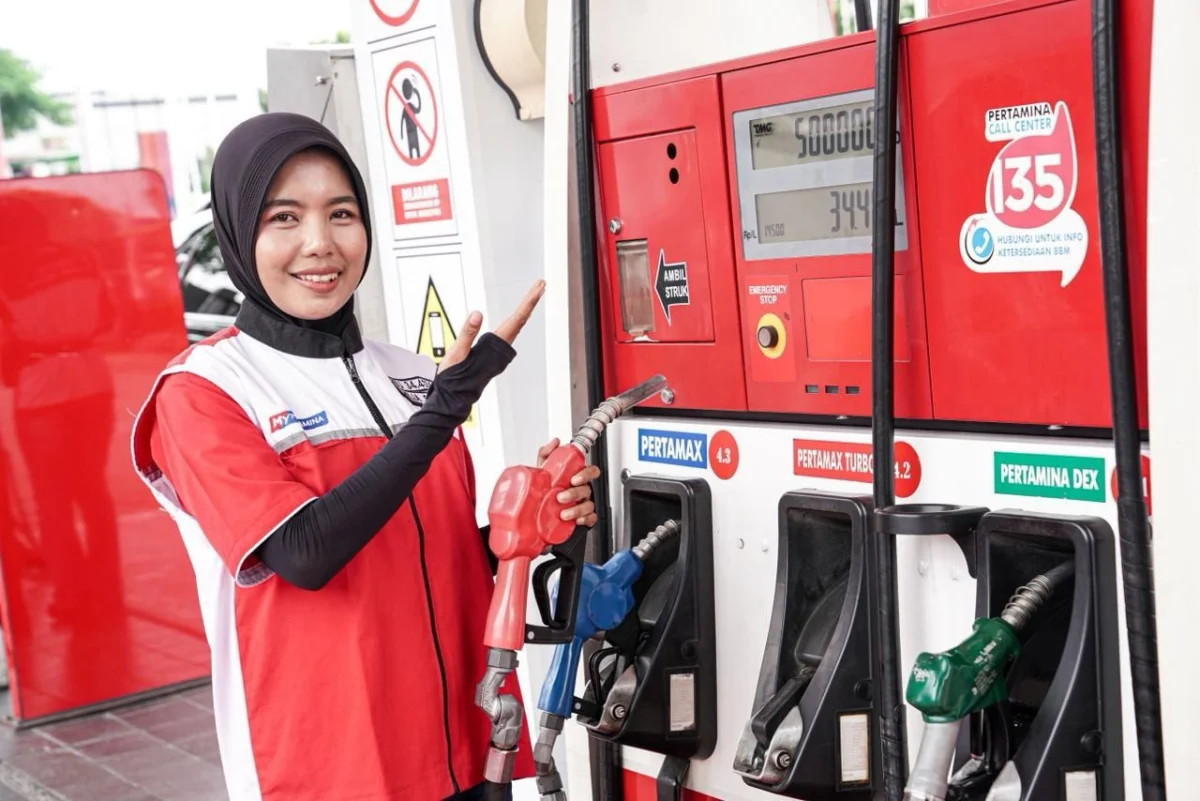
JAKARTA – State-owned energy giant PT Pertamina (Persero) through its commercial arm, Pertamina Patra Niaga, has once again adjusted its non-subsidized fuel prices downwards, effective July 1, 2026, at 00:00 WIB. This significant reduction impacts premium non-subsidized variants including Pertamax Turbo, Pertamina Dex, and Dexlite, offering a welcome relief to consumers and businesses navigating the dynamic energy landscape. The move reflects Pertamina’s ongoing commitment to periodically evaluating and aligning its pricing structure with global market trends, while also considering domestic economic factors and the purchasing power of the Indonesian populace.
The latest adjustment sees Pertamax Turbo, a high-octane gasoline variant, decrease from Rp20,750 per liter to Rp19,300 per liter, marking a substantial reduction of Rp1,450. Similarly, Pertamina Dex, a high-quality diesel fuel, experienced an even more pronounced drop, falling from Rp24,800 per liter to Rp21,150 per liter, a decrease of Rp3,650. Dexlite, another popular diesel variant, also saw its price reduced from Rp23,000 per liter to Rp19,700 per liter, a cut of Rp3,300. These price changes are uniform across most regions in Indonesia, subject to variations in regional taxes. Notably, prices for subsidized fuels like Pertalite and specific non-subsidized variants such as Pertamax and the newer Pertamax Green remain unchanged in this latest review, underscoring the government’s differentiated approach to fuel pricing based on subsidy policies and market segmentation.
Understanding the Pricing Mechanism: Global Dynamics and Domestic Considerations
The decision to lower non-subsidized fuel prices is not arbitrary but rather a complex calculation driven by a confluence of international and domestic factors. Vice President Corporate Communication Pertamina Patra Niaga, Kitty Andhora, elaborated on this, stating, "The adjustment of non-subsidized fuel prices refers to the dynamics of global oil market prices and adheres to prevailing regulations and mechanisms. Naturally, this adjustment step has been coordinated with the government." This statement highlights the intricate balance Pertamina must strike between market competitiveness, operational sustainability, and its role as a state-owned enterprise supporting national economic stability.
The primary benchmark for non-subsidized fuel prices in Indonesia is typically the Mean of Platts Singapore (MOPS) price. MOPS reflects the average free-on-board (FOB) prices of petroleum products traded in the Singapore market, which serves as a key hub for Asian oil trading. Fluctuations in global crude oil benchmarks such as Brent and West Texas Intermediate (WTI) directly influence MOPS prices. For instance, a sustained period of declining global crude prices in the preceding months would typically translate to lower MOPS values, providing Pertamina with room to reduce domestic fuel prices.
Beyond global crude and refined product prices, the exchange rate of the Indonesian Rupiah against the US Dollar plays a critical role. Since international oil transactions are predominantly denominated in US Dollars, a stronger Rupiah can mitigate the cost of crude oil imports, while a weaker Rupiah can inflate import costs. Therefore, a stable or appreciating Rupiah in the period leading up to July 2026 would have contributed positively to Pertamina’s ability to lower prices. Other factors include operational costs, distribution logistics, and government-imposed taxes and levies, all of which are factored into the final retail price.
Chronology of Market Conditions Leading to Price Adjustment
The lead-up to the July 2026 price reduction can be traced back to global market developments in the second quarter of the year. Following a period of relative volatility, the international crude oil market began to show signs of softening. This was likely influenced by several factors:
- Global Supply Dynamics: A potential increase in crude oil production from non-OPEC+ nations or a relaxation of production cuts by the OPEC+ alliance could have contributed to an oversupply scenario, putting downward pressure on prices.
- Demand Outlook: Concerns over global economic growth, perhaps stemming from persistent inflationary pressures in major economies or geopolitical uncertainties, might have dampened the demand forecast for petroleum products. Reduced industrial activity or slower-than-expected recovery in certain sectors could lead to lower fuel consumption.
- Inventory Levels: Rising crude oil and refined product inventories in key consumer markets, particularly the United States and China, would signal ample supply, further reinforcing bearish sentiment in the market.
- Geopolitical Stability: A period of relative calm in major oil-producing regions or de-escalation of previous tensions could also reduce the "risk premium" often embedded in oil prices.
These macroeconomic and geopolitical shifts would have steadily brought down the MOPS benchmarks for gasoline and diesel, particularly in May and June 2026. Pertamina, through its established review mechanisms, continuously monitors these global indicators. Typically, such price adjustments are evaluated on a monthly or quarterly basis, ensuring that domestic prices remain responsive to international market realities. The decision to implement the changes on July 1st signifies that the evaluation process, including internal analysis and coordination with government stakeholders, concluded by late June, paving the way for the new pricing structure at the start of the new month.
Statements and Reactions: A Broader Perspective
The announcement by Pertamina Patra Niaga was met with a mix of relief and cautious optimism from various stakeholders. Kitty Andhora’s emphasis on "evaluasi berkala sesuai mekanisme yang berlaku" (periodic evaluation according to prevailing mechanisms) and coordination with the government underscores the transparent and regulated nature of these adjustments.
From a governmental perspective, a spokesperson from the Ministry of Energy and Mineral Resources (ESDM), while not directly quoted in the original article, would likely reiterate the government’s commitment to ensuring energy availability and affordability. They might emphasize that non-subsidized fuel prices reflect fair market value, protecting the state budget from undue subsidy burdens while allowing consumers to benefit from global price declines. "The government continues to monitor global energy markets closely," an inferred statement might read, "and supports Pertamina’s efforts to ensure that domestic fuel prices are reflective of international benchmarks, fostering a healthy energy ecosystem while safeguarding consumer interests."
Consumer advocacy groups, often vocal about fuel price changes, would generally welcome the reduction. A representative from a consumer protection agency might comment, "This price drop is a positive development for household budgets, especially for those reliant on transportation. It helps alleviate some of the cost-of-living pressures that many families have been facing." However, they might also call for continued transparency and stability in pricing.
Industry analysts, providing a more detached perspective, would likely view this as a healthy market correction. Dr. Surya Atmaja, an energy economist based in Jakarta, could be inferred to comment, "The downward adjustment of non-subsidized fuel prices by Pertamina is a direct reflection of the easing global oil market in Q2 2026. This move is crucial for maintaining Pertamina’s competitiveness against other private fuel retailers and for providing a much-needed boost to economic activities, particularly in the logistics and manufacturing sectors. It also signals a stable Rupiah, which is vital for managing import costs."
Economic Implications: Ripple Effects Across Sectors
The reduction in non-subsidized fuel prices carries significant economic implications for various segments of Indonesian society and the broader economy.
- For Consumers: Lower fuel prices translate directly into reduced transportation costs for individuals. This frees up disposable income, potentially boosting consumer spending on other goods and services, which can stimulate retail activity. Families using vehicles for daily commutes or small businesses relying on personal transport will feel an immediate positive impact on their monthly budgets.
- For Businesses: The most significant beneficiaries among businesses are those heavily reliant on fuel for operations, particularly in logistics, transportation, agriculture, and manufacturing.
- Logistics and Transportation: Trucking companies, ride-hailing services, and public transport operators will see their operational costs decrease. This can lead to more competitive pricing for goods and services, or increased profit margins, fostering economic efficiency.
- Manufacturing: Industries that use diesel for machinery or power generation will experience lower input costs, potentially leading to more competitive product pricing or improved profitability.
- Agriculture and Fisheries: Farmers and fishermen who use fuel for machinery, irrigation pumps, or fishing boats will also benefit from reduced operational expenses, which can help stabilize food prices.
- Inflationary Pressure: Lower fuel prices typically exert a disinflationary effect on the economy. Fuel is a critical input cost across many sectors, and a reduction can help moderate the overall rate of inflation. This is a crucial factor for Bank Indonesia (BI) in managing monetary policy and maintaining price stability. While the impact might be more pronounced on the non-food component of inflation, it can contribute to a more stable macroeconomic environment.
- Government Budget: For the government, while non-subsidized fuel prices do not directly impact the subsidy budget (which applies to Pertalite and specific types of diesel), a general trend of lower global oil prices can indirectly alleviate pressure on the state budget by reducing the potential need for future subsidy increases if market prices were to surge. It also supports economic growth, which translates to higher tax revenues.
- Pertamina’s Profitability and Strategy: Pertamina operates in a competitive market alongside private fuel retailers. Adjusting prices in line with global trends ensures that Pertamina remains competitive and maintains its market share. While lower prices might seem to reduce revenue per liter, the aim is to optimize sales volume and overall profitability by offering competitive rates. Pertamina’s strategy often involves balancing market responsiveness with its role in energy security and distribution across the vast archipelago, including remote areas where private players might be less inclined to operate.
Pertamina’s Differentiated Fuel Strategy: Subsidized vs. Non-Subsidized
It is important to reiterate Pertamina’s two-tiered pricing strategy. Subsidized fuels like Pertalite are subject to government intervention, with prices set to be affordable for the general public and small businesses, often below market cost, with the difference covered by the state budget. This segment serves a crucial social function, ensuring energy access for all income levels.
Non-subsidized fuels, including Pertamax, Pertamax Turbo, Pertamina Dex, and Dexlite, are priced according to market mechanisms. These products cater to consumers who demand higher quality, better performance, and are willing to pay market rates. The introduction of "Pertamax Green" variants, though not subject to adjustment in this round, signifies Pertamina’s long-term commitment to cleaner energy solutions and meeting evolving environmental standards, likely incorporating bio-components or advanced additives. The decision to keep Pertamax and Pertamax Green prices stable in this round suggests that the cost components for these specific products might not have seen sufficient changes to warrant an adjustment, or Pertamina might be strategically maintaining their prices for market stability or to differentiate them from the more volatile premium offerings.
Future Outlook and Policy Considerations
Looking ahead, the stability of fuel prices in Indonesia will largely depend on the trajectory of global oil markets, the strength of the Rupiah, and the government’s energy policy. While the current reduction is favorable, consumers and businesses should remain aware that market-linked prices can fluctuate. Pertamina’s commitment to regular evaluation ensures that future adjustments, whether upwards or downwards, will continue to reflect global realities.
The government’s role in managing energy affordability remains paramount. This includes maintaining effective subsidy programs for essential fuels, investing in domestic energy production to reduce reliance on imports, and promoting the diversification of the energy mix towards cleaner and more sustainable sources. As Indonesia progresses towards its net-zero emissions targets, the transition to alternative fuels and electric vehicles will also gradually reshape the dynamics of the conventional fuel market. However, for the foreseeable future, Pertamina’s ability to swiftly adapt its non-subsidized fuel prices in response to global market signals will continue to be a key indicator of economic responsiveness and consumer welfare in the nation. The July 2026 price drop serves as a timely reminder of the interconnectedness of global energy markets and their direct impact on daily life in Indonesia.