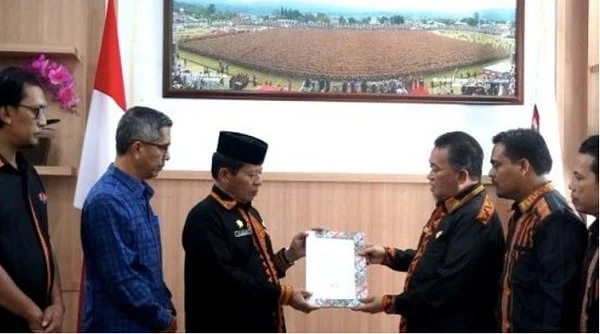
The Assistant for Government, Aceh Special Autonomy, and Public Welfare (Asisten I) of the Gayo Lues Regency Secretariat, Nevirizal, has tendered his resignation following widespread public attention and controversy sparked by his son’s ostentatious display of wealth on social media platforms. The decision, officially submitted by Nevirizal, underscores a growing trend of public officials facing intense scrutiny over the perceived lavish lifestyles of their family members, often leading to questions about the integrity and transparency of government institutions. This incident, unfolding in the relatively conservative region of Aceh, has reignited national conversations surrounding public accountability, ethical conduct for civil servants, and the critical role of social media in shaping public opinion and holding power to account.
Chronology of Events and Public Reaction
The controversy began to unfold in mid-July 2026 when a series of videos and images, allegedly posted by Nevirizal’s son, went viral across various social media platforms. These posts reportedly depicted an extravagant lifestyle, showcasing luxury items, high-end vehicles, and lavish vacations, which quickly drew the ire of the public. Social media users and local community groups swiftly highlighted the perceived discrepancy between the visible wealth and the typical salary of a regional government official, leading to accusations of impropriety and calls for investigation. The content circulated widely, sparking outrage and prompting a deluge of comments questioning the source of such wealth and the ethical implications for a public servant whose family appeared to be flaunting affluence.
The immediate public outcry placed immense pressure on Nevirizal and the Gayo Lues Regency administration. Critics pointed to the potential erosion of public trust, particularly given the ongoing national efforts to combat corruption and promote good governance. Within days of the social media posts gaining traction, Nevirizal formally submitted his letter of resignation. In his statement, he cited "moral responsibility" as the primary driver behind his decision, acknowledging that while the issues arose from the personal conduct of a family member, his position as a public official necessitated an unwavering commitment to integrity and the good name of the institution he served. He recognized that the incident had created a "polemic" that adversely affected public confidence in the government, indicating a keen awareness of the broader implications beyond his immediate family.
Nevirizal’s Role and Public Service Ethics
Asisten I for Government, Aceh Special Autonomy, and Public Welfare is a significant and influential position within a regional administration in Indonesia. This role typically involves overseeing critical governmental functions, including local governance affairs, inter-agency coordination, and the implementation of policies related to public welfare. Crucially, in Aceh, this position also holds responsibilities pertaining to the unique Special Autonomy status granted to the province, which involves managing specific regulations, funds, and cultural considerations. An official in such a capacity is expected to uphold the highest standards of ethics, transparency, and public service, acting as a steward of public resources and trust.
The resignation of Nevirizal underscores the increasing pressure on public officials to not only maintain personal integrity but also to manage the public perception of their families. Indonesia’s civil service code of ethics often extends to the conduct of family members, particularly when their actions could reflect poorly on the official or the government. The principle of "appearance of impropriety" becomes central in such cases, where even without direct evidence of wrongdoing by the official, the ostentatious displays by a close family member can create an impression of illicit wealth or abuse of power, severely damaging public trust. This incident serves as a stark reminder that public service in the digital age demands comprehensive accountability, extending beyond the individual official to encompass the perceived lifestyle of their immediate family.
Wealth Disclosure: The LHKPN and Public Scrutiny
Central to the public’s scrutiny of Nevirizal’s situation is his official wealth declaration. According to data from the Corruption Eradication Commission (KPK)’s Laporan Harta Kekayaan Penyelenggara Negara (LHKPN) or State Officials’ Wealth Report, filed on July 9, 2025, Nevirizal reported a total net worth of Rp 1,468,226,875 (approximately USD 90,000 based on prevailing exchange rates at the time). The LHKPN is a mandatory annual disclosure for all state officials in Indonesia, designed as a crucial tool for transparency and to prevent corruption. It requires officials to report all their assets, including land, buildings, vehicles, cash, and other movable property, as well as debts. The KPK then verifies these reports, though the depth of verification can vary.

The reported wealth figure, while not extraordinarily high for a long-serving senior official, became a point of contention when juxtaposed with the perceived opulence displayed by his son. The public often questions how such lifestyles can be sustained on official salaries, particularly if the reported wealth does not fully account for the observed spending patterns. This discrepancy fuels suspicions and reinforces the public’s demand for greater transparency. The KPK consistently emphasizes the importance of accurate and timely LHKPN submissions, viewing them as a frontline defense against corruption and a means to foster public confidence. However, incidents like Nevirizal’s highlight the challenge of connecting declared assets with real-time spending habits, especially when involving family members who are not directly subject to LHKPN reporting requirements. The timing of the LHKPN submission (July 2025) versus the incident (July 2026) also suggests that any significant changes in wealth over that year would not yet be publicly declared, adding another layer of complexity to the public’s financial assessment.
The "Flexing" Phenomenon and National Context
The phenomenon of "flexing" – the conspicuous display of wealth on social media – by the children of public officials is not new in Indonesia. Over recent years, several high-profile cases have emerged, leading to public outrage, investigations, and in some instances, the downfall of the officials themselves. These incidents often tap into a deep-seated public frustration over corruption and inequality. When the children of officials flaunt wealth that seems incongruous with their parents’ official salaries, it triggers widespread suspicion that the wealth may have been acquired through illicit means, such as bribery, embezzlement, or other forms of corruption.
These "flexing" scandals serve as powerful catalysts for public discourse on accountability. They amplify calls for stricter enforcement of anti-corruption laws, enhanced oversight of public officials’ lifestyles, and more robust mechanisms for wealth verification. Social media, in particular, plays a dual role: it is the platform where such displays occur, but also the primary channel through which they are exposed and scrutinized by a vigilant public. This dynamic creates an environment where public officials and their families are under constant, albeit informal, surveillance, with any perceived misstep quickly becoming a national talking point. The Gayo Lues incident adds another case study to this growing list, reinforcing the notion that public service in Indonesia now carries an implicit expectation of modesty and transparency, not just for the official but for their immediate family too.
Official Reactions and Broader Implications
The Gayo Lues Regency administration, while acknowledging Nevirizal’s resignation, has maintained a professional and measured stance. It is anticipated that the Regent’s office would accept the resignation, expressing regret over the circumstances but reaffirming its commitment to upholding integrity and public trust within the local government. Such statements typically emphasize adherence to good governance principles and may include pledges to conduct internal reviews or reinforce ethical guidelines for all civil servants. The immediate task for the administration will be to appoint a suitable replacement for the Asisten I position to ensure continuity in vital government operations.
Beyond the local level, this incident has broader implications for Indonesia’s ongoing fight against corruption and its efforts to professionalize its bureaucracy. The KPK, while not directly commenting on individual resignations unless it involves an ongoing investigation, consistently advocates for greater transparency, robust LHKPN compliance, and a strong ethical framework for all public officials. This incident serves as a reinforcement of their message: public officials and their families must be mindful of their conduct, as it directly impacts public perception and trust in government.
Civil society organizations and anti-corruption watchdogs are likely to leverage this incident to reiterate their demands for more comprehensive wealth checks, lifestyle audits for public officials, and stricter penalties for those found guilty of corruption or illicit enrichment. They often argue that LHKPN, while important, is just one piece of the puzzle and needs to be complemented by proactive investigations and a culture of accountability that permeates all levels of government.
The resignation of Nevirizal from his influential post in Gayo Lues due to his son’s social media activities marks another significant moment in Indonesia’s journey towards greater public sector accountability. It underscores the profound impact of social media in modern governance, transforming private actions into public issues with far-reaching consequences. For public officials across the archipelago, it serves as a potent reminder that the pursuit of public trust requires not only personal probity but also a vigilant awareness of how the actions and lifestyles of their families can shape public perception and, ultimately, their own careers and the integrity of the institutions they represent. The incident in Gayo Lues is likely to prompt further discussions within government circles about extending ethical guidelines to cover family conduct more explicitly and reinforcing the message that public service is a commitment that extends beyond the office, impacting the entire household.