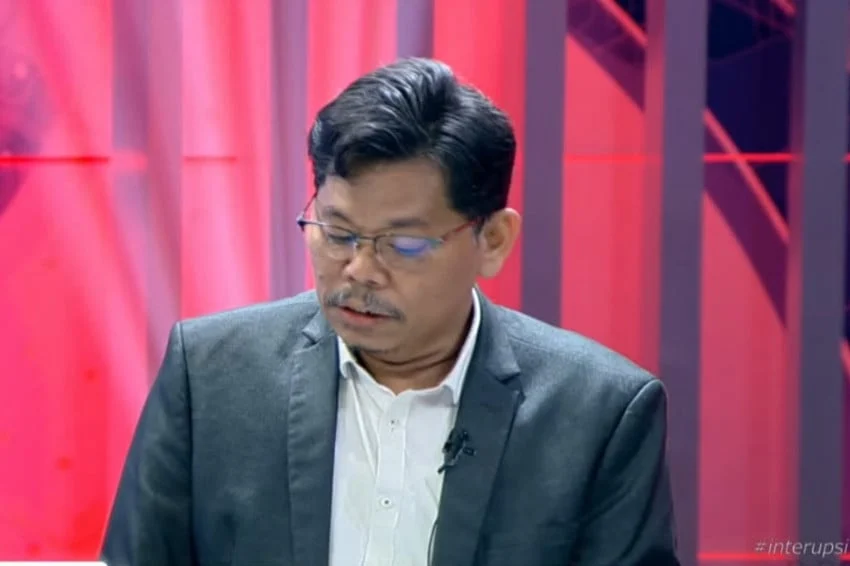
The ongoing public discourse surrounding the educational credentials of Indonesia’s seventh president, Joko Widodo (Jokowi), has entered a new phase following expert commentary on administrative law, public policy, and institutional transparency. During a recent televised debate on iNews TV’s program Interupsi, public policy expert Bonatua Silalahi asserted that the validity of an academic diploma extends far beyond the physical sheet of paper. According to Silalahi, the integrity of a diploma is fundamentally tied to the legitimacy of the educational process itself. If systemic flaws or administrative irregularities occurred during the learning phase, the legal foundation of the credential could theoretically be invalidated through formal judicial review.
This statement adds further complexity to a controversy that has persisted for years, despite repeated clarifications from educational institutions and government bodies. The debate touches upon critical intersections of administrative law, state information disclosure, public accountability, and the political legacy of a leader who governed the world’s third-largest democracy for a decade. As legal challenges continue to move through various state agencies and tribunals, constitutional and administrative law experts remain divided on the thresholds required to legally question a presidential degree long after graduation and the completion of public office.
The Core Argument: Process Over Physical Document
Speaking on the September 10, 2026 broadcast, Bonatua Silalahi emphasized that scrutinizing a diploma solely based on its physical appearance—such as paper texture, ink quality, or typographical layout—misses the broader legal definition of educational certification. True academic legitimacy, Silalahi argued, requires an unbroken, verifiable chain of administrative processes, ranging from primary and secondary school admissions to university matriculation, attendance records, thesis defense, and graduation registries.
"Referring to the term diploma, falsification does not merely occur through the physical document sheet, but the process can also be false. It is possible," Silalahi stated during the program.
He further suggested that if substantial evidence regarding procedural irregularities were proven in a competent court, the administrative decree recognizing the credentials could face legal challenges. Joining Silalahi on the program was Roy Suryo, a prominent critic and former government official, who presented documents and analyses pointing to alleged discrepancies within the thesis and academic records associated with Jokowi’s university tenure. Silalahi remarked that if these claims were substantiated under formal courtroom scrutiny, the matter could potentially progress to the State Administrative Court (PTUN), where plaintiffs might seek formal administrative remedies.
A Historical Precedent: The Case of Untung Wiyono
To illustrate how administrative authorities typically handle disputes over official credentials, Bonatua Silalahi drew a parallel to a historical legal case involving the former Regent of Sragen, Untung Wiyono. The case of the former regional leader demonstrated how administrative validation could be resolved through straightforward verification of basic schooling data, student identification numbers, and archive matching without escalating into prolonged national controversies.
"I will give an example, the Regent of Sragen, Mr. Untung. It never became this noisy. It was sufficient to examine data like this, and the process was already revealed. Apparently, his high school did not exist, and his student identification number (NIS) was actually borrowed from someone else," Silalahi explained.
In administrative law, the verification of credentials relies heavily on institutional archives maintained by schools, universities, and regional education offices. When discrepancies arise—such as unverified enrollment records, missing grade transcripts, or mismatched identification numbers—administrative tribunals possess the jurisdiction to evaluate whether the issuance of the certificate violated government regulations or educational standards in place at the time.
Chronology of the Diploma Controversy
The public debate surrounding Joko Widodo’s educational background is not a recent phenomenon; it has evolved through multiple phases since his tenure as Mayor of Solo, Governor of Jakarta, and ultimately during his two terms as President of the Republic of Indonesia.
The allegations first surfaced intermittently on social media platforms during the 2014 and 2019 presidential elections, where anonymous online commentators questioned whether the graduation documents from Universitas Gadjah Mada (UGM)—where Jokowi earned his degree from the Faculty of Forestry in 1985—were genuine. Despite these early claims, UGM officials consistently verified that Joko Widodo was an authentic alumnus who successfully completed his studies within the stipulated timeframe.
The controversy escalated legally in subsequent years when independent activists and critics filed formal lawsuits and information disclosure requests. A notable milestone in this timeline occurred when civic actors, including Bonatua Silalahi, sought official administrative documents through public information channels. When initial administrative complaints faced institutional hurdles or rejections from bodies such as the Election Organizer Ethics Council (DKPP), litigants pivoted their legal strategies toward the Central Information Commission (KIP) and state administrative courts.
Throughout this timeline, the primary defense has rested on official statements from Universitas Gadjah Mada, high school alumni associations, and classmates who have corroborated Jokowi’s presence on campus during the 1980s. However, persistent skepticism among a faction of critics has kept the issue alive in public forums, legal seminars, and investigative talk shows.
Legal Framework and Institutional Responses
In the Indonesian legal system, challenges against official state documents or administrative decisions involving public officials typically fall under the jurisdiction of the State Administrative Court (PTUN). To successfully challenge a diploma or its subsequent legal use, plaintiffs must carry the burden of proof by presenting material evidence that demonstrates a violation of laws or administrative procedures at the time of issuance.
Legal scholars have noted that questioning a university degree decades after graduation presents significant procedural hurdles. Universities operate under autonomous academic governance regulated by national education laws. Universitas Gadjah Mada has repeatedly asserted that its administrative archives contain the complete registry of Joko Widodo’s academic progression, including coursework, thesis examination records, and graduation ceremonies.
Furthermore, government agencies such as the State Archives of the Republic of Indonesia (ANRI) and the Ministry of Education, Culture, Research, and Technology hold regulatory oversight regarding educational standards. Challenges directed at these institutions often require navigating strict statutory limits and proving direct legal standing (locus standi) for the plaintiffs involved.
The KIP Proceedings and Transparency Disputes
A significant dimension of Bonatua Silalahi’s ongoing campaign involves leveraging the Public Information Disclosure Act (UU KIP). Silalahi’s persistence in bringing administrative disputes to the Central Information Commission reflects a broader strategy aimed at compelling state institutions and public universities to release detailed archival documents related to the verification of presidential credentials.
While proponents of these freedom-of-information requests argue that transparency is vital for public accountability and upholding the integrity of high public office, institutional defenders counter that certain educational records involve personal privacy protections and data privacy regulations. The friction between open government mandates and personal data protection has turned these commission hearings into legal battlegrounds, where the definition of "public information" versus "private academic records" is rigorously debated.
Broader Implications for Public Policy and Governance
The ongoing discourse surrounding state officials’ credentials carries several broader implications for Indonesian governance, institutional trust, and the rule of law.
-
Institutional Credibility: The controversy places academic institutions, particularly historic public universities like UGM, in the spotlight. How these universities manage archival transparency and defend the integrity of their alumni records directly impacts public trust in higher education systems.
-
The Boundaries of Political Opposition: The persistence of legal and administrative challenges highlights the evolving nature of political discourse and accountability in post-reformasi Indonesia. While citizens retain the legal right to utilize administrative tribunals and information commissions, critics argue that persistent, unverified allegations can also contribute to political polarization.
-
Administrative Law Precedents: The legal arguments presented by policy experts like Bonatua Silalahi test the limits of administrative jurisprudence. Establishing clear judicial standards for how historical educational documents are verified or contested will create important legal precedents for future public officials and civil servants.
Conclusion
As the legal maneuvers surrounding the archival and administrative aspects of Joko Widodo’s educational background continue through bodies like the Central Information Commission and potential state administrative courts, the debate underscores the intricate balance between institutional autonomy, public transparency, and legal accountability. While experts like Bonatua Silalahi emphasize the necessity of rigorous process-based verification, educational institutions and legal defenders maintain that established archival records provide sufficient proof of legitimacy. Ultimately, resolving these disputes within the framework of Indonesia’s legal institutions remains essential for maintaining public confidence in the administrative integrity of the nation’s leadership.