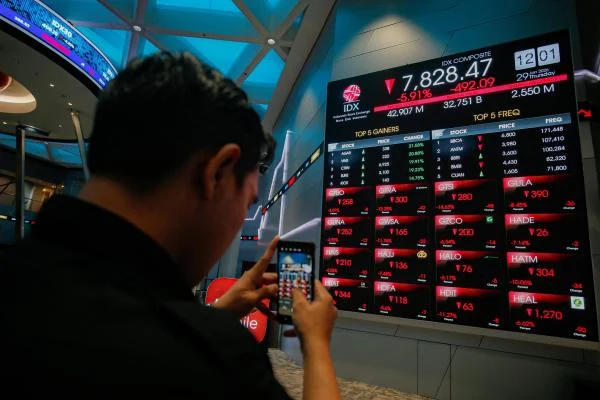
The Jakarta Composite Index (Indeks Harga Saham Gabungan or IHSG) experienced a significant downturn during the final trading session on Tuesday, September 15, 2026, settling firmly in negative territory. Market sentiment remained fragile as selling pressure intensified across multiple major sectors, dragging the benchmark index down by 73.54 points, or 1.13 percent, to close at 6,461. This latest market movement reflects ongoing volatility within the domestic financial landscape, compounded by cautious investor sentiment and broader macroeconomic headwinds influencing both equity and currency markets across Indonesia.
Market Turnover and Trading Activity Overview
During Tuesday’s trading session, market participation remained active despite the downward trajectory of the index. A total of 25.5 billion shares changed hands across the Indonesia Stock Exchange (IDX), generating a substantial total transaction value of Rp12.6 trillion. Market breadth indicated a remarkably balanced yet cautious struggle between buyers and sellers, with 330 stocks managing to post gains, while 332 stocks suffered declines, and 301 stocks remained stagnant at their previous closing prices.
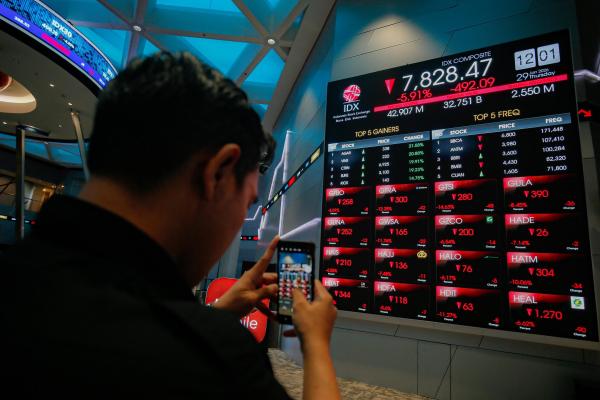
Major subsidiary indices mirrored the broader market’s bearish sentiment. The LQ45 index, which tracks the 45 most liquid stocks on the exchange, fell by 1.25 percent to close at 650. Similarly, the Jakarta Islamic Index (JII) declined by 0.41 percent to finish at 395. The IDX30 index dropped 1.32 percent to 361, while the MNC36 index recorded a loss of 1.20 percent, ending the session at 283.
Sectoral Performance: Broad-Based Declines
The downward pressure on Tuesday was distributed across a vast majority of the IDX sectoral indices. Out of the primary sectors, eight closed in the red zone, while only three managed to buck the trend by staying afloat in positive territory.
The sectors that suffered the heaviest losses and weighed down the IHSG included energy, non-cyclical consumer goods, financials, property, basic materials, transportation, industrial goods, and technology. The contraction in the financial and technology sectors was particularly notable, as these heavily weighted segments often dictate the broader direction of the main composite index.

Conversely, pockets of resilience emerged within the consumer cyclical, infrastructure, and healthcare sectors. These three segments managed to register modest gains, offering limited relief to investors holding sector-specific portfolios amidst an otherwise gloomy market backdrop.
Top Gainers and Losers of the Day
Individual stock movements presented distinct highlights on both ends of the performance spectrum. Leading the top gainers list was PT Danasupra Erapacific Tbk (DEFI), which surged by an impressive 34.95 percent to close at Rp139 per share. It was followed closely by PT Communication Cable Systems Indonesia Tbk (CCSI), which climbed 24.86 percent to finish at Rp442, and PT Voksel Electric Tbk (VOKS), which recorded a 24.62 percent jump to close at Rp324.
On the flip side, the top losers category was heavily populated by exchange-traded funds (ETFs) and select equities facing severe profit-taking or liquidation pressures. The Pinnacle Core High Dividend ETF suffered the steepest decline among major instruments, tumbling 14.94 percent to Rp655. PT Satria Antaran Prima Tbk (SAPX) followed closely, dropping 14.85 percent to Rp430, while the Batavia SRI-KEHATI ETF Index experienced a comparable loss of 14.84 percent, ending the day at Rp482.

Macroeconomic Context and Currency Pressures
The bearish sentiment in the equity market did not occur in a vacuum; it coincided with continued weakness in the domestic currency. On the same day, the Indonesian rupiah remained under sustained pressure, closing weaker against the United States dollar at Rp17,694 per USD. The simultaneous pullback in both the IHSG and the rupiah highlights a challenging macroeconomic environment for Indonesian financial assets. Foreign exchange volatility and shifting global interest rate expectations continue to prompt foreign capital outflows, exerting downward momentum on local equities.
Furthermore, market participants have been closely monitoring recent domestic fiscal and political developments. The market continues to absorb structural shifts within the economic governance team, including the recent transition in the Ministry of Finance, which has kept institutional and retail investors in a cautious holding pattern as they evaluate future policy directions, budget allocations, and economic growth forecasts for the remainder of the fiscal year.
Broader Implications for Investors and Analysts
Market analysts suggest that the current technical correction in the IHSG points toward a phase of consolidation. With the index slipping below key psychological thresholds, short-term volatility is expected to persist as traders navigate external global economic indicators and domestic currency fluctuations.
For institutional and retail investors alike, the prevailing market conditions necessitate a defensive investment strategy. Diversification into resilient sectors—such as healthcare and infrastructure, which demonstrated relative strength during Tuesday’s session—may offer a buffer against ongoing equities turbulence. Meanwhile, market watchers will remain vigilant for any monetary policy adjustments by Bank Indonesia or intervention measures aimed at stabilizing the rupiah, which could subsequently restore confidence and attract renewed capital inflows back into the Indonesian capital market.