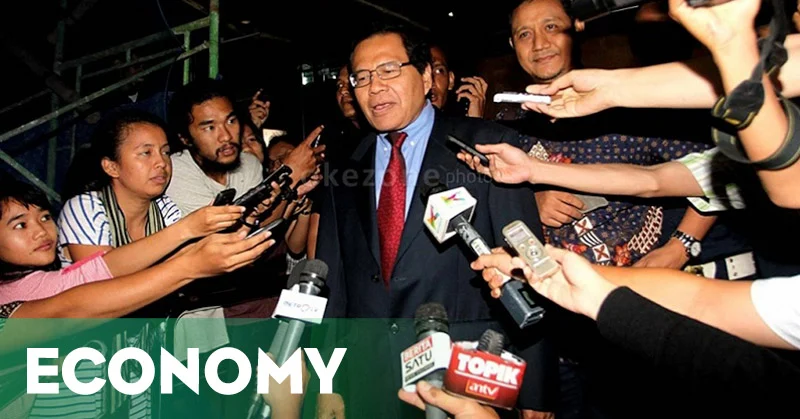
JAKARTA — Coordinating Minister for Maritime Affairs and Natural Resources Rizal Ramli opted for silence on Monday, November 9, 2015, declining to field questions from journalists regarding the high-profile dissolution of Pertamina Energy Trading Limited (Petral). The state-owned oil trading arm had long been a focal point of public scrutiny, regulatory investigations, and allegations of systemic inefficiencies before its eventual dismantling by the Ministry of Energy and Mineral Resources (ESDM).
The decision to disband Petral and its subsidiary, Pertamina Energy Service Pte Ltd (PES), followed exhaustive audits and mounting evidence pointing to undue influence by third-party intermediaries in the procurement and trading of crude oil and refined petroleum products. Despite heading the coordinating ministry tasked with overseeing the energy sector, Ramli sidestepped media inquiries following a high-level meeting on energy diversification and decentralization at his office in Central Jakarta. Rather than addressing reporters, Ramli raised both hands in a gesture of polite refusal, smiled, and swiftly departed to attend a scheduled state reception at the Merdeka Palace, where President Joko Widodo was hosting Italian President Sergio Mattarella.
The reticence of a high-ranking official like Ramli underscored the complex political and economic sensitivities surrounding the liquidation of Petral—a monumental policy milestone for the administration of President Joko Widodo, commonly known as Jokowi. The winding down of Petral was championed as a crucial victory for transparency and reform in Indonesia’s notoriously opaque oil and gas supply chain, a sector historically plagued by rent-seeking behaviors and inflated import costs.
Background and Context of the Petral Controversy
For decades, Pertamina Energy Trading Limited, operating primarily out of Singapore, served as the trading hub for Indonesia’s crude oil imports and petroleum product acquisitions. Established to secure reliable energy supplies for Southeast Asia’s largest economy, Petral progressively morphed into a sprawling entity that critics, energy analysts, and government reformers argued had distanced itself from effective domestic oversight.
Throughout the late 2000s and early 2010s, public discontent steadily mounted over the so-called "oil mafia"—a loosely defined network of intermediaries, brokers, and vested political interests allegedly manipulating tender processes. Because Indonesia had transitioned from a net oil exporter to a net importer, the country relied heavily on imported fuels to satisfy domestic consumption. Every fluctuation in procurement costs directly strained the state budget through heavy fuel subsidies, making transparency in international trading a matter of national economic security.
Allegations centered on the heavy reliance on third-party brokers rather than dealing directly with National Oil Companies (NOCs) or major international refineries. Critics argued that these middlemen added unnecessary markups, costing the Indonesian state billions of dollars over the years. Calls for structural reform intensified after Jokowi assumed the presidency in October 2014, with promises to overhaul the country’s energy governance and eradicate corrupt practices in state-owned enterprises (SOEs).
Chronology of the Dissolution Process
The dismantling of Petral did not happen overnight; it was the culmination of targeted audits, political pressure, and institutional restructuring led by reform-minded officials within the Ministry of Energy and Mineral Resources and state energy giant PT Pertamina (Persero).
The foundational step toward restructuring occurred in early 2015 when the government commissioned an independent forensic audit by Australian accounting firm Sherwood Indonesia. The audit was designed to review Petral’s operational history, tender mechanisms, and supply contracts spanning several years.
By May 2015, the findings of the audit were made public, revealing systemic vulnerabilities, including structural conflicts of interest, lack of transparency in tender awards, and the pervasive involvement of intermediaries in PES transactions. Armed with these findings, the Ministry of ESDM, led then by Minister Sudirman Said, announced a definitive roadmap to audit, restructure, and ultimately dissolve Petral and its subsidiaries.
By mid-2015, operational control over oil procurement was systematically transferred back to Jakarta, specifically to Pertamina’s newly established Integrated Supply Chain (ISC) unit. This transition aimed to eliminate the secretive Singapore-based trading desk and ensure that crude and fuel purchases were conducted transparently, utilizing direct-to-source negotiations with reputable global producers.
Official Responses and Institutional Dynamics
The handling of the Petral dissolution highlighted intricate bureaucratic dynamics within the Indonesian cabinet. While the Ministry of ESDM took the lead in announcing and executing the policy, Coordinating Minister Rizal Ramli held overarching supervisory authority over energy and maritime portfolios. Ramli, known for his vocal critiques of economic inefficiencies and monopolistic practices, had frequently spoken out against rent-seekers during his lengthy career as an economist and public official.
Consequently, his sudden reluctance to comment on November 9 sparked intense speculation among political observers. Some analysts suggested that Ramli’s silence might have been driven by strategic caution, given that the operational execution of the liquidation fell strictly under the purview of Pertamina and the Ministry of ESDM, rather than his own coordinating ministry. Others pointed to the immense political sensitivities involved, as unwinding decades-old institutional structures inevitably disturbed entrenched networks of power and influence.
Meanwhile, representatives from Pertamina maintained that the transition to the Integrated Supply Chain was proceeding according to plan. Management emphasized that domestic energy security would not be compromised during the winding down of PES operations. Pertamina officials repeatedly assured the public that direct procurement would foster greater accountability, reduce transaction costs, and restore public trust in the state-owned enterprise.
Economic Implications and Market Impact
The dissolution of Petral carried profound economic implications for Indonesia’s fiscal health and energy landscape. For years, economists estimated that inefficiencies in fuel procurement contributed significantly to the "high-cost economy," placing an unnecessary burden on the state budget through the subsidy mechanism.
By bringing oil procurement back onshore and bypassing intermediary trading desks, the Indonesian government anticipated substantial cost savings. Initial estimates circulated by energy reformers suggested that direct transactions with national oil companies and major refiners could save the country hundreds of millions, if not billions, of dollars annually. These projected savings were especially critical as Indonesia faced broader global economic headwinds, including declining commodity prices and pressures on the national currency.
Furthermore, the move sent a strong signal to international markets and investors regarding the administration’s seriousness about tackling structural corruption. Transparency in state procurement was viewed by foreign investors as a litmus test for Indonesia’s commitment to good corporate governance. By dismantling an entity that had long symbolized lack of accountability, the government sought to demonstrate that reform policies could override entrenched political patronage.
Broader Challenges in Indonesia’s Energy Sector
Despite the symbolic and financial victories associated with Petral’s closure, energy experts cautioned that structural reform in Indonesia’s oil and gas sector required sustained vigilance. The creation of the Integrated Supply Chain represented a major institutional improvement, but long-term success depended on maintaining rigorous internal controls, insulating procurement officers from political interference, and ensuring continuous auditing of supply contracts.
Moreover, Indonesia faced broader structural challenges, including declining domestic crude production, aging refinery infrastructure, and a rapidly growing domestic demand for fuel. While reforming procurement addressed the symptoms of inefficient trade execution, the fundamental challenge of boosting domestic energy production and reducing reliance on fossil fuel imports remained pressing.
The transition also required careful management of human resources and international legal obligations. Winding down a major regional trading hub involved complex corporate restructuring, settlement of existing contracts, and addressing the status of personnel previously employed by Petral and its subsidiaries.
Legacy of a Monumental Reform
The events of November 9, 2015, encapsulated the delicate balance between high-level policy execution and political discretion in Jakarta. While Rizal Ramli chose to let his physical departure to meet a foreign head of state speak louder than words, the administrative machinery he helped oversee was actively dismantling one of the most controversial corporate entities in Indonesia’s modern economic history.
The dissolution of Petral remains a watershed moment in the governance of Indonesian state-owned enterprises. It demonstrated the capacity of regulatory institutions to confront entrenched inefficiencies when backed by political will and empirical audit data. As Indonesia continues to navigate its complex energy future, the legacy of the Petral liquidation serves as both a benchmark for transparency and a reminder of the enduring vigilance required to safeguard the nation’s strategic economic interests.