The Indonesian Meteorology, Climatology, and Geophysics Agency (BMKG) has reported that forest and land fires (karhutla) remain at critical levels in South Sumatra and Central Kalimantan, prompting an intensified nationwide emergency response. As of late October 2026, the agency is leveraging large-scale Weather Modification Operations (OMC) combined with dry ice seeding to suppress the widespread blazes that have blanketed parts of the country in thick, hazardous haze.
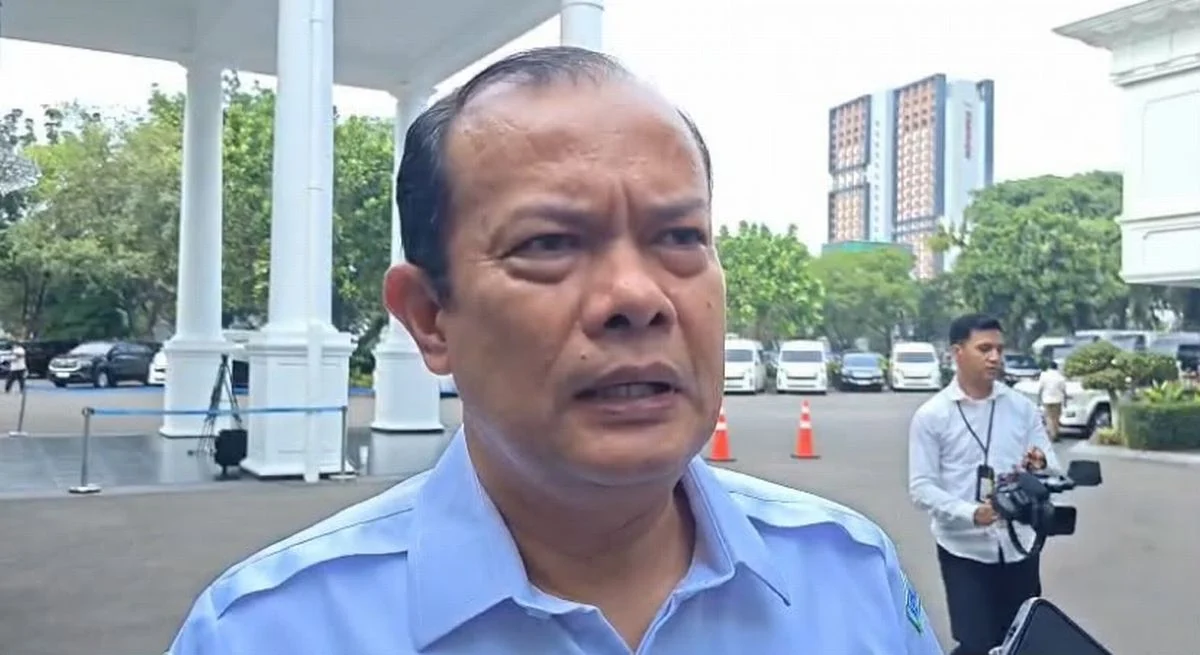
The situation in these two provinces has become a focal point of national disaster management efforts. Head of BMKG, Teuku Faisal Fathani, speaking from the Presidential Palace in Jakarta on Monday, October 26, 2026, underscored the urgency of the intervention. He confirmed that the government is mobilizing significant aviation resources to combat the fires, which have persisted despite seasonal transitions.
The Scope of the Crisis and Operational Response
The current strategy represents one of the most extensive weather modification deployments in Indonesian history. According to Faisal, the operation is strategically split between the most affected regions to maximize the probability of rainfall. Nine aircraft are currently operating over the skies of Central Kalimantan and South Kalimantan, while an additional six aircraft are stationed in South Sumatra.
The inclusion of dry ice—solid carbon dioxide—in the seeding process marks a technical shift in the agency’s approach. While traditional salt-based cloud seeding is standard, the use of dry ice is intended to enhance the cooling of cloud tops, potentially triggering faster precipitation in the convective clouds often found in the tropics. BMKG officials expressed optimism that the current week will transition into a "wet period," which, if coupled with the modified weather patterns, could provide much-needed moisture to quench the parched peatlands.
Chronology and Environmental Context
The 2026 fire season has been particularly challenging due to lingering dry spells that have hampered standard firefighting efforts. Forest and land fires in Indonesia are notoriously difficult to extinguish once they penetrate deep into the carbon-rich peat soils. Even when surface flames are suppressed, smoldering fires can persist underground for weeks, re-igniting whenever weather conditions become sufficiently arid.
The chronology of this year’s crisis mirrors patterns observed in previous severe fire years, such as 2015 and 2019. By mid-September 2026, the BMKG began tracking an uptick in hotspots across Sumatra and Kalimantan. As the "Dry Season Peak" extended beyond initial projections, the regional air quality index (AQI) in cities like Palembang and Palangka Raya began to deteriorate significantly. By early October, local health authorities reported an increase in respiratory ailments, prompting the government to escalate the response from local firefighting brigades to a centralized, multi-agency atmospheric intervention.
Technical Challenges of Weather Modification
Weather modification is not a panacea for forest fires, but it serves as a critical stopgap measure. The effectiveness of OMC relies heavily on the presence of "seedable" clouds. Without adequate moisture in the atmosphere, aircraft cannot generate the necessary precipitation to douse the fires effectively.
BMKG climatologists explain that the current operation is timed to exploit atmospheric instability. By forcing clouds to release their moisture prematurely, the agency aims to increase soil moisture content, thereby reducing the flammability of the peatlands. However, the high-intensity nature of the fires this year, fueled by human activity and agricultural land-clearing, creates a continuous cycle of ignition that challenges even the most sophisticated climate interventions.
Socio-Economic and Health Implications
The persistence of these fires carries profound implications for the Indonesian economy and public health. Beyond the immediate loss of biodiversity and the destruction of carbon-sequestering peat ecosystems, the regional haze poses a significant risk to aviation, transport, and international trade.

Public health impacts are often the most immediate concern for local residents. The fine particulate matter (PM2.5) generated by peat fires is known to cause long-term respiratory issues, cardiovascular stress, and developmental risks for children. In previous years, the haze has led to school closures, the grounding of commercial flights, and a significant burden on the national healthcare system.
From an environmental standpoint, the continued burning of peatlands releases vast quantities of trapped carbon into the atmosphere. This creates a feedback loop: the fires contribute to global temperature increases, which in turn exacerbate the drought conditions that make the forests more susceptible to burning in subsequent years.
Official Stance and Inter-Agency Cooperation
The coordination between the BMKG, the National Disaster Management Agency (BNPB), and the Ministry of Environment and Forestry (KLHK) has been described as a "unified front." The presence of Faisal at the Presidential Palace highlights that the government views the fires as a high-priority national security concern.
Government strategy involves more than just suppression; it involves rigorous monitoring via the Sentinel-2 and Himawari satellite systems, which allow for real-time tracking of hotspots. Ground crews, often consisting of the Manggala Agni firefighting units, work in tandem with the aerial operations. While the aircraft focus on cooling the atmosphere and encouraging rain, ground teams are tasked with the grueling manual labor of "wetting" the peat and creating firebreaks to prevent the spread of flames into protected areas.
Future Outlook and Sustainable Management
While the current operation aims for immediate relief, the recurring nature of the fires necessitates a long-term shift in land management policy. The Indonesian government has faced international pressure to enforce stricter regulations on corporations involved in palm oil and pulpwood production, as many fires are traced back to illegal land-clearing practices.
Experts suggest that while OMC is effective as an emergency measure, sustainable fire prevention requires addressing the root cause: the drainage of peatlands. When peatlands are drained for agricultural use, they become highly flammable. Restoring the hydrology of these areas—a process known as "peatland rewetting"—is widely considered the most effective long-term solution.
As the country moves through the final week of October 2026, the focus remains squarely on the success of the ongoing weather modification. With nine aircraft over Kalimantan and six over Sumatra, the atmosphere is being actively manipulated in hopes of a turning point. For the residents of the affected regions, the arrival of rain is not merely a weather event; it is a vital relief from a season of smoke and uncertainty.
Conclusion
The commitment shown by the BMKG to sustain the largest-ever modification operation underscores the severity of the 2026 fire season. With the combination of dry ice technology and mass aviation deployment, the agency is pulling all available levers to mitigate the environmental and humanitarian impact. As meteorological data continues to pour in, the coming days will be critical in determining whether these efforts can effectively break the cycle of fire and bring much-needed moisture to the scorched landscapes of South Sumatra and Central Kalimantan.
The government’s response serves as a reminder of the delicate balance between economic land use and environmental stewardship. Until systemic changes in land management are fully realized, the reliance on advanced atmospheric technology like the OMC will remain a cornerstone of Indonesia’s disaster response architecture. For now, all eyes are on the sky, waiting for the rain that will mark the end of one of the most challenging fire seasons in recent memory.