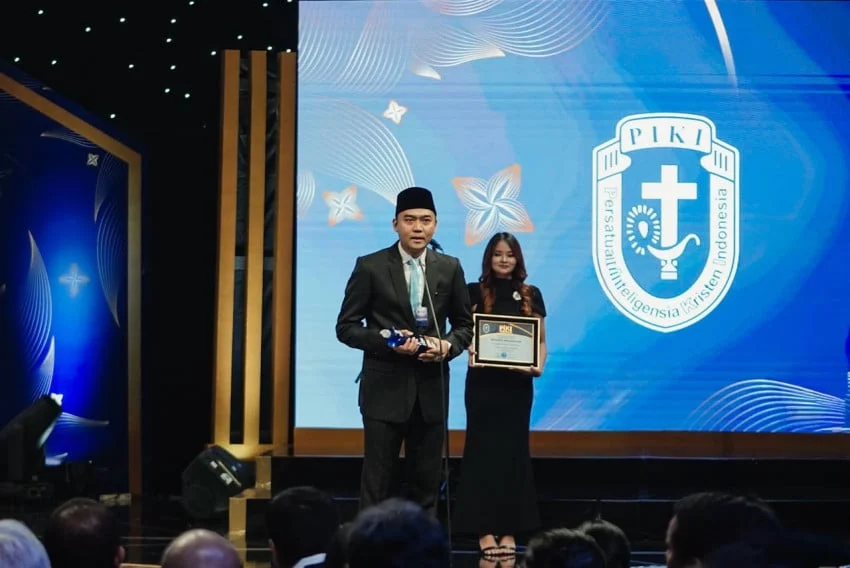
JAKARTA — In a significant acknowledgment of ongoing efforts to bridge communal divides and protect religious liberties in Indonesia, Special Staff to the Minister of Religious Affairs, Gugun Gumilar, was officially honored with the Freedom of Worship Activist accolade at the prestigious Persatuan Inteligensia Kristen Indonesia (PIKI) Awards 2026. The high-profile ceremony, organized by the Indonesian Christian Intellectuals Association, took place on Sunday, October 25, 2026, drawing prominent religious leaders, civil society advocates, academics, and government officials to the Indonesian capital.
The accolade serves as a public testament to Gumilar’s sustained dedication and policy-driven interventions aimed at safeguarding the constitutional rights of minority and majority religious communities alike. Amid ongoing socio-religious challenges in the world’s largest archipelagic nation, the recognition underscores the critical role of inclusive governance and proactive state intervention in maintaining Indonesia’s foundational national motto, Bhinneka Tunggal Ika (Unity in Diversity).
Context and Significance of the PIKI Awards 2026
The Persatuan Inteligensia Kristen Indonesia has long operated as a intellectual and social pillar within Indonesia’s diverse religious landscape. Established to foster critical thinking, theological reflection, and civic responsibility among Christian intellectuals, PIKI frequently engages in nation-building dialogues. The PIKI Awards, a flagship annual event organized by the association, aims to shine a spotlight on individuals and institutions that have demonstrated extraordinary commitment to pluralism, interfaith dialogue, human rights, and constitutional democracy.
The selection of Gugun Gumilar for the Freedom of Worship category was the result of a rigorous evaluation process conducted by PIKI’s independent award committee. The panel reviewed numerous candidates ranging from grassroots activists to high-ranking government officials who have consistently championed tolerance. Gumilar’s selection highlights a growing recognition that state apparatuses, when guided by empathetic and proactive leadership, can effectively mediate interfaith friction and uphold the secular and inclusive nature of the Indonesian state.
A Collective Victory for Religious Harmony
Upon receiving the award, Gumilar struck a humble and inclusive tone. In his official acceptance speech, he emphasized that the honor was not merely a personal milestone or an individual achievement. Instead, he framed the accolade as a collective representation of tireless collaborative efforts involving various stakeholders committed to preserving religious freedom across the archipelago.
"I express my deepest gratitude to PIKI for this appreciation. However, for me, this award is not about personal prestige. It is a tribute to all parties who have continuously worked, struggled, and taken a part in maintaining harmony and ensuring that every citizen can practice their worship according to their beliefs," Gumilar stated during the ceremony.
He further elaborated that the protection of freedom of religion and worship is not a matter of bureaucratic preference, but a non-negotiable constitutional mandate embedded within the 1945 Constitution of the Republic of Indonesia (UUD 1945). Article 29 of the constitution explicitly guarantees the independence of every resident to adhere to their respective religion and to worship according to their religion and beliefs. Gumilar reiterated that realizing this constitutional promise requires a multi-layered approach, involving not only the executive branch of government but every stratum of society.
Chronology of Advocacy: From Policy to Ground-Level Action
Gumilar’s recognition at the PIKI Awards 2026 is deeply rooted in a series of proactive interventions he has spearheaded during his tenure as Special Staff to the Minister of Religious Affairs. Over the past several years, the Ministry of Religious Affairs has intensified its focus on early detection and rapid conflict resolution regarding houses of worship and localized religious disputes.
A notable milestone in Gumilar’s recent operational timeline occurred when he personally conducted a field inspection at the Javanese Christian Church (Gereja Kristen Jawa – GKJ) Nusukan in Solo, Central Java. That mission was designed to ensure that the congregation could conduct their religious activities free from administrative hurdles, intimidation, or social friction. By visiting regional sites of worship directly, Gumilar operationalized the Ministry’s commitment to bridging the gap between Jakarta-based policy formulation and grassroots realities.
Analysts note that this hands-on approach represents a departure from traditional bureaucratic inertia. Historically, localized disputes over the establishment or utilization of houses of worship often languished in administrative deadlocks. By stepping onto the ground, engaging with local religious leaders, regional governments, and community stakeholders, Gumilar and the Ministry have sought to de-escalate tensions before they transform into broader communal conflicts.
The Broader Landscape of Religious Freedom in Indonesia
Indonesia, home to over 275 million people encompassing hundreds of ethnic groups and recognized religions—including Islam, Protestantism, Catholicism, Hinduism, Buddhism, Confucianism, and numerous indigenous belief systems—faces persistent challenges in maintaining interfaith equilibrium. While the state ideology of Pancasila guarantees belief in One Supreme God and promotes social justice for all citizens, bureaucratic hurdles such as obtaining permits for houses of worship (based on the Joint Regulation of the Minister of Religious Affairs and the Minister of Home Affairs) have historically sparked friction.
In recent years, the Ministry of Religious Affairs under the current administration has made religious moderation (penguatan moderasi beragama) a strategic national priority. This policy framework aims to foster an intermediate theological perspective, countering both religious extremism and radical secularism. As a Special Staff member, Gumilar has been instrumental in translating this national priority into tangible diplomatic and administrative actions across various provinces.
Experts observing the socio-political climate in Indonesia point out that the recognition of government officials by independent civil society organizations like PIKI signals a healthy, functioning democracy. It demonstrates that civil society closely monitors state performance and is willing to validate bureaucrats who actively transcend institutional barriers to protect minority and majority rights alike.
Implications and Future Outlook
The presentation of the PIKI Awards 2026 carries several profound implications for public administration and civil-religious relations in Indonesia.
First, it sets a benchmark for bureaucratic accountability. By honoring a government official for protecting freedom of worship, PIKI has reinforced the expectation that state apparatuses must function as active guardians of pluralism, rather than passive observers of social polarization.
Second, the event reinforces the necessity of cross-sectoral collaboration. As Gumilar emphasized in his remarks, securing religious freedom cannot be achieved by the Ministry of Religious Affairs alone. It demands the active participation of religious organizations, civil society watchdogs, academic institutions, and local community leaders. The synergy between organizations like PIKI and government functionaries creates a vital feedback loop that helps keep state policies aligned with human rights standards.
Looking forward, the challenges facing religious freedom in Indonesia are expected to evolve, particularly with the advent of digital communications, which can both amplify interfaith dialogue and accelerate the spread of sectarian disinformation. Officials like Gumilar will likely face new frontiers in managing religious harmony online and offline.
Nevertheless, the accolades bestowed at the PIKI Awards 2026 serve as an encouraging indicator that dedication to constitutional principles, inclusivity, and direct engagement does not go unnoticed. As Indonesia continues its journey as a vibrant, pluralistic democracy, the collaborative framework highlighted by Gugun Gumilar’s recognition offers a constructive blueprint for sustaining peace, mutual respect, and absolute freedom of worship across the nation.