The date of October 28 serves as a profound marker in the historical consciousness of Indonesia, representing the zenith of nationalist sentiment during the colonial era. While the Sumpah Pemuda (Youth Pledge) of 1928 stands as the primary focus of national commemoration, this date also intersects with several pivotal global developments that have shaped modern political and cultural landscapes. Understanding the convergence of these events provides a holistic view of how human history is often linked by threads of independence, ideological transformation, and technological evolution.
The Genesis of Indonesian Nationalism: The 1928 Youth Pledge
The Sumpah Pemuda was not merely a spontaneous declaration; it was the calculated culmination of years of organizational efforts by various youth factions across the Indonesian archipelago. By the late 1920s, the burgeoning intellectual elite, educated in Dutch-run institutions, began to coalesce around the idea of a unified identity that transcended regional, ethnic, and linguistic barriers.
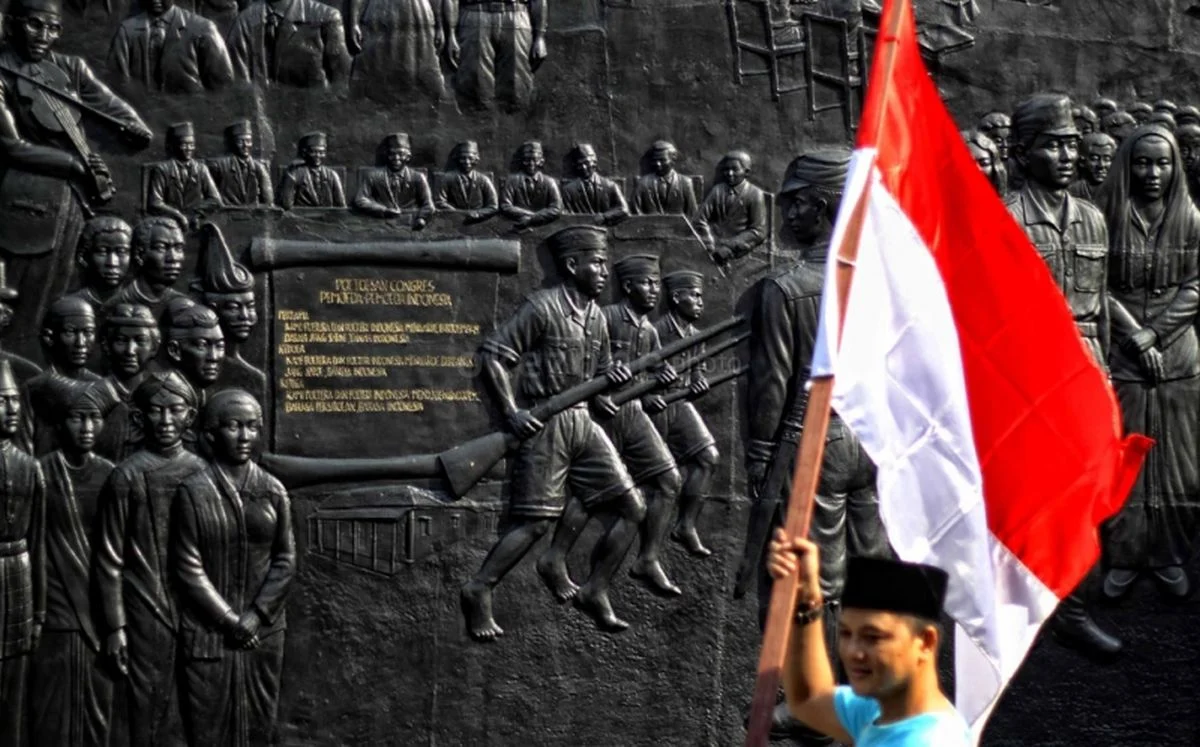
The Second Youth Congress (Kongres Pemuda II) in 1928 was organized by the Perhimpunan Pelajar-Pelajar Indonesia (PPPI), an association of students from across the country. Under the leadership of Sugondo Joyopuspito, the congress sought to formalize the aspirations of a fragmented nationalist movement. The sessions held on October 27 and 28, 1928, provided a platform for representatives from groups such as Jong Java, Jong Sumatranen Bond, Jong Celebes, and Jong Ambon to bridge their differences.
The final result, the three-point pledge, remains the bedrock of Indonesian national identity:
- We, the sons and daughters of Indonesia, acknowledge one motherland, Indonesia.
- We, the sons and daughters of Indonesia, acknowledge one nation, the Indonesian nation.
- We, the sons and daughters of Indonesia, uphold the language of unity, the Indonesian language.
This linguistic assertion was particularly radical at the time, as it proposed the Malay-based "Bahasa Indonesia" as the lingua franca, effectively sidelining the colonial Dutch language and regional vernaculars in favor of a unifying national tool.
Chronology of the Congress: October 27–28, 1928
The logistics of the congress underscore the determination of the participants. The first session took place at the Katholieke Jongenlingen Bond building, where discussions focused on the importance of unity and the psychological foundations of national character. The second day, October 28, was held at the Oost Java building in Medan Merdeka Utara. It was here that the resolution was finalized, accompanied by the first public performance of the national anthem, "Indonesia Raya," played by W.R. Supratman on the violin.
The immediate implication of this gathering was the transition of the nationalist movement from localized, ethnically-based organizations to a centralized, singular vision of an independent Indonesian state. This shift arguably laid the structural and ideological groundwork for the eventual proclamation of independence seventeen years later in 1945.
Global Historical Context of October 28
Beyond the borders of the Dutch East Indies, October 28 has been a date of significant historical flux. The world has witnessed the collapse of empires, the birth of nations, and the rise of individuals who would redefine the human experience.
The Dissolution of the Austro-Hungarian Empire
On October 28, 1918, the Czechoslovak National Council proclaimed the independence of Czechoslovakia from the Austro-Hungarian Empire. This was a direct result of the destabilization caused by World War I and the collapse of the Habsburg dynasty. The establishment of Czechoslovakia, led by Tomáš Garrigue Masaryk, marked the emergence of democratic ideals in Central Europe, following the principle of self-determination popularized in the aftermath of the Great War.

Intellectual and Cultural Milestones
The date is also marked by the passing of influential figures. On October 28, 1704, the English philosopher John Locke died. Locke’s theories on the social contract, individual rights, and the government’s responsibility to the governed profoundly influenced the Enlightenment and the American Revolution. His work continues to serve as a foundation for modern political liberalism.
Conversely, the date also marks the birth of figures who reshaped the modern technological landscape. Bill Gates, the co-founder of Microsoft, was born on October 28, 1955. His trajectory from a software developer to the leader of a global enterprise illustrates the shift of the late 20th century toward the digital economy, a stark contrast to the revolutionary movements of the early 20th century.
Institutional Perspectives and Commemoration
Today, the Indonesian government and various civil society organizations view the Sumpah Pemuda as an ongoing project rather than a static historical event. Official commemorations emphasize the "relevance of the pledge in the digital age."
In recent statements, government officials have highlighted that the modern challenge is not colonial occupation, but the fragmentation caused by digital disinformation and social polarization. The Ministry of Youth and Sports frequently frames the commemoration as a call to action for the "Gen Z" and "Millennial" demographics to leverage their technological prowess for national development, mirroring the intellectual activism of their predecessors in 1928.
Sociologists note that the Sumpah Pemuda remains a vital psychological anchor. In a country as diverse as Indonesia—comprising over 17,000 islands and hundreds of distinct ethnic groups—the pledge serves as the primary "social glue." The implications of the pledge have evolved from a demand for independence to a requirement for inclusive governance and sustainable development in the 21st century.
Analysis: Implications for Future Generations
The resonance of October 28 lies in its capacity to adapt to changing historical needs. While the 1928 event was about achieving political sovereignty, the current interpretation focuses on "sovereignty in the global landscape." This includes economic self-reliance, cultural preservation amidst globalization, and the maintenance of political stability.
Data from the Indonesian Central Bureau of Statistics regarding youth demographic trends indicates that the nation is currently experiencing a "demographic bonus." With a significant portion of the population under the age of 30, the spirit of 1928 is being re-contextualized. Analysts argue that if the 1928 youth were successful in forging a nation through ideological unity, the challenge for the current generation is to maintain that unity through economic and educational advancement.
Conclusion
October 28 serves as a multi-layered reminder of the trajectory of human history. For Indonesia, it is the day that defined the national identity. For the global community, it is a day of structural shifts, from the end of imperial rule in Central Europe to the birth of figures who influenced the global digital age.
The common thread linking these disparate events is the human desire for progress—whether that progress is defined as political independence, intellectual freedom, or technological innovation. As time moves forward, the legacy of the Sumpah Pemuda persists not merely as a chapter in a history book, but as a living mandate for the Indonesian youth to continue the work of their ancestors, adapting their vision of unity to the complexities of the modern world. The challenge for the future remains consistent: to ensure that the spirit of the pledge—the commitment to one nation, one people, and one language—remains robust in an increasingly interconnected and rapidly changing global society.