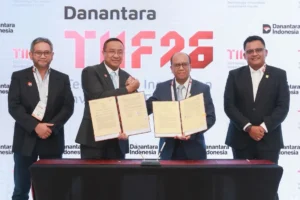
The rapid evolution of Artificial Intelligence (AI) is fundamentally altering the global economic landscape, ushering in an era where digital infrastructure acts as the bedrock for industrial innovation and public service delivery. At the Danantara Indonesia Technology and Innovation Forum (DTIIF) 2026, held on Tuesday, October 27, in Jakarta, industry leaders converged to discuss how emerging technologies will reshape global markets. Central to these discussions was the perspective of Nanang Hendarno, President Director of PT Telkom Indonesia (Persero) Tbk, who argued that technological adoption alone is insufficient to capture the potential of the current industrial wave. Instead, Hendarno emphasized the urgent need for a robust ecosystem that integrates connectivity, data center capacity, and strategic investment to ensure sustainable industrial growth and national technological sovereignty.
The DTIIF 2026 Forum Context
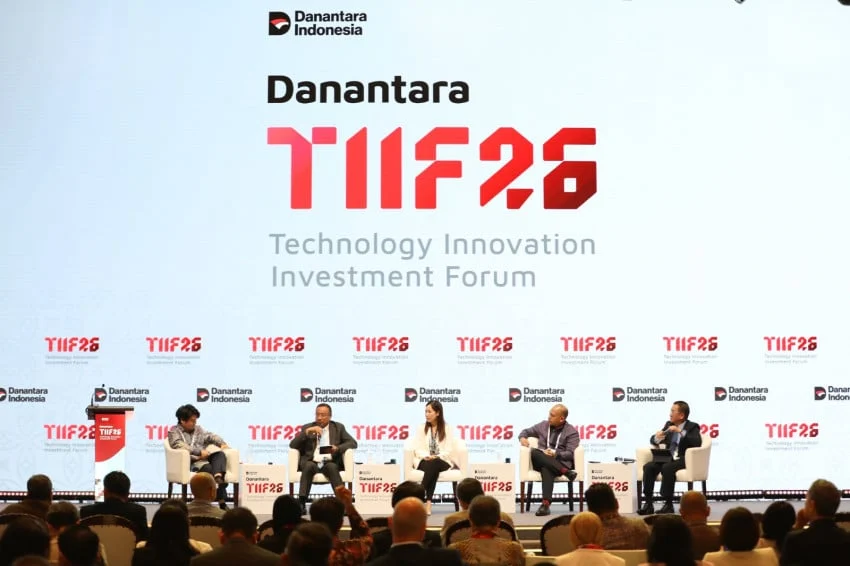
The Danantara Indonesia Technology and Innovation Forum (DTIIF) 2026 serves as a premier gathering for policymakers, global technology executives, and infrastructure developers. Organized to address the strategic positioning of Indonesia in the global digital economy, the forum focuses on the convergence of digital, business, and infrastructure development. The plenary session, titled "The Next Industrial Wave: Which Technologies Will Create New Global Industries?", highlighted the necessity for emerging economies to transition from mere consumers of technology to architects of their own digital infrastructure.
Hendarno was joined on the panel by Teddy Liu, Executive Director and CEO of JINGDONG Coinlink Technology Hong Kong Limited, and Sara Supaamornkul, Senior Director of International Business Development at AtkinsRéalis. Moderated by Irwan Rei, Managing Director of Strategic Technology Initiatives at Danantara Indonesia, the dialogue explored the intersection of high-speed connectivity and AI deployment, questioning how businesses can bridge the gap between experimental pilot projects and scalable, profitable industrial solutions.
The Economics of AI Infrastructure
A core component of Hendarno’s presentation centered on the shifting economic model of AI. He noted that since 2022, the cost per AI query has plummeted by approximately 280 times, a dramatic decline that has democratized access to generative AI tools. This reduction in cost has catalyzed a surge in usage, with data from platforms such as Google indicating that AI consumption has increased sevenfold within a single year.
However, Hendarno cautioned that the "gold rush" mentality surrounding AI applications might be misplaced. He argued that the most sustainable economic value is not found in the immediate sale of AI software units, but rather in the foundational infrastructure that supports massive, high-frequency usage.
"Peluang terbesar bukan sekadar menjual AI per unit, melainkan membangun infrastruktur yang menopang penggunaannya secara luas," Hendarno stated. He explained that as the cost of computation drops, the consumption of digital services grows exponentially. Therefore, the strategic advantage for national telecommunications providers lies in their ability to provide the underlying data centers, high-capacity networks, and the "trust architecture"—cybersecurity and data sovereignty frameworks—necessary for widespread institutional adoption.
Addressing the ROI Gap in Generative AI
Despite the optimism surrounding AI, the industry currently faces a significant "valuation chasm." Data presented during the forum highlighted that while enthusiasm for AI is high, actual performance remains volatile. Statistics shared by Hendarno indicated that approximately 95% of generative AI pilot projects fail to generate a measurable impact on a company’s bottom line. Furthermore, only 25% of enterprises have successfully achieved a return on investment (ROI) that meets their initial strategic expectations.
This discrepancy between pilot success and commercial viability suggests a "maturity gap" in the current market. Many organizations are struggling to integrate AI into existing legacy systems, leading to high operational costs that negate the efficiency gains promised by the technology. For Telkom Indonesia, this reality underscores the need for a consultative approach: providing not just the connectivity (the "pipes") but also the managed services and cloud infrastructure that allow enterprises to deploy AI in a cost-effective manner.
Chronology of Digital Transformation in Indonesia
The focus on AI and infrastructure at DTIIF 2026 is part of a broader, multi-year trajectory for Indonesia’s digital economy. The timeline of this transformation can be traced through several key phases:
- 2020–2021 (The Acceleration Phase): The global pandemic forced a rapid shift toward digitization, prompting state-owned enterprises like Telkom to accelerate their data center and 5G rollout programs to support remote work and digital banking.
- 2022–2023 (The Infrastructure Build-out): As generative AI gained mainstream traction, Indonesia focused on expanding its fiber-optic footprint and developing massive hyper-scale data centers to keep pace with growing data residency requirements.
- 2024–2025 (The Integration Phase): The focus shifted toward standardizing AI governance, improving cybersecurity protocols, and fostering a domestic ecosystem for Large Language Models (LLMs) localized to Indonesian languages and cultural contexts.
- 2026 (The Industrial Wave): The current phase, as highlighted at DTIIF 2026, marks the move toward "Industrial AI," where the focus is on integrating technology into manufacturing, logistics, and large-scale public infrastructure.
Implications for National Technological Sovereignty
A significant theme of the forum was the concept of technological sovereignty. For Indonesia, a nation with a vast geography and a rapidly expanding middle class, relying entirely on foreign AI infrastructure poses risks to data security and economic independence.
Hendarno’s emphasis on building a local ecosystem suggests that Telkom is positioning itself as a "sovereign cloud" provider. By keeping data within national borders and building infrastructure that complies with domestic regulations, Indonesia can ensure that its industrial growth is not entirely dependent on foreign providers. This strategy is essential for protecting sensitive public service data and ensuring that the economic gains from AI remain within the country.
Expert Perspectives and Broader Impact
Industry analysts observing the forum noted that the shift from "AI-as-a-product" to "AI-as-an-infrastructure" is a natural evolution in the tech lifecycle. Sara Supaamornkul of AtkinsRéalis noted that for large-scale engineering and infrastructure projects, the value of AI lies in predictive maintenance and optimized supply chain management—areas that require the high-speed, low-latency connectivity that Telkom provides.
Similarly, Teddy Liu of JINGDONG Coinlink emphasized that the integration of blockchain and AI could provide the transparency and trust required for secure cross-border digital trade. He pointed out that the next wave of global industries will be built by companies that can successfully blend hardware (data centers and sensors) with software (AI and data analytics).
Conclusion: Preparing for the Next Wave
The conclusion drawn from the DTIIF 2026 plenary session is clear: the future of industrial competitiveness will be defined by those who control the "middle layer" of the tech stack—the data centers and the connectivity that make AI possible.
For PT Telkom Indonesia, the road ahead involves a delicate balance of aggressive infrastructure investment and the implementation of practical, ROI-driven AI solutions for their clients. By addressing the 95% failure rate of pilot projects through better infrastructure support and strategic guidance, Telkom aims to stabilize the market and lead Indonesia into the next era of industrial innovation.
As the forum concluded, the consensus among participants was that while AI is the engine of the next industrial wave, connectivity and infrastructure are the fuel. Without a sovereign, robust, and secure digital foundation, the transformative potential of AI will remain largely theoretical. Indonesia’s proactive stance, as evidenced by the strategic focus at DTIIF 2026, signals a readiness to move beyond the experimental phase and into a period of deep, infrastructure-led industrial transformation that promises to redefine the nation’s role in the global digital economy for the coming decade.