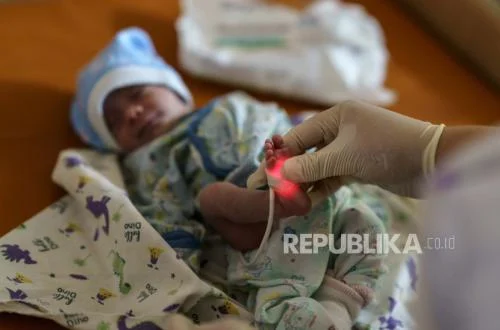
The identification of Congenital Heart Disease (CHD) in infants remains one of the most pressing challenges in modern pediatrics, particularly in developing nations where diagnostic resources may be unevenly distributed. Dr. Rizky Adriansyah, the Chairman of the Cardiology Coordination Tool Unit of the Indonesian Pediatric Society (IDAI), recently underscored the gravity of this issue during a comprehensive media briefing. According to Dr. Rizky, one of the most visible and primary indicators that a child may be suffering from an underlying heart defect is a persistent difficulty in gaining weight. This clinical sign, often referred to as "failure to thrive," serves as a critical red flag for parents and primary care physicians alike, signaling that the infant’s metabolic demands are not being met due to a compromised cardiovascular system.
Congenital Heart Disease refers to a broad spectrum of structural and functional abnormalities of the heart that are present from birth. these defects occur during the intricate process of fetal heart development, typically within the first eight weeks of pregnancy. While some defects are minor and may resolve on their own, others are life-threatening and require immediate surgical intervention. The Indonesian Pediatric Society’s recent briefing aimed to bridge the knowledge gap among the public, emphasizing that the window for effective intervention is often narrow and depends heavily on the vigilance of caregivers and the accuracy of early screenings.
The Clinical Manifestations of Congenital Heart Disease
Dr. Rizky Adriansyah highlighted that while heart disease is often associated with the elderly, the pediatric version presents a unique set of symptoms that can be easily overlooked or attributed to other common childhood ailments. The struggle to gain weight is a hallmark symptom because a heart with structural defects must work significantly harder to pump blood to the rest of the body. This increased workload consumes a disproportionate amount of the infant’s caloric intake, leaving little energy for growth and physical development.
Beyond weight issues, Dr. Rizky identified several other symptoms that constitute the clinical profile of CHD or early-stage heart failure in children. These include chronic fatigue and shortness of breath, particularly during feeding or mild physical activity. In many instances, these respiratory symptoms lead to a frequent and dangerous misdiagnosis. "This is where the diagnosis often goes astray," Dr. Rizky noted. "Children exhibiting these symptoms are frequently diagnosed with asthma. While the symptoms of wheezing and labored breathing are indeed similar, they may actually be manifestations of CHD rather than a primary respiratory condition."
Furthermore, parents are urged to be cautious if their child suffers from recurring bouts of pneumonia, persistent coughs, or flu-like symptoms that do not seem to resolve. The mechanism behind this is often related to "pulmonary overcirculation," where a heart defect causes too much blood to flow to the lungs, leading to congestion and making the child more susceptible to respiratory infections. The cycle of falling ill, recovering briefly, and then relapsing is a classic sign that the underlying cause may be structural rather than purely infectious.
Diagnostic Breakthroughs and the Role of Echocardiography
Once a suspicion of CHD is raised through physical symptoms, the medical community relies on advanced imaging to confirm the diagnosis. The gold standard for this is the echocardiogram, commonly referred to as a heart USG. This diagnostic tool utilizes high-frequency ultrasonic waves to create a real-time, detailed image of the heart’s chambers, valves, and blood vessels. It allows pediatric cardiologists to visualize the direction of blood flow and identify any holes in the heart walls (septal defects) or narrowed valves.
The utility of echocardiography extends far beyond the postnatal period. Dr. Rizky emphasized that modern medical technology allows for the detection of heart defects while the fetus is still in the womb. Fetal echocardiography can be performed as early as the 16th week of pregnancy, once the heart’s structure is sufficiently formed. This early window of detection is transformative for clinical outcomes. If a defect is identified in utero, medical teams can prepare for a specialized delivery, ensuring that a neonatal surgical team is on standby to provide life-saving care the moment the baby is born.
Global and National Data: A Growing Public Health Concern
The prevalence of Congenital Heart Disease is a global concern. Data from the United States indicates that approximately 35,000 to 40,000 babies are born with heart defects every year, making it the most common type of birth defect. In the context of Indonesia, with a population of over 270 million, the numbers are equally staggering. It is estimated that 1 out of every 100 live births involves some form of CHD. With roughly 4.5 to 5 million births annually in Indonesia, this translates to nearly 45,000 to 50,000 new cases of pediatric heart disease every year.
The mortality rate for untreated critical CHD is high, with many infants not surviving past their first birthday without surgical intervention. However, the survival rate for children with CHD has improved dramatically over the last few decades due to advancements in surgical techniques and post-operative care. In high-income countries, the survival rate into adulthood for children born with CHD now exceeds 90%. The challenge remains in ensuring that similar diagnostic and treatment standards are accessible in middle-to-low-income regions.
The Importance of Systematic Screening
The Indonesian Pediatric Society continues to advocate for more systematic screening processes. Dr. Rizky reiterated that early detection is not just a medical preference but a "crucial" necessity to prevent irreversible organ damage and death. In many advanced healthcare systems, Pulse Oximetry screening is performed on all newborns before they leave the hospital. This simple, non-invasive test measures the oxygen saturation in the blood and can identify "silent" heart defects that do not immediately present with a murmur or visible distress.
For parents, the message from IDAI is clear: do not ignore the signs of slow growth or chronic respiratory issues. Seeking a consultation with a pediatric cardiologist is a vital step for any child showing these symptoms. Early intervention often means the difference between a child requiring a single corrective procedure versus a lifetime of chronic illness and multiple surgeries.
Socio-Economic Impact and Healthcare Implications
The implications of CHD extend beyond the individual patient and into the broader socio-economic fabric of the country. Treating heart disease is expensive, often requiring specialized intensive care units (ICUs), expensive prosthetic valves or patches, and highly trained surgical teams. For families, the emotional and financial toll can be devastating.
In Indonesia, the national health insurance scheme (BPJS Kesehatan) covers many aspects of CHD treatment, but the backlog for surgeries remains a significant hurdle. There is a limited number of specialized cardiac centers capable of performing complex pediatric heart surgeries, leading to long waiting lists. Experts argue that by investing more in early screening and regional diagnostic centers, the healthcare system can manage these cases more efficiently, potentially performing less invasive catheter-based interventions early on rather than waiting for the condition to deteriorate into a complex surgical emergency.
Analysis: Moving Toward a Preventive Paradigm
The statements made by Dr. Rizky Adriansyah reflect a broader shift in the Indonesian medical community toward a preventive and early-intervention paradigm. By educating the public on the subtle signs of CHD—such as the link between weight gain and heart health—medical professionals are empowering parents to act as the first line of defense.
The confusion between asthma and CHD highlights a critical need for better training for general practitioners and midwives, who are often the first point of contact for new mothers. If these frontline healthcare workers are trained to recognize that not all wheezing is asthma and not all poor growth is due to malnutrition, the rate of early diagnosis will naturally rise.
Furthermore, the emphasis on fetal echocardiography at 16 weeks suggests a move toward integrating specialized cardiology into standard prenatal care. As ultrasound technology becomes more ubiquitous in rural clinics, the possibility of identifying these defects before birth becomes more realistic, even in remote areas of the Indonesian archipelago.
In conclusion, while Congenital Heart Disease remains a formidable challenge, the roadmap provided by the Indonesian Pediatric Society offers a clear path forward. Through a combination of parental vigilance, accurate symptom recognition, and the strategic use of echocardiography, the medical community can significantly reduce the morbidity and mortality associated with this condition. As Dr. Rizky Adriansyah concluded, the ultimate goal is to ensure that every child born with a heart defect is given the opportunity to lead a full and healthy life, a goal that begins with the simple act of monitoring a baby’s growth and breathing.