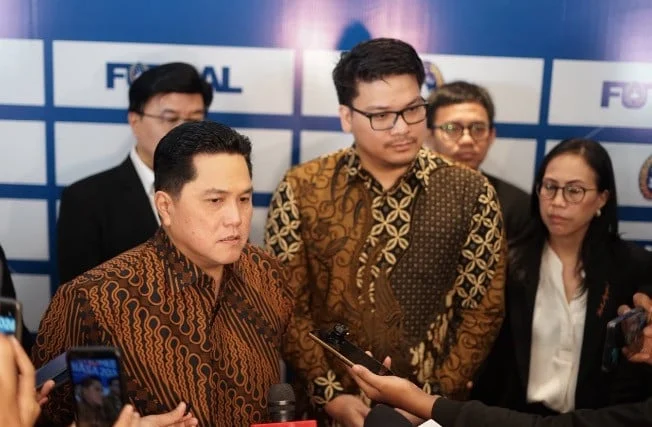
JAKARTA — The Indonesian Futsal Federation (Federasi Futsal Indonesia or FFI) has officially announced a significant structural realignment, marked by the termination of Budi Setiawan from his position as Secretary General. The decision, formalized under Decree No: 0071/FFI-KEP/1229/ORG/XI-2026, signals a pivotal shift in the administrative governance of the organization as it seeks to optimize its internal operations and strategic output for the upcoming fiscal and competitive cycle. This move is categorized by the federation as a necessary step toward enhancing organizational agility and ensuring that the leadership structure remains aligned with the federation’s long-term objectives for the sport’s development within the archipelago.
The Strategic Context of the Leadership Shift
The removal of the Secretary General—a role that serves as the administrative backbone of the federation—comes at a time when the Indonesian Futsal Federation is navigating a period of increased scrutiny and high expectations. Under the leadership of Chairman Michael Sianipar, FFI has been tasked with modernizing the sport’s infrastructure, broadening its commercial appeal, and improving the performance metrics of the national futsal teams on the international stage.
Administrative restructuring is common in national sports federations; however, the timing of this decision, coming late in the year 2026, suggests a proactive preparation for the 2027 competitive calendar. In professional sports governance, the Secretary General is responsible for the daily execution of board policies, overseeing staff, managing regional relations, and ensuring compliance with both internal statutes and external mandates from the Asian Football Confederation (AFC) and FIFA. By vacating this role, FFI is signaling a desire to install a new administrative philosophy that may focus more heavily on digital transformation, grassroots engagement, and transparent governance.
Chronology of Organizational Change
The decision to dismiss Budi Setiawan was not an isolated incident but rather the culmination of an internal review process that has been ongoing throughout the latter half of 2026. While the public announcement was made in November 2026, sources close to the federation indicate that the leadership had been evaluating the effectiveness of the central secretariat for several months.
- Q3 2026: FFI initiates a comprehensive audit of its administrative workflows and project management efficiency across regional chapters.
- October 2026: Informal discussions regarding the necessity of structural reforms are held among the executive committee members.
- November 2026: Formalization of the restructuring plan, leading to the issuance of Decree No: 0071/FFI-KEP/1229/ORG/XI-2026.
- November 2026: Official public notice of the Secretary General’s dismissal and the initiation of the transition phase to ensure continuity of operations.
This timeline reflects a deliberate effort by the current leadership to manage the transition during the off-season of major league competitions, thereby minimizing the impact on ongoing tournament schedules.
Analyzing the Role of the Secretary General in FFI
To understand the magnitude of this change, one must examine the specific duties of the Secretary General within the FFI framework. The office serves as the primary liaison between the executive board, regional futsal associations (Asosiasi Futsal Provinsi), and international governing bodies. Any friction in this chain of command can lead to delays in licensing, failure to meet grant disbursement deadlines, or miscommunication in tournament logistics.
In recent years, the Indonesian futsal ecosystem has grown exponentially. The professional league (Liga Futsal Profesional Indonesia) has seen an increase in sponsorship interest and broadcast quality. Consequently, the administrative demands on the federation have shifted from purely logistical to highly commercial and media-centric. The change in leadership is likely intended to bring in a figurehead capable of managing these complex commercial relationships while maintaining the discipline required for high-performance sports management.
Official Stance and Leadership Philosophy
Chairman Michael Sianipar has positioned this decision as a pragmatic necessity rather than a punitive measure. In his official statement, Sianipar emphasized that the collective goals of the federation must supersede the tenure of any individual.
"Organization must continue to evolve and move forward," Sianipar stated. "Every leadership decision must place the interests of the organization above individual interests. We appreciate every contribution that has been made, and we ensure that we remain committed to maintaining the continuity of the Indonesian futsal development agenda."
This rhetoric underscores a "results-oriented" governance style. For the broader Indonesian sporting community, Sianipar’s emphasis on "continuity" is crucial. It serves to reassure stakeholders—including sponsors, athletes, and the Indonesian Ministry of Youth and Sports—that the dismissal of a key official will not cause a vacuum of power or a suspension of ongoing programs such as the national team training camps and the development of the youth talent pipeline.
Broader Impact and Implications for the Futsal Ecosystem
The ripple effects of this restructuring will likely be felt across several tiers of the Indonesian futsal landscape:
1. Strengthening Regional Relations
A major challenge for FFI has always been the synchronization of regional associations with the central office in Jakarta. The new administrative leadership will likely be tasked with standardizing reporting and development protocols across all provinces, ensuring that the "FFI standard" is met regardless of geographic location.
2. Commercial and Media Relations
As the commercial value of futsal increases, the federation requires a Secretary General who can navigate complex media rights, sponsorship acquisitions, and digital marketing strategies. The current transition period offers FFI an opportunity to recruit talent with a background in sports management and commercial development, rather than relying solely on traditional bureaucratic structures.
3. National Team Performance
While the Secretary General is primarily an administrative role, their efficiency directly impacts the national team. Effective management ensures timely visa processing, equipment procurement, and travel arrangements for international competitions. By streamlining the secretariat, FFI aims to ensure that athletes can focus entirely on performance without the distraction of administrative hurdles.
4. Governance and Transparency
In the current era of sports administration, transparency is paramount. By restructuring the top layer of management, FFI is likely attempting to signal to its members and the public that it is taking proactive measures to improve its governance profile. This could be a vital move if the federation intends to bid for hosting international tournaments in the future, as FIFA and the AFC place high premiums on the administrative stability of member associations.
Challenges Ahead for the Federation
Despite the optimism expressed by the leadership, the transition will not be without challenges. The new appointee will face an immediate backlog of administrative tasks and will need to quickly build rapport with the regional associations. Furthermore, the federation must ensure that the departure of Budi Setiawan does not lead to a loss of institutional knowledge. Documenting processes and maintaining a clear handover of ongoing projects will be the primary test for the FFI leadership in the coming weeks.
Additionally, the federation must manage internal morale. When a high-ranking official is dismissed, it can create a period of uncertainty among the staff. Clear communication from the Chairman regarding the vision and the roadmap for the search for a successor will be essential to maintaining internal stability.
Future Outlook: The Road to 2027 and Beyond
As the Indonesian Futsal Federation looks toward 2027, the focus remains firmly on development. The federation has outlined a path that includes strengthening the professional league, investing in referee training, and expanding the reach of women’s futsal. These are ambitious goals that require a unified and highly functional administrative core.
The removal of the Secretary General is the first domino in what appears to be a broader effort to revitalize the federation. Whether this leads to a "golden era" for Indonesian futsal depends on the effectiveness of the next administrative lead and the ability of the executive committee to support the necessary changes.
For now, the stakeholders in the futsal community—from club owners to grassroots coaches—are watching closely. The stability of the federation is the foundation upon which the success of the sport is built. If the FFI can execute this transition smoothly, it may well prove to be the catalyst for the sustained growth and professionalization of the sport in Indonesia. As Michael Sianipar noted, the organization must move forward, and in the high-stakes environment of international sports, standing still is often the same as moving backward. Through this structural realignment, the FFI is clearly signaling that it intends to keep pace with the evolving demands of the global futsal community.