George Tawlon Manneh Oppong Ousman Weah’s remarkable journey from the dusty football pitches of Monrovia to the hallowed halls of the presidency is a testament to an extraordinary life of ambition, talent, and public service. In December 2017, the man affectionately known as "George Weah" officially ascended to the highest office in Liberia, capping a career that had already seen him achieve unparalleled success in the world of football, including being crowned the FIFA World Player of the Year in 1995. His transition from global sporting icon to national leader signifies a profound shift, intertwining athletic legacy with political aspiration in a narrative that has captivated the world.
A Humble Beginning and a Stellar Rise in Football
Born on October 1, 1966, in Monrovia, Liberia, George Weah’s early life was steeped in the vibrant, often challenging, realities of his homeland. His prodigious talent for football was evident from a young age, honed on the sandy grounds of his neighborhood. These formative experiences laid the foundation for a career that would see him grace some of Europe’s most prestigious clubs. Weah’s initial forays into organized football were with local Liberian teams such as Invincible Eleven, Mighty Barolle, Bongrange Bonguine, and Young Survivors of Claretown. It was with Young Survivors, a team that notably operated without a coach, that Weah demonstrated his leadership potential, guiding them to promotion into the top division.
This early success did not go unnoticed. In 1987, at the age of 21, Weah secured a three-year contract with Tonnerre of Yaoundé in Cameroon. His impact was immediate, helping the club clinch the league title in his inaugural season. This achievement served as a crucial stepping stone, propelling him onto the international stage.
The European Dream: Monaco, PSG, and AC Milan
The allure of European football proved irresistible, and in 1987, AS Monaco, a prominent club in France’s top division, secured Weah’s signature. His transfer marked the beginning of a prolific five-season spell in France, during which he netted an impressive 57 goals between 1987 and 1992. His time at Monaco was not just about individual brilliance; he also contributed to the team’s success, notably helping them win the French Cup in 1991.
Weah’s electrifying pace, exceptional dribbling skills, and pinpoint accuracy in front of goal quickly made him a fan favorite and a coveted asset for clubs across Europe. His relentless work ethic and uncompromising technical ability caught the eye of Paris Saint-Germain (PSG), who signed him, further solidifying his reputation as a world-class talent.
At PSG, Weah continued to shine, becoming a household name. His contributions were instrumental in the club’s triumphs, including winning the Coupe de France, the French league title, and reaching the semi-finals of the UEFA Champions League in 1995. Across 123 appearances in Ligue 1, he amassed 37 goals and 3 assists, showcasing his consistent offensive threat.
In 1995, a significant transfer saw Weah move to the storied Italian club AC Milan for a substantial fee. His five-year tenure in Serie A (1995-2000) was the pinnacle of his playing career. He played a pivotal role in AC Milan securing league titles in 1996 and 1999. During his time in Italy, he scored 51 goals and provided 1 assist in 114 appearances, cementing his status as one of the era’s most formidable strikers.
The Pinnacle of Footballing Achievement: Ballon d’Or and World Player of the Year
The year 1995 proved to be George Weah’s crowning glory on the football field. His exceptional performances for both PSG and AC Milan earned him the prestigious Ballon d’Or, awarded to the best player in Europe, in 1996, following his recognition as FIFA World Player of the Year in 1995. He remains the only African player to have won these coveted individual accolades, a remarkable achievement that underscores his unparalleled impact on the sport. These awards were not merely personal triumphs but also symbolized a groundbreaking moment for African football on the global stage, breaking the dominance of European and South American players.
His playing career continued with stints at Chelsea (on loan), Manchester City, and Marseille before he eventually retired from professional football. However, his influence extended far beyond the pitch.
Transition to Politics: A New Arena for Service
Upon retiring from football, George Weah did not fade from public life. Instead, he pivoted his considerable influence and popularity towards a new, ambitious endeavor: politics. Recognizing the deep-seated challenges facing Liberia, including poverty, corruption, and a lack of infrastructure, Weah announced his intention to run for the presidency. This decision was met with a mixture of hope and skepticism, given Liberia’s complex political landscape and his relatively limited experience in governance.
His political career began with a senatorial bid in Montserrado County in 2014, which he won. This victory provided him with valuable experience in the legislative branch and a platform to articulate his policy vision for Liberia. He then embarked on a presidential campaign, building a coalition of support that transcended traditional political divides.
The 2017 Presidential Election: A Historic Mandate
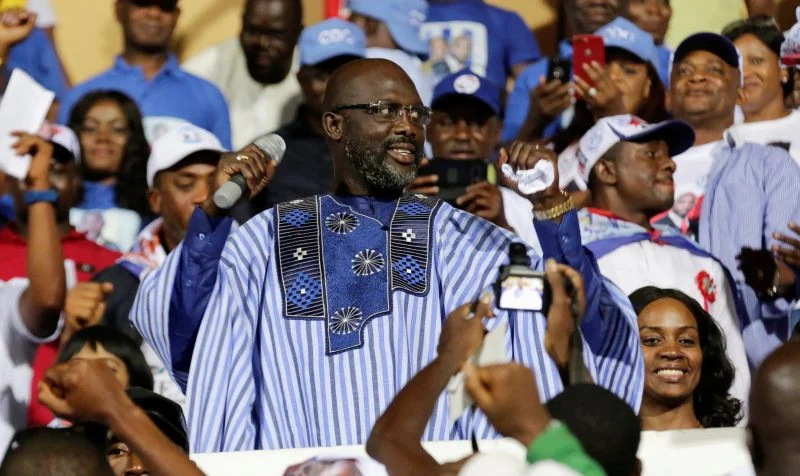
The 2017 Liberian general election was a highly anticipated event, marking a crucial moment in the nation’s post-civil war recovery. George Weah, representing the Coalition for Democratic Change (CDC), emerged as a leading contender, challenging the incumbent Vice President, Joseph Boakai, of the Unity Party. The campaign was characterized by passionate rallies, extensive grassroots mobilization, and a focus on issues of economic development, job creation, and social welfare.
Weah’s campaign resonated with many Liberians who saw him as an outsider, a symbol of hope, and a potential agent of change. His celebrity status and philanthropic efforts, particularly his work with the George Manneh Weah Foundation, had already endeared him to a broad segment of the population. His message of "Liberia First" and his promises to tackle corruption and improve living standards struck a chord with voters eager for a new direction.
The election, however, was not without its complexities. Initial delays and accusations of irregularities in the first round of voting led to a run-off election between Weah and Boakai. Despite these challenges, the process ultimately concluded with a clear outcome. On December 29, 2017, the National Elections Commission of Liberia declared George Weah the winner of the presidential election, securing over 61% of the vote in the run-off. This historic victory marked the first peaceful transfer of power from one democratically elected president to another in Liberia in over 70 years.
Governing Liberia: Challenges and Aspirations
Assuming the presidency in January 2018, George Weah inherited a nation grappling with significant economic headwinds, high unemployment, and the lingering effects of years of instability. His administration has faced the daunting task of fulfilling the promises made during his campaign, navigating the complexities of governance, and fostering sustainable development.
Key policy priorities for the Weah administration have included:
- Economic Reform: Efforts to attract foreign investment, diversify the economy, and create jobs have been central to his agenda. However, Liberia’s reliance on commodity exports and its limited industrial base present persistent challenges.
- Anti-Corruption Measures: Weah has repeatedly pledged to combat corruption, a pervasive issue that has historically hindered Liberia’s progress. Implementing robust transparency and accountability mechanisms remains a critical focus.
- Infrastructure Development: Improving roads, power infrastructure, and access to basic services are crucial for economic growth and improving the quality of life for Liberians.
- Education and Healthcare: Investing in these vital sectors is seen as essential for building human capital and ensuring a healthier, more educated populace.
The initial years of his presidency have seen both progress and setbacks. While his administration has initiated several development projects and implemented some reforms, the country continues to face economic difficulties, exacerbated by global factors and internal constraints. The transition from the euphoria of election victory to the realities of governing has been a steep learning curve, and public expectations remain high.
The Global Impact of Weah’s Journey
George Weah’s ascension to the presidency is more than just a Liberian story; it’s a global phenomenon. His journey from sporting idol to head of state serves as an inspiration, demonstrating that individuals can transcend perceived limitations and make significant contributions in diverse fields. It highlights the potential for public figures to leverage their platforms for positive social and political change.
For many, Weah represents a new generation of African leadership, one that is forward-looking, globally connected, and committed to democratic principles. His presidency offers a unique opportunity to observe how a figure with a background outside traditional politics can navigate the challenges of nation-building and governance. The international community has watched closely, offering support and engaging with his administration on issues of development, democracy, and human rights.
Conclusion: A Legacy in the Making
George Weah’s life story is a compelling narrative of ambition, resilience, and the pursuit of a greater purpose. His achievements on the football field are etched in history, but his presidency in Liberia is where his legacy will truly be forged. The challenges are immense, but the hope he represents is equally profound. As he continues to lead Liberia, his journey serves as a powerful reminder of the multifaceted potential of individuals to inspire, unite, and ultimately, to serve their nations. The world continues to watch, eager to see how this former football superstar will shape the future of Liberia.