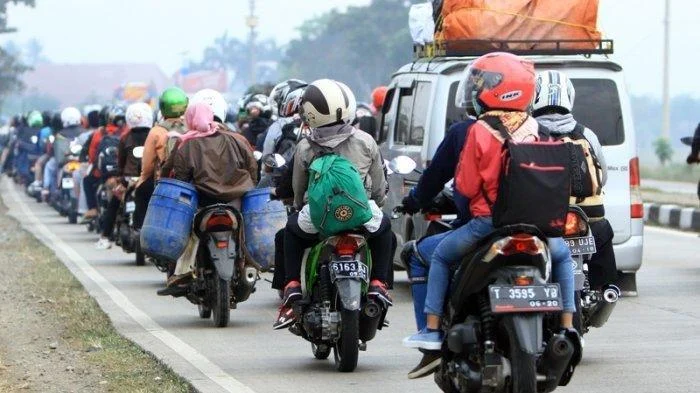
The Indonesian government officially announced that citizens would be permitted to travel to their hometowns for the 2021 Eid al-Fitr (Lebaran 1442 H) holidays, marking a significant departure from the strict nationwide travel bans enforced during the previous year at the onset of the global health crisis. This pivotal policy decision was formally articulated by Minister of Transportation Budi Karya Sumadi during a working session with Commission V of the House of Representatives (DPR RI) on Tuesday, March 16, 2021.
While the announcement provided immense relief to millions of citizens yearning to reunite with their families after a year of unprecedented restrictions, it immediately sparked intense debate among public health officials, epidemiologists, and policymakers. The Ministry of Transportation clarified that the statement did not constitute a direct encouragement or aggressive promotion of travel—as the ministry lacks the administrative authority to mandate or compel movement—but rather served as an acknowledgment that a blanket prohibition would not be implemented as it had been in 2020. Consequently, the formulation of a comprehensive, safe travel framework became an urgent priority for federal agencies.
Background and Context of the 2021 Policy Shift
The decision to allow homecoming, locally known as mudik, in 2021 arose from a complex socioeconomic and political landscape. In 2020, Indonesia implemented sweeping restrictions under Large-Scale Social Restrictions (PSBB) and a strict ban on mudik to curb the initial wave of the SARS-CoV-2 virus. That prohibition, while effective in slowing early transmission, severely impacted the national economy and induced widespread psychological fatigue among the populace.
By early 2021, the government had initiated its national vaccination campaign, prioritizing healthcare workers, elderly populations, and public servants. This rollout instilled a sense of cautious optimism among policymakers, leading to the belief that rising immunity levels could potentially buffer the population against severe illness. However, unlike the previous year’s total prohibition, the 2021 strategy relied on managed mobility rather than outright containment, introducing a paradigm of controlled freedom underpinned by strict health protocols and advanced screening technologies.
Chronology of Policy Formulation and Inter-Agency Coordination
Following the March 16 announcement by Minister Budi Karya Sumadi, the Ministry of Transportation entered a critical phase of inter-agency coordination. Recognizing the acute risk of rural transmission—where elderly populations were more vulnerable and local healthcare infrastructure was often less equipped to handle surges—the government partnered closely with the COVID-19 Task Force, the Indonesian National Police (Polri), regional administrations, and health authorities.
Throughout late March and April 2021, the administration utilized official communication channels, including ministerial social media platforms such as Instagram (@budikaryas), to outline the emerging framework. The core strategy emphasized stringent pre-departure verification, aggressive contact tracing, and the deployment of domestically developed screening innovations, such as the GeNose C19 breathalyzer test, across major transportation hubs including terminals, railway stations, and airports.
Official Requirements and Implementation Protocols
To mitigate the inherent epidemiological risks associated with mass migration, the Ministry of Transportation, in collaboration with health authorities, established a rigorous matrix of requirements and operational protocols for travelers during the 2021 Lebaran season.
First and foremost was the mandatory adherence to strict health protocols across the entire journey continuum—spanning departure points, transit zones, onboard environments, and final destinations. Public transport operators were instructed to enforce social distancing, mandate the consistent use of approved face masks, conduct regular disinfection of vehicles and terminal facilities, and strictly limit passenger capacities to prevent overcrowding.
Second, to proactively address the expected surge in passenger volume, federal authorities mandated heightened surveillance and contact tracing protocols. Travelers were subjected to compressed screening validation timelines. For instance, the validity periods for pre-travel diagnostic tests, such as rapid antigen tests and polymerase chain reaction (PCR) swabs, were significantly shortened to ensure that a negative status accurately reflected a traveler’s immediate epidemiological condition.
Furthermore, the government heavily promoted the use of public transportation systems over private vehicles. Transport officials argued that communal hubs equipped with standardized screening facilities offered a centralized mechanism for monitoring health compliance, whereas private cars presented an unregulated vector for potential virus transmission across provincial and district borders.
Epidemiological Warnings and Critical Reception
Despite the government’s meticulous planning, the decision to permit the 2021 homecoming tradition drew sharp criticism and skepticism from the scientific and epidemiological communities. Prominent public health experts warned that relaxing mobility restrictions prematurely could catalyze a devastating post-holiday surge in infections, mirroring outbreaks observed in other countries following major national holidays.
Dr. Riris Andono Ahmad, a leading epidemiologist from Universitas Gadjah Mada (UGM), publicly expressed grave concerns regarding the policy rationale. In interviews with national media outlets, Dr. Riris analyzed that the government’s relaxed stance appeared to be anchored on the assumption that early vaccine coverage was sufficient to control transmission dynamics. However, she emphasized that vaccination coverage in the first quarter of 2021 remained exceedingly low on a national scale, and herd immunity was far from realization.
Dr. Riris pointed out that immunization primarily protects individuals from developing severe disease or mortality; it does not render a person entirely immune to contracting or transmitting the virus in high-density public environments. She argued that without universal compliance with health protocols—mask-wearing, hand hygiene, and physical distancing—the fundamental transmission risks during the 2021 mudik season remained virtually identical to those of the pre-vaccination era.
The Private Vehicle Dilemma and Surveillance Challenges
A central point of contention highlighted by epidemiologists was the widespread preference for private transportation among returning travelers. While public transit nodes were fortified with advanced screening apparatuses like GeNose and antigen testing stations, millions of citizens typically opted for motorcycles and private automobiles to reach their hometowns.
This reliance on private vehicles created an enforcement blind spot for authorities. Unchecked movement across porous provincial borders made comprehensive contact tracing and health screening nearly impossible. Epidemiologists warned that asymptomatic travelers utilizing private cars could inadvertently seed the virus into rural communities that had previously remained insulated from widespread outbreaks. Consequently, public health advocates continuously urged the government to strongly discourage private travel or, at the very least, implement stringent checkpoints along all major arterial roadways.
Macro-Level Implications and Societal Outlook
The debate surrounding the 2021 mudik policy illuminated the perpetual balancing act governments must perform between public health preservation and economic-social continuity. While the Ministry of Transportation’s framework represented an administrative compromise—eschewing a complete travel ban in favor of regulated mobility—it placed an immense burden of responsibility on individual citizens.
Public health professionals consistently stressed that legal permission to travel did not equate to a cessation of risk. The prevailing consensus among infectious disease specialists at the time was that macro-level mobility should ideally have been postponed until population-wide vaccination coverage reached critical thresholds. As the 2021 Eid al-Fitr season approached, the unfolding situation served as a critical stress test for Indonesia’s pandemic management infrastructure, demonstrating the profound challenges of managing mass cultural traditions during an ongoing global biological crisis.