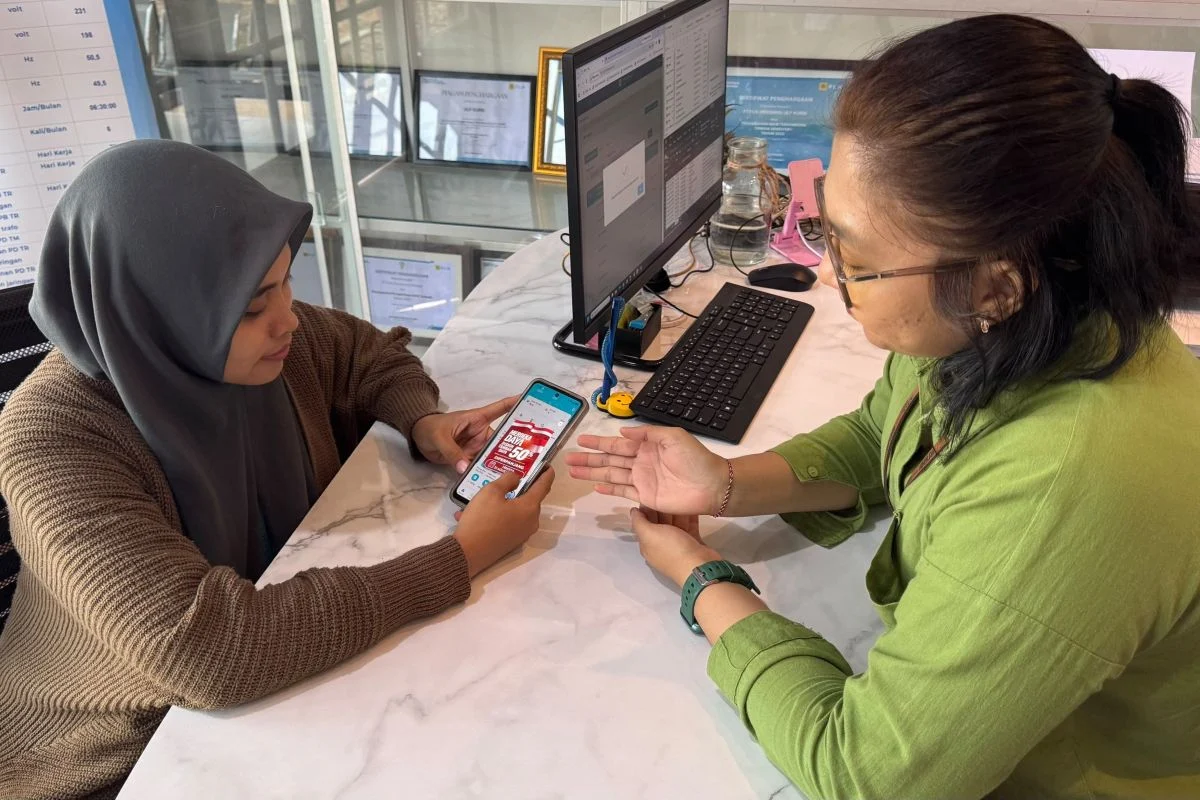
Jakarta (ANTARA) – Managing household utilities in Indonesia has evolved significantly over the past decade, shifting away from long queues at physical service counters toward streamlined, digital-first platforms. For millions of customers of PT PLN (Persero), the state-owned electricity corporation, monitoring monthly electricity usage, verifying billing statements, and checking applicable tariff rates can now be performed seamlessly via smartphone devices. Central to this digital transformation is the official mobile application, PLN Mobile, which consolidates an array of customer services into a single, user-friendly interface.
The integration of digital services represents a broader strategic push by Indonesia’s energy sector to enhance operational transparency, improve consumer convenience, and reduce administrative overhead at local customer service branches. By harnessing smartphone technology, subscribers—ranging from residential households to commercial enterprises—gain real-time access to vital account data, billing histories, and service requests without leaving their homes. This comprehensive guide outlines the methodology for checking electricity bills, reviews current tariff policies, and examines the broader economic frameworks governing electricity pricing in Indonesia.
The Evolution of PLN Customer Service and Digital Integration
Historically, managing electricity accounts required consumers to visit physical PLN distribution offices, rely on paper-based billing statements delivered monthly, or contact call centers with high wait times. The introduction of pre-paid token meters in the late 2000s marked the first major shift toward consumer empowerment, allowing households to manage their energy consumption proactively. However, post-paid customers still faced traditional billing bottlenecks.
To address these challenges, PT PLN (Persero) accelerated the deployment of its digital ecosystem, culminating in the widespread adoption of the PLN Mobile application. This platform serves as a virtual customer service hub. Beyond simply viewing monthly invoices, users can submit new connection requests, apply for power upgrades, purchase pre-paid tokens, report power outages, and monitor the status of ongoing technical complaints. The transition to digital platforms has drastically reduced foot traffic at regional offices, allowing utility personnel to focus on grid maintenance and infrastructure enhancement.
Step-by-Step Guide: Checking Electricity Bills via Smartphone
For post-paid electricity customers, keeping track of monthly consumption is critical for financial planning. The PLN Mobile application simplifies this process through an integrated account management system. Below is the procedural breakdown for checking bills using a mobile device:
- Application Acquisition and Installation: Users must first download and install the PLN Mobile application via the Google Play Store for Android devices or the Apple App Store for iOS devices.
- Account Registration and Verification: New users are required to register using a valid mobile phone number and email address. Existing users can log in directly. Security protocols require verification via a One-Time Password (OTP) sent via SMS.
- Adding Customer Identity (IDPel): Once logged into the dashboard, users must link their electricity account by entering their 11-digit Customer ID (IDPel) or meter number. Multiple customer IDs can be linked to a single profile, enabling users to manage electricity accounts for family members or multiple properties.
- Accessing Billing Information: Navigate to the "Billing" (Tagihan) menu on the home screen. The application will instantly display the active billing status, showing whether the current month’s invoice has been issued, the total kilowatt-hour (kWh) consumption recorded, and the exact rupiah amount due.
- Payment Integration: PLN Mobile integrates with various digital payment gateways, including virtual accounts from major state-owned and private banks, e-wallets (such as LinkAja, OVO, and DANA), and credit card facilities, allowing users to settle payments directly within the application interface.
In addition to post-paid billing, pre-paid customers can utilize the same platform to track their historical token purchases, monitor daily consumption trends, and receive low-balance notifications before their meters trigger automatic power cutoffs due to depleted credit.
Current Tariff Framework and Government Policy for 2026
Understanding the numerical figures on an electricity bill requires a foundational knowledge of how tariffs are structured in Indonesia. The cost of electricity per kilowatt-hour (kWh) is not uniform; it varies significantly depending on the consumer’s connection capacity (measured in Volt-Amperes or VA), the customer category (residential, social, business, industrial), and whether the supply receives government subsidies.
For the third quarter (Triwulan III) of 2026—spanning the months of July through September—the Indonesian government, in coordination with the Ministry of Energy and Mineral Resources (ESDM), decided to maintain electricity tariffs without any upward adjustment. This policy ensures price stability for millions of households and industrial players, shielding them from sudden cost-of-living shocks.
Despite fluctuations in macroeconomic parameters that typically trigger adjustments under the formal tariff adjustment mechanism, the state maintained the existing rate structure to support ongoing economic recovery and control national inflation. The macroeconomic indicators normally factored into the quarterly tariff adjustment formula include:
- The rupiah exchange rate against the United States dollar (USD).
- The Indonesian Crude Price (ICP), which benchmarks global oil prices.
- The national inflation rate as recorded by Statistics Indonesia (BPS).
- The Coal Benchmark Price (Harga Batubara Acuan or HBA, given that a significant portion of Indonesia’s baseload power relies on coal-fired generation).
Categories of Residential Tariffs and Subsidy Classifications
To accurately calculate or estimate monthly electricity expenditures, consumers must identify their specific power tier. Residential customers are broadly divided into subsidized and non-subsidized segments.
Subsidized Tariffs:
Targeted at lower-income households, these rates are heavily backed by the state budget (APBN). Common subsidized tiers include:
- 450 VA households: Benefiting from the lowest base tariff, designed to support basic lighting and essential household appliances.
- 900 VA households (specifically categorized as households meeting social welfare criteria): Also receive targeted government support to ensure affordable access to electricity.
Non-Subsidized Tariffs (Tariff Adjustment Customers):
Households with higher electrical capacities do not receive government subsidies. Their rates fluctuate in accordance with the aforementioned macroeconomic indicators. Standard non-subsidized residential tiers include:
- 900 VA Household Non-Subsidi (R-1/TR)
- 1,300 VA Household Non-Subsidi (R-1/TR)
- 2,200 VA Household Non-Subsidi (R-1/TR)
- 3,500 VA to 5,500 VA Households (R-2/TR)
- 6,600 VA and above Households (R-3/TR)
Because tariff rates per kWh differ across these brackets, consumers must verify their exact grouping before attempting to forecast upcoming utility expenditures. A household shifting from a 1,300 VA connection to a 2,200 VA connection, for instance, moves into a different billing tier, which alters the calculation formula applied to their monthly kWh consumption.
Analyzing Electricity Consumption and Future Billing Estimates
A key advantage of utilizing digital monitoring tools is the ability to analyze consumption patterns over time. Post-paid customers can review historical data stored within the PLN Mobile application to observe monthly trends. Seasonal factors—such as increased usage of air conditioning during hotter dry-season months or extended lighting hours during the rainy season—directly impact total kWh consumption.
By tracking daily or monthly averages through the platform, consumers can establish predictive budgeting. If a household observes a sudden, unexplained spike in their kWh consumption, they can use the application to investigate potential appliance inefficiencies or submit a technical inspection request directly to PLN field teams to check for meter anomalies or unauthorized tampering.
Furthermore, the integration of digital services aligns with broader national initiatives promoting energy conservation and electric vehicle (EV) adoption. With the rising popularity of battery electric vehicles in Indonesia—exemplified by expanding charging infrastructure and incentives such as limited-time power-upgrade discounts offered by PLN—managing household electrical loads has become increasingly complex. Intelligent load management via mobile applications allows EV owners to schedule vehicle charging during off-peak hours, thereby optimizing household energy costs and reducing strain on local transformer stations.
Economic Implications of Maintained Electricity Tariffs
The government’s decision to freeze electricity tariffs through the third quarter of 2026 carries profound economic implications. For the broader public, stable utility costs provide predictable budgeting conditions, mitigating inflationary pressures on staple goods and services whose production costs depend heavily on electricity.
From an industrial perspective, predictable energy pricing maintains operational cost certainty for manufacturing plants, small and medium-sized enterprises (SMEs), and commercial hubs. Energy is a primary input factor across all sectors of the economy; sudden tariff hikes typically ripple through supply chains, driving up the retail prices of goods. By absorbing macroeconomic volatility through state fiscal mechanisms and operational efficiencies within PT PLN (Persero), the government aims to stimulate domestic demand and maintain industrial competitiveness within the Southeast Asian region.
However, energy analysts note that maintaining tariffs amidst fluctuating global fuel prices requires careful fiscal balancing. PT PLN (Persero) continues to optimize its generation mix, increasing the proportion of renewable energy sources—such as geothermal, solar, and hydro power—while lowering reliance on imported fossil fuels over the long term. This structural transition is critical to insulating the national grid from international commodity price shocks while meeting Indonesia’s carbon neutrality commitments.
Conclusion and Best Practices for Consumers
The digital transition spearheaded by PT PLN (Persero) through the PLN Mobile application marks a significant milestone in public utility management in Indonesia. By empowering consumers with direct access to billing data, tariff information, consumption analytics, and administrative services via their mobile phones, the utility has eliminated traditional bureaucratic hurdles.
Consumers are strongly advised to take advantage of these digital tools by regularly updating their applications, verifying their customer account details, and monitoring their monthly kWh consumption. Understanding one’s specific tariff category and staying informed regarding government policy updates ensures that households can manage their finances effectively while contributing to national energy efficiency and conservation goals.