
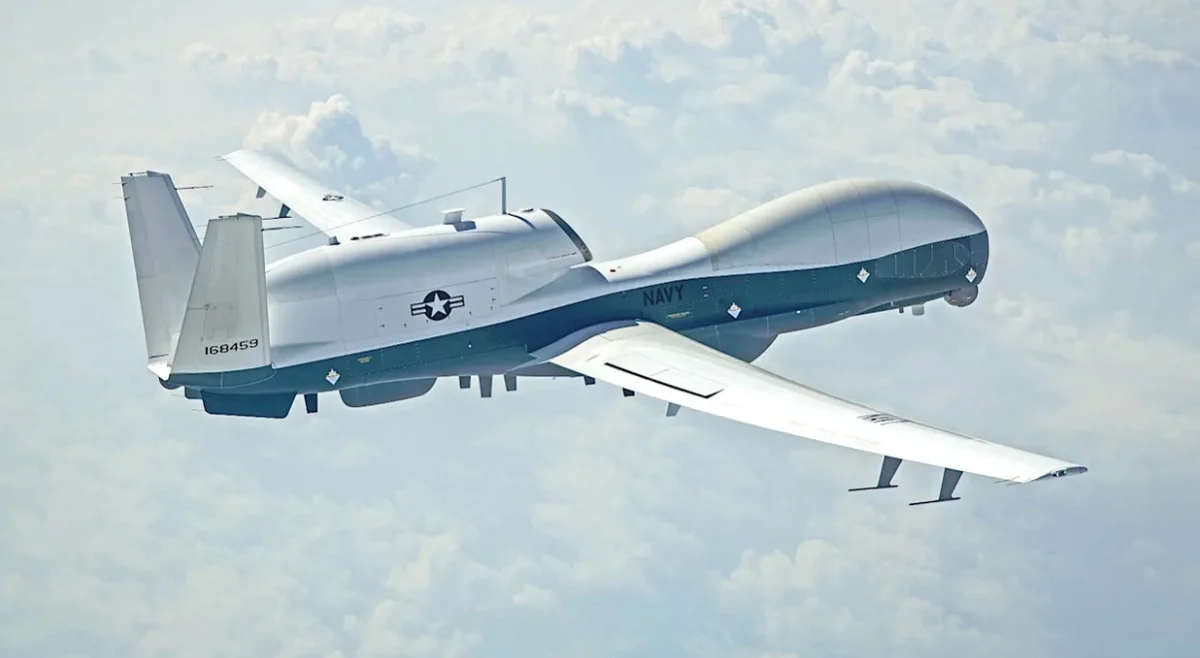
The United States Navy has officially confirmed the unexpected loss of a highly advanced MQ-4C Triton unmanned aerial vehicle (UAV) in the strategically vital Strait of Hormuz region. The sophisticated reconnaissance drone, a critical asset in maritime domain awareness, disappeared from online flight tracking systems while conducting operations over the Persian Gulf last week, with its precise crash location remaining undisclosed. This incident, categorized as a Class A mishap, represents a significant financial and operational blow to U.S. naval intelligence capabilities in a highly volatile geopolitical theater.
The confirmation emerged from the latest publicly available accident summary issued by the Naval Safety Command on Wednesday, April 15, 2026. The report details that the MQ-4C Triton ceased operations and disappeared on April 9, 2026, from a location that has not been specified. The exact cause of the drone’s downfall is currently under investigation and remains unknown, with the incident being broadly classified under the severe "Class A" category. This classification is reserved for accidents resulting in damages exceeding $2 million, causing a fatality or permanent total disability, or a combination thereof. Given the MQ-4C Triton’s substantial unit cost, which the latest Navy budget documents peg at slightly over $238 million (approximately IDR 4.08 trillion at current exchange rates), its categorization as a Class A mishap was an inevitable consequence of its loss. As of 2025, the U.S. Navy operated a fleet of 20 such drones, with plans to acquire an additional seven, making this loss particularly impactful for the program.
The MQ-4C Triton: A Sentinel of the Seas
The MQ-4C Triton, developed by Northrop Grumman, is an integral component of the U.S. Navy’s Broad Area Maritime Surveillance (BAMS) program. Designed to provide persistent maritime intelligence, surveillance, and reconnaissance (ISR) capabilities, the Triton is a high-altitude, long-endurance (HALE) UAV based on the RQ-4 Global Hawk platform. Its primary mission is to conduct continuous surveillance over vast ocean and coastal regions, enhancing the situational awareness of naval commanders and contributing to global security.
The drone boasts an impressive array of advanced sensors, making it exceptionally capable in its role. These include a powerful multi-spectral electro-optical/infrared (EO/IR) sensor, a sophisticated maritime surveillance radar (Multi-Function Active Sensor – MFAS), and an Automatic Identification System (AIS) receiver. These systems enable the Triton to detect, classify, and track maritime targets across immense distances and in various weather conditions, both day and night. With an operational altitude exceeding 50,000 feet and an endurance of over 24 hours, the MQ-4C can cover more than 2,000 nautical miles of ocean per flight, providing an unparalleled watch over critical maritime routes and potential flashpoints. Its ability to integrate with manned patrol aircraft, such as the P-8A Poseidon, creates a formidable surveillance network, significantly extending the reach and effectiveness of naval operations. The development and deployment of the Triton fleet represent a substantial investment in the future of naval reconnaissance, underscoring the strategic importance placed on maintaining a clear understanding of global maritime activity.
The Strait of Hormuz: A Geopolitical Crucible
The location of the incident, the Strait of Hormuz, adds a layer of significant geopolitical sensitivity to the loss of the Triton. This narrow waterway, connecting the Persian Gulf with the Gulf of Oman and the Arabian Sea, is arguably the world’s most critical oil transit chokepoint. Approximately one-fifth of global petroleum consumption, and a substantial portion of the world’s liquefied natural gas (LNG), passes through this strait daily. Its strategic importance has historically made it a focal point for regional tensions and international military presence.
The Strait is bordered by Iran to the north and Oman and the United Arab Emirates to the south. Iran has, on multiple occasions, threatened to close the strait, particularly during periods of heightened international pressure or sanctions. This has led to a consistent and robust U.S. military presence in the region, aimed at ensuring freedom of navigation and deterring potential disruptions to global commerce. The area has witnessed numerous maritime incidents over the past decades, including attacks on oil tankers, seizures of commercial vessels, and confrontations involving naval assets, underscoring its inherent volatility. The deployment of advanced surveillance assets like the MQ-4C Triton is therefore not merely for general reconnaissance but is directly linked to monitoring potential threats and maintaining regional stability in this critical maritime corridor. The loss of such an asset in this particular location naturally raises questions about the circumstances and potential broader implications for regional security dynamics.
Chronology of a Disappearance and Confirmation
The sequence of events surrounding the MQ-4C Triton’s loss began with its unannounced disappearance from public flight tracking platforms on Thursday, April 9, 2026. These platforms, which aggregate data from Automatic Dependent Surveillance-Broadcast (ADS-B) transponders, often provide real-time tracking of military aircraft, even those on classified missions, if their transponders are active. The sudden cessation of data transmission for a high-value asset like the Triton would have immediately triggered internal alarms within U.S. Navy command structures.
Following the disappearance, it is highly probable that immediate internal protocols would have been activated. This would have involved attempts to re-establish contact with the drone, analysis of telemetry data up to the point of loss, and potentially the dispatch of search and rescue (SAR) assets if human life were involved, though drones primarily involve asset recovery. A preliminary internal investigation would have commenced swiftly to determine the last known position, flight parameters, and any unusual sensor readings or anomalies prior to the loss of signal. This period, from April 9 to April 15, would have been characterized by intensive data analysis, internal reporting, and preliminary assessments within the Naval Air Systems Command (NAVAIR) and the Naval Safety Center. The formal public confirmation, issued on Wednesday, April 15, 2026, via the Naval Safety Command’s accident summary, signifies the conclusion of these initial internal assessments, leading to the official classification of the incident as a Class A mishap. This timeline indicates a methodical, albeit swift, process of internal verification before public disclosure of such a significant event.
Deconstructing a Class A Mishap
The classification of the Triton incident as a Class A mishap by the Naval Safety Command is the highest and most severe category for military aviation accidents. This designation is not merely an arbitrary label but follows stringent criteria established by the Department of Defense. Specifically, a Class A mishap is defined by one or more of the following outcomes: total damages exceeding $2,500,000 (though the Navy’s internal threshold can be slightly different, often around $2 million as noted in the original summary); the destruction of an aircraft; or any accident resulting in a fatality or permanent total disability. In the case of the MQ-4C Triton, the sheer replacement cost of the drone, exceeding $238 million, automatically places it firmly within this category, irrespective of any other factors.
The implications of a Class A classification extend beyond the financial. It mandates a comprehensive and exhaustive investigation by a dedicated safety investigation board, often composed of high-ranking officers and technical experts. This board will meticulously examine all available evidence, including flight data recorders (if recoverable), maintenance logs, weather conditions, operational procedures, human factors, and potential external influences. The objective is not merely to assign blame but to identify root causes and contributing factors to prevent similar incidents in the future. Historically, Class A mishaps have led to significant program reviews, revisions of operational protocols, and sometimes even redesigns of components or systems. The rigor of this investigative process underscores the U.S. military’s commitment to safety and continuous improvement, even in the context of unmanned systems.
Financial and Operational Ramifications
The loss of an MQ-4C Triton represents a substantial financial setback for the U.S. Navy. At an estimated unit cost of $238 million, it is one of the most expensive unmanned systems in the world. This figure does not fully encompass the total cost of ownership, which includes research and development, operational expenses, maintenance, and personnel training. The replacement of this asset will draw directly from defense budgets, potentially impacting other procurement or operational priorities. Given the current global economic climate and competing demands for defense spending, such an unexpected expenditure could necessitate difficult decisions in future budgetary cycles.
Operationally, the incident will lead to a temporary, albeit localized, degradation of persistent maritime surveillance capabilities in the Persian Gulf region. While the U.S. Navy operates a fleet of 20 Tritons, and other ISR assets are available, the loss of one platform reduces the overall capacity for continuous coverage. The Triton’s unique capabilities, particularly its endurance and sensor suite, are difficult to replicate fully with other assets on short notice. The incident is also likely to prompt an immediate review of flight procedures, maintenance protocols, and risk assessments for the remaining Triton fleet, especially for operations conducted in sensitive or contested airspace. This could lead to temporary restrictions on flight profiles, increased monitoring, or even a temporary grounding of specific systems pending the outcome of the investigation, though such measures are typically taken only if a systemic issue is suspected. The long-term acquisition plans for the Triton program, which includes an additional seven drones, might also be subject to re-evaluation or delays depending on the findings of the mishap investigation and any recommended design or operational changes.
Broader Geopolitical Context and Potential Reactions
The disappearance and confirmed loss of a high-value U.S. military surveillance drone in the Strait of Hormuz carries significant geopolitical weight. While the U.S. Navy has classified it as an accident with an unknown cause, the inherent tensions in the region mean that such an event can be susceptible to various interpretations and potential miscommunications.
From the perspective of the U.S. military, official statements following such an incident typically emphasize the ongoing nature of the investigation, a commitment to understanding the cause, and a reiteration of the U.S. dedication to maintaining freedom of navigation and regional stability. Public communication would likely be carefully calibrated to avoid escalating tensions or providing adversaries with propaganda opportunities. U.S. officials would likely stress that while an asset has been lost, the U.S. maintains robust surveillance capabilities in the region and its operational posture remains unaffected.
Regional actors, particularly Iran, whose territory borders the northern side of the Strait, would be acutely aware of such an event. Given the history of confrontations and the strategic importance of the Strait, any U.S. military incident in the area is closely watched. While the U.S. has classified it as an accident, the possibility of an adversary recovering debris, or even the main wreckage, cannot be entirely dismissed, which would raise concerns about potential intelligence compromise. Conversely, if an adversary were to claim responsibility or make unsubstantiated claims regarding the drone’s demise, the U.S. would likely issue strong denials, backed by intelligence. The primary concern for U.S. policymakers would be to manage the narrative, prevent miscalculation by regional players, and ensure that the incident does not inadvertently lead to an escalation of tensions in an already volatile part of the world. Defense analysts will undoubtedly scrutinize the incident for any indicators of vulnerabilities in advanced drone technology or shifts in regional military capabilities.
The Future of Unmanned Aerial Systems in Naval Operations
The incident involving the MQ-4C Triton, while unfortunate, also serves as a stark reminder of the inherent risks associated with operating advanced unmanned aerial systems (UAS) in complex and challenging environments. Despite their sophisticated technology and autonomous capabilities, drones are still susceptible to mechanical failures, software glitches, severe weather, or, in some cases, external interference. However, the benefits derived from UAS, particularly in terms of persistent surveillance, risk mitigation for human pilots, and cost-effectiveness compared to manned platforms for certain missions, continue to drive their increased adoption across global militaries.
The U.S. Navy, like other leading naval powers, is heavily invested in the future of unmanned systems, viewing them as force multipliers and essential components of future maritime operations. The Triton program itself is a testament to this commitment, designed to provide unparalleled ISR capabilities that would be prohibitively expensive and risky to achieve with manned aircraft for extended periods. This incident will undoubtedly inform future drone development, operational doctrine, and safety protocols. Lessons learned from the investigation will contribute to refining design specifications, enhancing redundancy in critical systems, and improving training for operators and maintenance personnel. The pursuit of greater autonomy, resilience, and stealth in UAS will likely intensify as militaries seek to leverage these platforms more extensively while simultaneously mitigating the risks of loss and potential compromise. Ultimately, while individual incidents can be costly and concerning, they rarely deter the broader strategic shift towards a future where unmanned systems play an increasingly dominant role in military operations worldwide.
Investigation and Next Steps
As a Class A mishap, the loss of the MQ-4C Triton will trigger a comprehensive and highly detailed investigation. A dedicated safety investigation board, likely comprising experts from the Naval Safety Command, NAVAIR, and operational units, will be convened. Their mandate will be to ascertain the precise cause of the incident, whether it was mechanical failure, software malfunction, human error, environmental factors, or external influences. The investigation will involve reviewing all available flight data, sensor logs, maintenance records, and potentially any recovered debris from the crash site, if retrieval is feasible.
The findings of this investigation, which could take several months or even longer, will be crucial for informing future operational procedures, potential design modifications for the Triton fleet, and broader naval aviation safety protocols. While the full report may not be publicly released due to national security sensitivities, key findings and recommendations typically lead to changes in policy and practice within the Navy. In the interim, U.S. Navy operations in the Persian Gulf will continue, with other ISR assets likely compensating for the temporary reduction in Triton coverage. The focus will remain on ensuring regional stability, safeguarding maritime navigation, and diligently pursuing the answers behind the unexpected loss of this invaluable surveillance asset.
