
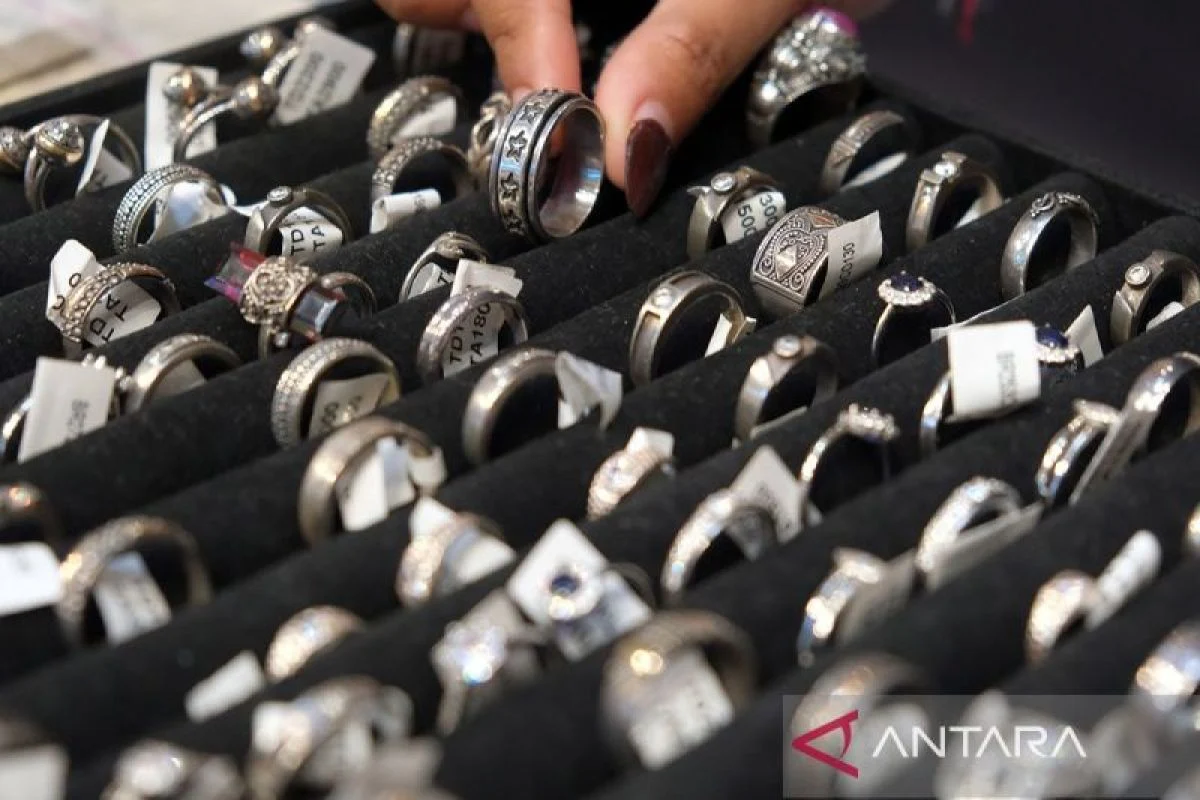
Jakarta (ANTARA) – Beyond the enduring allure of gold, silver has firmly established itself as another precious metal of significant strategic value, rapidly gaining prominence as a vital investment instrument. Its appeal has steadily climbed in tandem with a growing public awareness of its dual profitability potential, stemming from both its intrinsic value and its burgeoning industrial demand in an increasingly digitalized world. For discerning investors keen to diversify their portfolios, silver investments are readily accessible through a variety of official channels, including established formal financial institutions and reputable precious metals vendors, all of which assure credibility and transparency in transactions.
Understanding Silver’s Unique Profile
At its core, silver, as elucidated by sources like Sahabat Pegadaian, is instantly recognizable by its characteristic lustrous, metallic grey sheen. However, its significance extends far beyond mere aesthetic appeal. Silver is not just a beautiful metal; it is a highly conductive asset possessing profound economic utility. Its inherent softness and remarkable malleability make it an indispensable element across a myriad of global trade and industrial applications. Historically, silver has occupied an esteemed position in human civilization, transitioning from ancient forms of currency and a fundamental medium of exchange to a symbol of opulence, gracing the adornments and household accoutrements of royalty and aristocracy.
In the contemporary landscape, propelled by the relentless pace of digital transformation, silver has undergone a strategic metamorphosis, evolving into a highly liquid and valuable financial asset. This transformation is particularly evident in its critical role within the rapidly expanding sectors of smart technology and robotics. The escalating global demand for advanced technological devices has, in turn, fueled an unprecedented surge in the need for raw silver material. This intricate interplay between technological innovation and commodity demand is a primary driver behind the heightened investment interest in the metal, a trend widely anticipated to strengthen considerably as global economies become increasingly reliant on future technological advancements.
Historical Trajectory and Economic Significance
Silver’s journey through human history is as rich and complex as gold’s, often intertwined but with distinct characteristics. For millennia, silver served as a cornerstone of monetary systems, with its earliest recorded use as currency dating back to ancient civilizations. The Roman Empire, for instance, extensively utilized silver coins, with the denarius being a prominent example, facilitating trade and economic stability across vast territories. In various cultures, silver was not only a medium of exchange but also a store of wealth, often perceived as a more accessible alternative to gold. The bimetallic standard, where both gold and silver circulated as legal tender at a fixed ratio, was a dominant feature of global economies for centuries, underscoring silver’s integral role in financial frameworks until the late 19th and early 20th centuries.
The shift away from bimetallism and the adoption of the gold standard, followed by fiat currencies, saw silver gradually relinquish its primary monetary role. However, it swiftly found new purpose as an industrial workhorse. Its unparalleled electrical and thermal conductivity, reflectivity, and antimicrobial properties ensured its continued relevance, albeit in a different capacity. This transition from a purely monetary metal to an industrial commodity with significant investment potential highlights its adaptability and enduring value proposition. Historically, silver prices have exhibited a higher degree of volatility compared to gold, often referred to as "gold on steroids," meaning it can experience more pronounced percentage gains during bull markets but also sharper corrections during downturns. This characteristic contributes to its appeal for investors seeking potentially higher returns, albeit with commensurately higher risk.
Diverse Avenues for Silver Investment
For investors looking to venture into the silver market, understanding the various types of silver and available investment vehicles is paramount. It is crucial, particularly for novice investors, to distinguish between different forms of silver to align with specific investment objectives.
1. Physical Silver (Bullion): The Foundation of Investment
The most recommended and straightforward instrument for investment is fine silver, characterized by its exceptional purity of up to 99.9% (often denoted as .999 fine) or even 99.99% (.9999 fine). This form of silver is specifically valued for its metal content, making it an ideal long-term asset.
- Silver Bullion Bars: These are perhaps the most common form of physical silver investment. Available in various weights, from small 1-ounce bars suitable for beginners to larger 10-ounce, 100-ounce, and even 1,000-ounce bars for institutional investors. Bullion bars are typically minted by government facilities or private refineries, and their value is primarily derived from their silver content. Their simplicity and direct correlation to the spot price of silver make them highly desirable.
- Silver Bullion Coins: Government-minted coins, such as the American Silver Eagle, Canadian Silver Maple Leaf, Austrian Philharmonic, and Australian Kookaburra, are highly popular. These coins often carry a legal tender face value, which is largely symbolic as their intrinsic metal value far exceeds it. Bullion coins offer several advantages: they are globally recognized, often have a lower premium over the spot price compared to smaller bars, and some also possess a degree of collectibility that can add to their value over time. Their authenticity is generally easier to verify due to government backing.
- Silver Rounds and Generic Bars: These are privately minted, typically without a legal tender status. While they offer the same purity as government-issued bullion, their premiums over the spot price are often slightly lower, making them an attractive option for investors prioritizing cost-efficiency.
- Silver Grains: Less common for individual investors but used in industrial processes, these small granules of fine silver are a bulk form of the metal.
A key characteristic of fine silver is its relative softness due to the absence of alloying metals. This makes it susceptible to scratches and dents, which is why it is rarely used in its pure form for jewelry, where durability is crucial.
2. Sterling Silver: More for Adornment than Pure Investment
In contrast to fine silver, the silver commonly encountered in jewelry and silverware is typically sterling silver. This alloy consists of 92.5% pure silver and 7.5% other metals, most commonly copper or nickel. The addition of these base metals significantly enhances the silver’s strength, durability, and resistance to tarnish, making it suitable for intricate designs and everyday wear.
While sterling silver jewelry can be collected and appreciated for its craftsmanship and aesthetic value, its utility as a primary investment instrument is generally lower than fine silver bullion. The reasons for this include:
- Lower Purity: The 92.5% silver content means less precious metal per unit weight.
- Manufacturing Costs: A significant portion of the price of silver jewelry is attributed to design, craftsmanship, and branding, rather than just the raw material cost. These "premiums" are often difficult to recoup upon resale.
- Liquidity: Reselling jewelry for its metal content often yields a price significantly below its retail value, as buyers primarily value the intrinsic silver content.
Therefore, while owning silver jewelry can be enjoyable, for pure investment purposes, high-purity silver in bar or coin form is consistently recommended for long-term value stability, mirroring the advice often given for gold investments. The guiding principle remains: the higher the purity, the more ideal the asset for investment.
3. Paper and Digital Silver: Indirect Exposure
For investors who prefer not to handle physical metal or seek different risk profiles, several indirect investment options exist:
- Silver Exchange Traded Funds (ETFs): These funds trade on stock exchanges and aim to track the price of silver. Most silver ETFs are "physically backed," meaning they hold actual silver bullion in vaults to cover their shares. Advantages include liquidity, ease of trading, and elimination of storage concerns. However, investors do not directly own physical silver, and there is a degree of counterparty risk and annual management fees.
- Silver Futures Contracts: These are agreements to buy or sell a specific quantity of silver at a predetermined price on a future date. Futures are highly leveraged instruments, offering significant potential gains but also substantial risks, making them suitable primarily for experienced and sophisticated investors.
- Silver Mining Stocks: Investing in companies involved in silver exploration, mining, and production provides indirect exposure to silver prices. The value of these stocks is influenced not only by silver prices but also by company-specific factors such as management quality, operational efficiency, production costs, and geopolitical risks in mining regions.
Industrial Demand: Silver’s Economic Engine
Unlike gold, which is primarily a monetary and jewelry metal, silver boasts a robust and indispensable industrial demand, making it a critical component in a multitude of advanced technologies. This dual demand profile provides a unique fundamental floor for silver prices.
- Electronics: Silver’s unparalleled electrical conductivity makes it essential for contacts, conductors, and fuses in almost every electronic device, from smartphones, laptops, and tablets to televisions and RFID chips. The miniaturization trend in electronics further solidifies silver’s role due to its efficiency in small spaces.
- Solar Energy (Photovoltaics): The rapidly expanding solar power industry is one of the largest and fastest-growing consumers of silver. Silver paste is crucial for the conductive front-side and back-side electrodes of crystalline silicon photovoltaic cells. As the world transitions to renewable energy, demand from this sector is projected to surge exponentially. Estimates suggest that the solar industry alone accounts for a significant portion, potentially over 10-15%, of the annual global silver supply.
- Automotive Industry: Modern vehicles, especially electric vehicles (EVs) and hybrid cars, utilize substantial amounts of silver. It is found in electrical contacts, sensors, battery connections, and various electronic control units, crucial for their complex electrical systems and advanced features.
- Medical Applications: Silver possesses potent antimicrobial properties, making it invaluable in the medical field. It is used in wound dressings, surgical instruments, catheters, and even some pharmaceutical compounds to prevent infections.
- Photography: While largely superseded by digital technology, silver halide was historically the backbone of photographic film and paper, demonstrating silver’s unique light-sensitive properties.
- Jewelry and Silverware: As mentioned, these traditional uses still account for a substantial portion of silver demand, contributing to its overall market dynamics.
The massive development of smart technology, 5G infrastructure, and robotics today further intensifies the need for silver. This industrial consumption is a key factor differentiating silver from other precious metals and is a strong indicator of its future price trajectory, tied directly to global technological advancement and sustainability efforts.
Advantages and Disadvantages of Silver Investment
Investing in silver, like any asset, comes with its own set of pros and cons that investors must carefully weigh.
Advantages:
- Affordability and Accessibility: Silver is significantly cheaper per ounce than gold, offering a more accessible entry point for new investors or those with smaller capital.
- Dual Demand Driver: Its unique position as both an industrial commodity and a precious metal means it benefits from both economic growth (driving industrial demand) and economic uncertainty (driving safe-haven investment demand).
- Inflation Hedge: Like gold, silver traditionally serves as a hedge against inflation, preserving purchasing power during periods of currency debasement.
- High Volatility Potential: While a double-edged sword, silver’s higher volatility compared to gold can lead to greater percentage gains during bull markets.
- Tangible Asset: Physical silver provides a sense of security and direct ownership, independent of financial institutions or digital systems.
- Diversification: Adding silver to a portfolio can enhance diversification, reducing overall risk and potentially improving returns.
Disadvantages:
- Pronounced Volatility: Silver’s price swings can be more dramatic than gold’s, exposing investors to greater risk of significant short-term losses.
- Storage Costs: For physical silver, secure storage (whether at home or in a third-party vault) can incur costs, including insurance.
- Liquidity for Physical Silver: While generally liquid, selling larger quantities of physical silver might take slightly longer or involve wider bid-ask spreads compared to highly liquid paper assets.
- Premiums and Spreads: Investors typically pay a premium over the spot price when buying physical silver and sell at a discount, impacting profitability.
- Sales Tax/VAT: In many jurisdictions, sales tax or VAT applies to purchases of physical silver, unlike investment gold, which is often exempt.
Market Dynamics and Future Outlook
The future trajectory of silver prices is poised to be significantly influenced by a confluence of supply-side constraints and burgeoning demand, particularly from the green energy transition. Global silver mining output has faced challenges in recent years, with production often struggling to keep pace with demand. This potential supply-demand imbalance, exacerbated by finite geological reserves and increasing industrial consumption, could lead to future deficits, creating upward pressure on prices.
The ongoing global push towards renewable energy, notably solar power and electric vehicles, will continue to be a dominant force driving silver demand. These technologies are not just trends but fundamental shifts in global infrastructure, ensuring a sustained and growing need for silver for decades to come. Furthermore, the expansion of 5G networks and other advanced electronic infrastructure will further cement silver’s indispensable role.
Economically, silver often performs well during periods of geopolitical instability or when confidence in fiat currencies wanes, acting as a safe-haven asset. Its price is also sensitive to interest rates, economic growth forecasts, and the strength of the U.S. dollar. A falling U.S. dollar typically makes dollar-denominated commodities like silver more attractive to international buyers.
The gold-silver ratio, which measures how many ounces of silver it takes to buy one ounce of gold, is another important indicator. Historically, this ratio has fluctuated significantly. When the ratio is high, it suggests silver is undervalued relative to gold and might present a buying opportunity, and vice-versa. Many analysts closely monitor this ratio for insights into market sentiment and potential shifts.
Market analysts widely predict a continued strong demand for silver, particularly driven by its industrial applications in the green economy and technological innovation. While price volatility is expected to persist, the underlying fundamental drivers suggest a robust long-term outlook for this versatile metal.
Recommendations for Aspiring Silver Investors
For individuals considering an investment in silver, a structured approach is recommended to navigate the market effectively:
- Conduct Thorough Research: Understand the market dynamics, price history, and the various investment vehicles available.
- Prioritize Purity: For investment purposes, always opt for fine silver (99.9% or 99.99% purity) in the form of bullion bars, coins, or rounds.
- Define Investment Goals: Determine whether the investment is for short-term gains or long-term wealth preservation, as this will influence the choice of investment vehicle and strategy.
- Diversify Your Portfolio: Silver should be considered as part of a diversified investment portfolio, not the sole asset.
- Source from Reputable Dealers: Purchase silver only from established and credible financial institutions or certified precious metals vendors to ensure authenticity and fair pricing.
- Ensure Secure Storage: For physical silver, arrange for secure storage, whether through a home safe, a bank safe deposit box, or a third-party insured vault service.
- Stay Informed: Keep abreast of global economic trends, technological advancements, and supply-demand reports that can impact silver prices.
In conclusion, while the allure of gold often dominates discussions around precious metal investments, silver has emerged as an equally compelling, if not more dynamic, asset. Its critical role in the accelerating digital and green revolutions, coupled with its historical stature as a store of value, positions it as a strategic component for modern investment portfolios. High-purity silver bullion, in particular, remains the gold standard for investors seeking long-term value stability and a tangible hedge against future economic uncertainties.
Pewarta: Putri Atika Chairulia
Editor: Alviansyah Pasaribu
Copyright © ANTARA 2025
