
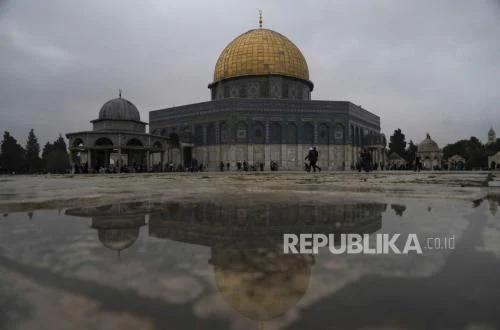
The Al-Aqsa Mosque complex, situated in the heart of the Old City of Jerusalem, remains one of the most spiritually significant and historically dense locations in the Islamic world, drawing thousands of pilgrims annually who seek to combine their Umrah pilgrimage to Saudi Arabia with a visit to the "Third Holiest Site." For Indonesian Muslims, this journey—often referred to as "Umrah Plus"—requires meticulous logistical planning, particularly regarding the complex visa regulations and the specific timeframe required for entry permits. As the rainy season descends upon the Levant, casting reflections of the golden Dome of the Rock in the puddles of the limestone courtyards, the necessity for early preparation becomes even more apparent for those wishing to pray in the footsteps of the prophets.
The Critical Timeline for Visa Procurement
The primary challenge for Indonesian pilgrims wishing to visit Jerusalem is the absence of formal diplomatic relations between Indonesia and Israel, which currently controls the borders and access points to the Al-Aqsa complex. Consequently, the visa process is unique and strictly regulated. Syam Resfiadi Amirysah, the Chairperson of the Indonesian Hajj and Umrah Association (Sapuhi) and Director of Patuna Syam Resfiadi Amirysah, emphasizes that the administrative process is not one that can be rushed.
According to Amirysah, the procurement of a visa for the Jerusalem leg of an Umrah trip typically requires a minimum of 40 working days. This timeframe is rigid and does not account for weekends or public holidays in the region. "If a pilgrim intends to continue their Umrah journey to Al-Aqsa, they must understand that the visa process takes 40 working days," Amirysah stated. "Effectively, this means travelers should register and submit their documentation at least two months prior to their scheduled departure date."
This two-month buffer is essential for travel agencies to compile a "manifest"—a comprehensive list of travelers that is submitted to regional partners in either Jordan or Egypt. Because Palestine does not issue its own independent visas for Indonesian passport holders, entry is facilitated through an Israeli-issued group permit or manifest, which is often processed through intermediaries in Amman or Cairo.
Documentation and Manifest Requirements
The "manifest" system is a collective visa application that requires detailed personal information that goes beyond standard passport data. To ensure a successful application, pilgrims must provide scanned copies of their passports (valid for at least six months from the date of travel) and specific biographical details.
A notable requirement in this process is the inclusion of parental information. Applicants are typically required to provide the names and phone numbers of their parents, a practice rooted in the security protocols of the issuing authorities. "The data required includes the names and contact numbers of the parents, alongside the high-resolution passport scans," Amirysah explained. These details are then forwarded to the relevant authorities in Israel through Jordanian or Egyptian travel partners.
The processing period is often a source of anxiety for pilgrims, as confirmation of the visa’s status frequently arrives only days before the flight. Amirysah advises that agencies and pilgrims should monitor the progress closely: "If the departure is on the 10th of the month, we usually receive word on whether the visa is granted or denied by the 5th or 7th. It is a process that requires patience and a high degree of organization to ensure that no one is left behind due to late submissions."
Historical and Spiritual Significance of the "Triple Journey"
The desire to visit Al-Aqsa alongside the Holy Cities of Mecca and Medina is rooted in the "Triple Journey" tradition. In Islamic eschatology and history, Al-Aqsa was the first Qibla (direction of prayer) before it was changed to the Kaaba in Mecca. It is also the site of the Isra Mi’raj, the miraculous night journey and ascension of the Prophet Muhammad.
The complex, known as Al-Haram ash-Sharif, houses both the Al-Qibli Mosque (with the lead-colored dome) and the Dome of the Rock (with the iconic gold dome). For many Indonesian pilgrims, the opportunity to offer a Friday prayer at Al-Aqsa is a life-changing event. However, the experience is often subject to the vagaries of the weather and the political climate. In early 2023, for instance, pilgrims faced a particularly cold and rainy winter, necessitating preparations for low temperatures and wet conditions while navigating the ancient, slippery stones of the Old City.
The Role of Regional Partners: Jordan and Egypt
Most Indonesian "Umrah Plus" packages utilize Jordan as the primary gateway to Jerusalem. Pilgrims typically fly from Saudi Arabia to Amman, from where they travel by land to the Allenby Bridge (also known as the King Hussein Bridge) crossing. This border crossing connects Jordan with the West Bank.
The logistics at the Allenby Bridge are notoriously rigorous. Pilgrims may spend several hours undergoing security screenings and document verification by Israeli border officials. Because Indonesia does not have a consulate in Israel, the travel agency’s partner in Jordan plays a vital role in coordinating with the border authorities to ensure the group manifest is recognized and processed.
Alternatively, some tours enter through the Taba border crossing from the Sinai Peninsula in Egypt. This route is often chosen by those who wish to combine their pilgrimage with a visit to Mount Sinai and the historic sites of Cairo. Regardless of the entry point, the 40-day visa rule remains the standard benchmark for Indonesian travelers.
Economic and Geopolitical Context
The religious tourism sector is a vital component of the Palestinian economy in East Jerusalem. Pilgrims from Indonesia, which has the world’s largest Muslim population, represent a significant market for local businesses, including hotels, restaurants, and souvenir shops in the Old City.
However, the flow of tourism is highly sensitive to the political situation. Any escalation in tensions within the region can lead to sudden border closures or the suspension of visa processing. This volatility is why experts like Amirysah stress the importance of working with experienced travel agencies that can provide real-time updates and have the insurance and infrastructure to handle sudden itinerary changes.
Furthermore, the "group manifest" system is designed specifically to facilitate religious tourism without requiring formal diplomatic recognition between the states. This allows thousands of Indonesians to fulfill their spiritual aspirations while navigating the complex geopolitical landscape of the Middle East.
Practical Advice for Pilgrims
Beyond the visa and documentation, pilgrims are encouraged to prepare for the physical and environmental realities of Jerusalem.
- Weather Preparation: Jerusalem’s climate differs significantly from the heat of Mecca and Medina. During the winter months (December through March), temperatures can drop near freezing, and rain is common. Pilgrims should pack thermal clothing, waterproof jackets, and sturdy walking shoes.
- Currency and Expenses: While the Saudi Riyal is used in the first half of the trip, the Israeli Shekel (ILS) is the primary currency in Jerusalem, though Jordanian Dinars and US Dollars are often accepted in the Old City.
- Health and Mobility: The tour of the Al-Aqsa complex and the surrounding Old City involves extensive walking on uneven terrain. Pilgrims should ensure they are in good physical health and carry necessary medications, as the transition from the desert heat of Saudi Arabia to the damp cold of Jerusalem can be taxing on the immune system.
- Cultural Sensitivity: Jerusalem is a city of immense significance to three major religions. Pilgrims are advised to maintain a respectful demeanor and follow the guidance of their local Palestinian guides, who are well-versed in the protocols of the holy sites.
Conclusion and Implications
The trend of combining Umrah with a visit to Al-Aqsa reflects a growing desire among the global Muslim community to reconnect with the entirety of their religious heritage. For Indonesians, while the path to Jerusalem is paved with administrative hurdles and requires a significant lead time of at least two months, the spiritual rewards are considered immeasurable.
The 40-day visa requirement highlighted by Syam Resfiadi Amirysah serves as a crucial reminder that modern pilgrimage is as much an exercise in patience and planning as it is in faith. By adhering to these strict timelines and ensuring all documentation—from parental details to passport scans—is submitted well in advance, pilgrims can mitigate the risks of disappointment and ensure their journey to the "Blessed Land" is as seamless as possible. As religious tourism continues to evolve, the coordination between Indonesian agencies and their Middle Eastern partners remains the backbone of this sacred bridge between Southeast Asia and the heart of Jerusalem.
