The ongoing legal proceedings concerning alleged corruption in the Sleman tourism grant program, with former Sleman Regent Sri Purnomo as the defendant, have reached a critical juncture, drawing significant attention to fundamental aspects of anti-corruption law. Central to the current debate is the validity of the state loss calculation and the crucial element of criminal intent (mens rea), especially in light of the Constitutional Court (MK) Decision Number 28/PUU-XXIV/2026. This landmark ruling is poised to redefine the parameters for prosecuting public officials for actions taken in their administrative capacity, potentially setting a precedent for similar cases nationwide. The defense strategy, heavily reliant on expert testimony, argues that the absence of personal gain for the defendant and the public benefit derived from the grants fundamentally challenge the prosecution’s case, suggesting a possible overreach in applying criminal statutes to what might primarily be administrative irregularities.
Background to the Sleman Tourism Grant Case
Sleman Regency, renowned for its vibrant tourism sector and proximity to cultural heritage sites, relies heavily on strategic investments and promotional activities to sustain its economic growth. In 2020, amidst the challenging backdrop of the COVID-19 pandemic, the regional government initiated and distributed substantial tourism grants. These funds were earmarked to support local tourism stakeholders, including small and medium-sized enterprises (SMEs), community groups, and cultural organizations, all grappling with the severe economic downturn caused by travel restrictions and reduced visitor numbers. The grants were intended to stimulate recovery, preserve jobs, and ensure the long-term viability of the tourism ecosystem in the region. Sri Purnomo, as the then-incumbent Regent of Sleman, played a pivotal role in the formulation and implementation of these policies. His administration oversaw the allocation process, which, like many public spending initiatives, is subject to strict regulatory oversight and potential scrutiny.
The investigation into the alleged misuse of these funds commenced sometime after their distribution, reportedly stemming from public complaints or internal audits. The core allegation revolves around the process of grant allocation and whether it adhered to established legal and administrative procedures, particularly concerning transparency, accountability, and the potential for illicit gain. The prosecution posits that irregularities in the distribution mechanism led to state financial losses, categorizing the actions as criminal corruption under Indonesia’s anti-corruption laws. However, the defense contends that the funds reached their intended beneficiaries – the tourism community – and were utilized for their stated purpose, thereby negating the element of personal enrichment often central to corruption charges.
Expert Testimony Challenges Prosecution’s Narrative
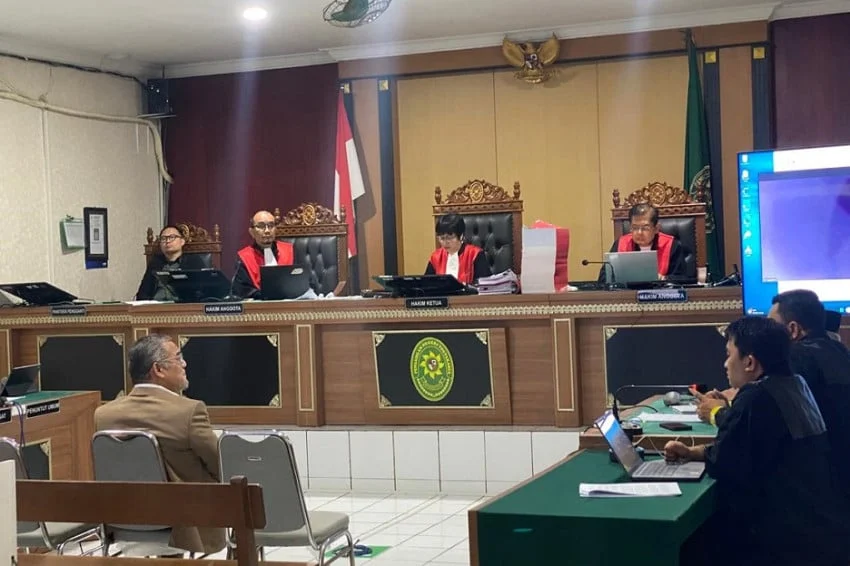
The trial at the Yogyakarta District Court recently featured compelling testimony from Chairul Huda, a distinguished legal expert and advisor to the National Police Chief. Huda’s intervention has injected a significant new perspective into the proceedings, directly challenging the foundational pillars of the prosecution’s case. His testimony focused on two critical aspects: the absence of a demonstrable criminal motive (mens rea) on the part of Sri Purnomo and the questionable methodology employed in calculating the alleged state financial losses.
Chairul Huda unequivocally stated that investigations have yielded no evidence linking the tourism grant policy to any illicit gains or personal enrichment for the defendant. He emphasized that for an act to be considered a criminal offense, particularly corruption, the perpetrator must possess a clear criminal intent. "How can someone be said to have committed a criminal act if they do not possess a motive? Throughout this process, no such motive has been found; there is no mens rea," Huda asserted during his testimony. This statement underscores a fundamental principle of criminal law: the requirement of a guilty mind accompanying a guilty act. Without intent to commit an unlawful act, even if administrative errors occurred, the threshold for criminal culpability may not be met.
Furthermore, Huda addressed the allegations of political motivations, specifically whether the grant distribution was designed to influence the 2020 Sleman Regional Election (Pilkada). He highlighted that any alleged violation of a regional head’s neutrality, particularly concerning electoral conduct, should be adjudicated by specialized electoral bodies such as the Election Supervisory Agency (Bawaslu), the Integrated Law Enforcement Centre (Gakkumdu), or the Constitutional Court itself. To date, Huda noted, no such authoritative body has issued a ruling confirming any electoral misconduct by Sri Purnomo in connection with the grants. This argument suggests that attempting to frame an alleged electoral violation as a corruption crime, without proper adjudication by electoral authorities, could be an inappropriate application of the law.
The Significance of Constitutional Court Decision No. 28/PUU-XXIV/2026
The legal expert’s arguments are significantly bolstered by his reference to Constitutional Court Decision Number 28/PUU-XXIV/2026. While the precise details of this specific ruling are not fully elaborated in the initial report, its mention by a prominent legal expert suggests it carries substantial weight in clarifying the boundaries between administrative policy decisions and criminal acts, particularly for public officials. Such a ruling typically aims to refine the interpretation of legal provisions related to state loss or the concept of mens rea within the context of public policy. It might, for instance, differentiate between administrative negligence or poor judgment, which could warrant administrative sanctions, and deliberate criminal intent to enrich oneself or others, which constitutes corruption.
This decision likely emphasizes that not every instance of public funds not yielding optimal results, or even cases of procedural missteps, automatically constitutes a criminal act of corruption. Instead, it would presumably reassert the necessity of proving direct personal gain, a clear intent to defraud the state, or a blatant abuse of power for illicit purposes. By invoking this Constitutional Court ruling, Chairul Huda implies that the prosecution’s interpretation of "state loss" or "criminal motive" in the Sri Purnomo case may not align with the latest judicial interpretations from the highest constitutional body. This could necessitate a re-evaluation of the evidence and the charges themselves, potentially leading to a redefinition of what constitutes a prosecutable corruption offense for public officials acting within their administrative discretion.
Legal Framework and Core Concepts in Focus
The case illuminates several critical legal concepts fundamental to Indonesian anti-corruption law.
- Mens Rea (Criminal Intent): As highlighted by Chairul Huda, mens rea is a cornerstone of criminal culpability. In corruption cases, it typically requires proof that the defendant knowingly and intentionally committed an act with the aim of unlawfully enriching themselves or others, or causing harm to the state. The defense contends that if the funds genuinely benefited the community as intended, and there was no personal gain, the element of criminal intent is absent. This principle is crucial in distinguishing between honest errors in judgment, administrative shortcomings, or even poor policy outcomes, and deliberate criminal conduct.
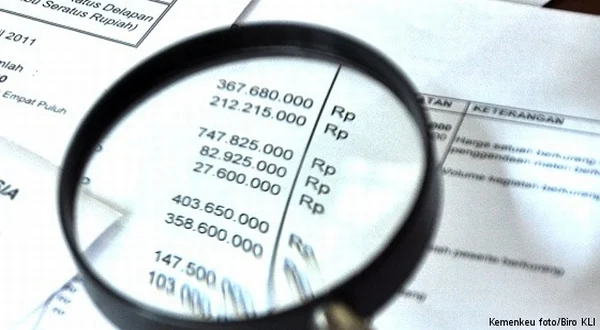
- State Loss (Kerugian Negara): The calculation of state loss is often the most contentious aspect of corruption trials. Indonesian law (Law No. 31/1999 jo. Law No. 20/2001 on the Eradication of Corruption) broadly defines state loss. Typically, state financial auditors (BPK or BPKP) are tasked with quantifying these losses. However, the methodology and interpretation can vary. The defense, supported by Huda’s testimony, suggests that if the grants were received by the public and used for public benefit (tourism development), even if there were procedural flaws, arguing for "state loss" in the criminal sense becomes problematic. This is because the funds, while potentially mismanaged, were not illicitly diverted for private gain but rather remained within the public domain or benefited the intended public. This nuanced interpretation challenges the prosecution to prove not just a loss, but a criminally caused loss, distinct from mere administrative inefficiency.
- Role of Electoral Bodies (Bawaslu, Gakkumdu, MK): The suggestion that any electoral violations should be handled by specific electoral dispute resolution mechanisms is vital. If the primary "offense" was alleged misuse of public funds to gain political advantage during an election, then the appropriate bodies (Bawaslu for administrative violations, Gakkumdu for criminal electoral offenses, and the Constitutional Court for disputes over election results) should have ruled on such matters. Without such findings, prosecuting an official for corruption based on an alleged, unproven electoral motive could be seen as circumventing established legal procedures and potentially criminalizing political actions without due process from the relevant electoral authorities.
Chronology of Events
The precise timeline leading to the current trial stage involves several key phases:
- Mid-2020: The Sleman Regency Government, under Regent Sri Purnomo, initiates and distributes tourism grants as part of its COVID-19 economic recovery efforts. These grants target various tourism stakeholders to mitigate the pandemic’s impact.
- Late 2020: The Sleman Regional Election (Pilkada) takes place. Sri Purnomo is the incumbent. The distribution of grants during an election period naturally draws heightened scrutiny for potential political influence.
- 2021-2022 (Inferred): Investigations commence following reports of alleged irregularities in the grant distribution process. This phase likely involves audits, collection of documents, and initial questioning of witnesses.
- Late 2022 – Early 2023 (Inferred): The investigation culminates in the naming of Sri Purnomo as a suspect. Formal charges are prepared, alleging corruption related to the tourism grants.
- Mid-2023 (Inferred): The case is formally brought to trial at the Yogyakarta District Court. The prosecution presents its case, outlining the alleged state losses and the defendant’s role.
- Late 2023 – Early 2024: The defense presents its arguments and calls expert witnesses. Chairul Huda provides his critical testimony, challenging the fundamental aspects of the prosecution’s case.
- Present: The trial continues, with the court meticulously evaluating all evidence, testimonies, and legal arguments before reaching a verdict.
Broader Context: Anti-Corruption Efforts and Challenges
Indonesia has a robust legal framework and dedicated institutions for combating corruption, including the Corruption Eradication Commission (KPK), the Attorney General’s Office, and the National Police. However, the prosecution of public officials, particularly regional heads, often presents unique challenges. The line between legitimate policy discretion, administrative errors, and outright criminal corruption can be difficult to draw. There is a persistent debate within legal circles about the potential for "criminalization of policy," where officials are prosecuted for decisions that, while perhaps flawed or inefficient, do not stem from malicious intent or lead to personal illicit enrichment.
This case, therefore, is not merely about an individual defendant but also serves as a litmus test for the country’s anti-corruption legal system. It probes the precision with which state loss is defined and calculated, the stringency with which mens rea is proven, and the appropriate jurisdiction for different types of alleged misconduct (administrative, electoral, or criminal). A verdict that clarifies these boundaries could have far-reaching implications, influencing how future investigations are conducted, how charges are framed, and how public officials exercise their discretionary powers without fear of undue criminalization for non-criminal policy outcomes.
Reactions and Perspectives
The prosecution, having built its case over months, likely views the alleged irregularities as clear violations of anti-corruption laws, resulting in quantifiable state losses. Their perspective would emphasize the importance of upholding accountability in public fund management, irrespective of whether the funds ultimately reached the public. They would argue that any deviation from proper procedure, especially if it opens avenues for abuse or distorts public policy for political gain, constitutes corruption.
The defense, aligning with Chairul Huda’s testimony, maintains that the case is "forced" and lacks the essential elements of a criminal offense. Their argument centers on the fact that the funds indeed served the public purpose of supporting the tourism sector and that the defendant did not personally benefit. This perspective aims to demonstrate that while there might have been administrative imperfections, these do not cross the threshold into criminal corruption.
Public and civil society reactions could be varied. On one hand, there is a strong demand for transparency and accountability in public spending, especially concerning large-scale grants. Any hint of corruption is met with public indignation. On the other hand, there is also concern that overzealous prosecution might stifle innovation and risk-taking by public officials, leading to a paralysis of policy implementation if every administrative misstep is immediately criminalized. This case could reignite debates about striking the right balance between combating corruption and allowing public officials sufficient latitude to govern effectively.
Implications and Future Outlook
The outcome of the Sri Purnomo trial, particularly concerning the court’s interpretation of mens rea and state loss in light of Constitutional Court Decision No. 28/PUU-XXIV/2026, will have significant implications:
- Precedent for Public Officials: A ruling favoring the defense could establish a precedent that makes it more challenging to prosecute public officials for policy decisions where personal illicit gain is not clearly proven, even if administrative flaws exist. Conversely, a conviction could reinforce the broad interpretation of state loss and criminal intent.
- Clarity on State Loss Calculation: The case could prompt further refinement in the methodology and legal interpretation of "state loss," especially when public funds are dispersed but allegedly mismanaged rather than embezzled for private use.
- Distinction Between Administrative and Criminal Offenses: It could sharpen the distinction between administrative errors (punishable by administrative sanctions) and criminal corruption (punishable by imprisonment).
- Role of Expert Witnesses: The prominence of Chairul Huda’s testimony highlights the critical role of legal experts in providing nuanced interpretations of complex legal principles in high-stakes corruption trials.
- Impact on Regional Governance: Regional heads and their administrations may become more cautious in exercising discretionary powers, particularly in grant distribution, if the risk of criminalization for policy outcomes without personal gain remains high.
As the trial progresses, all eyes will be on the Yogyakarta District Court to see how it navigates these complex legal arguments and how its final judgment will shape the landscape of anti-corruption enforcement in Indonesia. The decision will undoubtedly contribute to the ongoing evolution of legal jurisprudence concerning public officials, policy discretion, and the stringent requirements for proving criminal culpability in corruption cases.