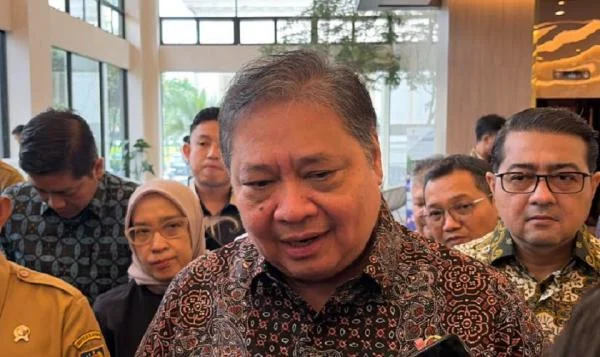
JAKARTA – Indonesia is advancing its ambitious plans to establish an International Financial Center (PFII) within a designated Special Economic Zone (KEK), a strategy championed by Coordinating Minister for Economic Affairs Airlangga Hartarto. The minister highlighted that integrating a financial hub within a KEK is a globally recognized and successful model, citing the Dubai International Financial Centre (DIFC) as a prime example. This strategic move aims to elevate Indonesia’s position in the global financial landscape, attract significant foreign direct investment, and diversify its economic drivers beyond traditional sectors. The proposed location for this pivotal development is the KEK Kura-Kura Bali, a choice that underscores the government’s multi-faceted approach to regional development and economic growth.
Speaking at Graha Pertamina in Jakarta on Wednesday, July 22, 2026, Minister Hartarto underscored the validity of the KEK framework for such an undertaking. "In Dubai, the Financial Centre operates within a special economic zone, and this is precisely the model we intend to promote in Indonesia," he stated, emphasizing the proven efficacy of the integrated approach. This endorsement comes amidst ongoing legislative efforts, including the recent passage of the PFII Bill (RUU PFII), which industry experts like Dr. Purbaya Yudhi Sadewa, a prominent economist and financial authority, have lauded for its potential to yield substantial long-term benefits for the Republic of Indonesia. The bill’s ratification marks a critical legislative milestone, providing the legal foundation necessary for the PFII’s establishment and operation.
The Rationale: Emulating Global Success Stories
The decision to site the PFII within a KEK, specifically KEK Kura-Kura Bali, is not arbitrary but a carefully considered strategy based on international best practices. The Dubai International Financial Centre (DIFC) stands as a beacon of success for this model. Established in 2004, DIFC is a federal financial free zone within Dubai, operating under a common law framework distinct from the UAE’s civil law. It boasts its own independent regulator, the Dubai Financial Services Authority (DFSA), and an independent judicial system, the DIFC Courts. This autonomy, combined with world-class infrastructure and attractive incentives, has allowed DIFC to become a leading global financial hub, attracting over 25,000 professionals and more than 4,000 companies, including many of the world’s top financial institutions. Its success story demonstrates how a dedicated, well-regulated, and incentivized zone can catalyze financial sector growth, generate high-value jobs, and significantly contribute to a nation’s GDP.
Indonesia seeks to replicate this success by offering a tailored regulatory environment, robust legal certainty, and a suite of incentives within the KEK framework. Minister Hartarto elaborated that while KEKs typically focus on specific product-oriented economic activities such as manufacturing, logistics, or tourism, the PFII will specialize exclusively in financial services. "We have already identified the site in Bali. It’s clear that a KEK and a PFII are distinct entities, but they can indeed overlap and synergize. A KEK usually deals with products, whereas a PFII focuses on financial services," he explained. This distinction allows for a bespoke regulatory regime within the PFII that caters specifically to the nuances and demands of the global financial industry, while leveraging the broader infrastructure and general incentives provided by the KEK.
Indonesia’s Vision for a Dynamic Financial Hub
Indonesia’s pursuit of an International Financial Center is deeply rooted in its long-term economic aspirations. As the largest economy in Southeast Asia and a member of the G20, Indonesia aims to transition from a middle-income country to a high-income nation by 2045. Achieving this goal necessitates significant economic diversification, enhanced competitiveness, and a robust financial sector capable of supporting large-scale investment and complex transactions.
Currently, Indonesia’s capital markets, while growing, still lag behind regional peers like Singapore and even Malaysia in terms of depth, liquidity, and global integration. The establishment of the PFII is envisioned as a catalyst to address these gaps by:
- Attracting Foreign Direct Investment (FDI): By offering a competitive and stable regulatory environment, the PFII aims to draw global financial institutions, asset managers, and investors who might otherwise bypass Indonesia due to perceived regulatory complexities or lack of specialized financial infrastructure.
- Deepening Capital Markets: The presence of international financial players and advanced financial products within the PFII can stimulate the growth and sophistication of Indonesia’s domestic capital markets, making them more attractive for both local and international issuers and investors.
- Facilitating Global Trade and Investment: A strong financial center can act as a crucial intermediary for international trade and investment flows, providing financing, risk management, and advisory services for businesses operating across the region.
- Promoting Innovation and Expertise Transfer: The influx of international talent and institutions will foster knowledge transfer, introduce new financial technologies (fintech), and elevate the skills of the domestic workforce in high-value financial services.
- Diversifying Economic Drivers: Reducing reliance on commodity exports and traditional manufacturing, the PFII will contribute to a more balanced and resilient economy driven by high-value services.
The Role of Special Economic Zones (KEKs)
Indonesia’s Special Economic Zones (KEKs) program, launched in 2009, is a cornerstone of its regional development strategy. KEKs are areas with specific geographical boundaries that enjoy economic benefits and incentives, including fiscal incentives (tax holidays, tax allowances), simplified licensing procedures, and robust infrastructure development. The goal is to stimulate investment, create jobs, and foster regional economic growth. There are currently over 19 operational KEKs across Indonesia, each tailored to specific industries such as manufacturing, tourism, logistics, or digital economy.
KEK Kura-Kura Bali, where the PFII is planned, is particularly illustrative. Located on Serangan Island, Denpasar, Bali, this KEK is designed as an integrated tourism and residential hub. Its existing focus on high-end tourism, luxury resorts, and a marina provides a unique backdrop for a financial center. The synergy is clear: a sophisticated financial services ecosystem can cater to the wealth management needs of high-net-worth individuals drawn to Bali, support the financing requirements of large-scale tourism infrastructure projects, and attract international businesses seeking a prestigious and well-connected location. The KEK status provides the fundamental infrastructure, land allocation, and a baseline of regulatory ease, upon which the specialized PFII framework can be built.

Legislative Chronology and Future Steps
The journey towards establishing the PFII has involved significant legislative groundwork. The concept of an international financial center has been discussed within Indonesian economic circles for several years, gaining momentum as part of President Joko Widodo’s broader economic reform agenda. The key legislative milestone highlighted by the article is the passage of the PFII Bill (RUU PFII). While the exact date of its enactment into law might vary, its passage signals a strong governmental commitment and provides the necessary legal teeth for implementation.
This bill is expected to delineate the specific legal and regulatory framework for the PFII, addressing critical aspects such as:
- The governance structure of the PFII, likely involving a dedicated authority.
- The scope of financial activities permitted.
- The independent regulatory body responsible for licensing, supervision, and enforcement (similar to DIFC’s DFSA).
- The dispute resolution mechanisms, potentially incorporating international arbitration standards or a specialized commercial court.
- Specific tax and non-tax incentives for entities operating within the PFII.
- Measures to ensure compliance with international standards for anti-money laundering (AML) and combating the financing of terrorism (CFT).
Following the bill’s passage, the next steps will involve the drafting and issuance of implementing regulations, the establishment of the PFII authority, detailed infrastructure planning within KEK Kura-Kura Bali, and aggressive promotion to attract anchor tenants and international financial institutions. The government will likely engage in roadshows and dialogues with global financial players to showcase the PFII’s potential and solicit feedback.
Operational Model and Regulatory Environment
The success of the Indonesian PFII will heavily depend on its operational model and the robustness of its regulatory environment. Learning from DIFC and other leading centers, the PFII is anticipated to feature:
- Independent Regulatory Authority: A dedicated regulator, distinct from existing national financial authorities like the Financial Services Authority (OJK) or Bank Indonesia (BI), will be crucial. This body would be responsible for licensing, supervising, and enforcing regulations on all entities operating within the PFII. Its independence, transparency, and adherence to international best practices (e.g., those set by IOSCO, FATF) will be paramount for building trust among global investors.
- Common Law Framework (or Hybrid): While Indonesia operates under a civil law system, the PFII might adopt a common law-based legal framework for commercial and financial transactions, similar to DIFC. This provides greater familiarity and predictability for international firms accustomed to common law jurisdictions. Alternatively, a hybrid system that harmonizes existing Indonesian laws with specific international commercial law principles could be considered.
- Comprehensive Range of Financial Services: The PFII is expected to offer a broad spectrum of financial services, including:
- Asset Management and Wealth Management: Catering to high-net-worth individuals and institutional investors.
- Investment Banking and Capital Markets: Facilitating corporate finance, mergers and acquisitions, and capital raising activities.
- Islamic Finance: Leveraging Indonesia’s position as the world’s largest Muslim-majority nation to develop a robust Islamic finance ecosystem.
- Fintech and Digital Assets: Providing a sandbox environment and regulatory clarity for emerging financial technologies and digital asset trading.
- Insurance and Reinsurance: Offering specialized insurance products and services.
- Fund Administration and Custody Services: Supporting the operational needs of financial institutions.
- State-of-the-Art Infrastructure: Beyond physical buildings, this includes advanced data centers, secure communication networks, and a highly skilled workforce, supported by a conducive living environment in Bali.
Potential Benefits and Challenges
The establishment of the PFII presents a compelling vision for Indonesia’s economic future, yet it also comes with a set of inherent challenges.
Potential Benefits:
- Economic Growth and Diversification: Direct contribution to GDP through financial services, and indirect growth through related sectors (legal, consulting, hospitality).
- Job Creation: Generation of high-skilled jobs in finance, technology, and support services, attracting and retaining top talent.
- Increased FDI: Significant inflows of foreign capital, not just into the financial sector but also into the broader Indonesian economy.
- Technological Advancement: Adoption of cutting-edge financial technologies and digital infrastructure.
- Enhanced Regional Influence: Strengthening Indonesia’s role as a key economic and financial player in Southeast Asia and beyond.
- Improved Governance and Transparency: Pressure to adopt and adhere to international best practices in financial regulation and corporate governance.
Challenges:
- Intense Global and Regional Competition: The PFII will face stiff competition from established hubs like Singapore, Hong Kong, Tokyo, and emerging centers like Kuala Lumpur. Differentiation and a unique value proposition will be crucial.
- Talent Acquisition: Attracting and retaining world-class financial talent, both local and international, will require competitive compensation, excellent quality of life, and a conducive professional environment.
- Regulatory Credibility: Building trust and demonstrating unwavering commitment to independent, transparent, and robust regulation will be a long-term endeavor. Any perception of political interference or regulatory arbitrage could be detrimental.
- Infrastructure Development: While KEK Kura-Kura Bali provides a foundation, the specific infrastructure required for a high-functioning financial center, including reliable power, internet connectivity, and secure data handling, must be meticulously developed and maintained.
- Anti-Money Laundering (AML) and Counter-Terrorism Financing (CFT) Compliance: Strict adherence to international standards to prevent illicit financial flows is paramount for maintaining global credibility and avoiding blacklisting.
- Harmonization with Domestic Regulations: Ensuring a clear delineation and effective synergy between the PFII’s independent regulatory framework and Indonesia’s broader financial regulations will be complex.
Conclusion
Indonesia’s decision to establish an International Financial Center within a Special Economic Zone, leveraging the KEK Kura-Kura Bali, represents a bold and strategic move to unlock new avenues of economic growth and elevate its global standing. By drawing inspiration from successful models like the Dubai International Financial Centre and providing a robust legislative framework through the PFII Bill, the government, led by Coordinating Minister Airlangga Hartarto, is laying the groundwork for a sophisticated financial ecosystem. While significant challenges lie ahead, including intense competition and the need for unwavering commitment to regulatory excellence, the potential benefits—from attracting substantial foreign investment and deepening capital markets to fostering innovation and creating high-value jobs—underscore the immense importance of this initiative for Indonesia’s long-term prosperity. The world will be watching as Indonesia embarks on this ambitious journey to transform KEK Kura-Kura Bali into a thriving hub of global finance.