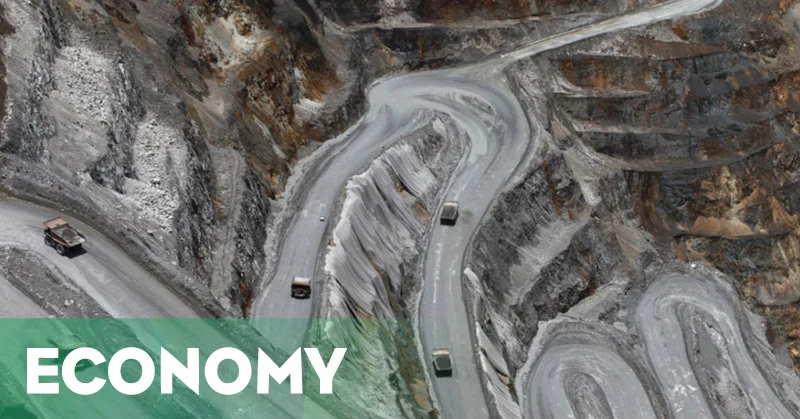
The Indonesian government has expressed unwavering confidence in the ability of its State-Owned Enterprises (BUMN) to take over and manage the operations of PT Freeport Indonesia (PTFI), as the complex divestment process of the mining giant continues to unfold. Sonny Loho, the Director General of State Assets at the Ministry of Finance, emphasized that domestic entities possess the necessary technical expertise, financial frameworks, and human resources to oversee one of the world’s largest gold and copper mining operations located in the Grasberg district of Papua. Speaking at the Ministry of Finance office in Jakarta, Loho dismissed concerns regarding the readiness of local firms, asserting that the nation’s top-tier mining companies have matured significantly and are now on par with international standards.
The discourse surrounding the divestment of PT Freeport Indonesia has reached a critical juncture, with two primary state-owned entities, PT Aneka Tambang (Persero) Tbk (Antam) and PT Inalum (Persero), being positioned as the lead vehicles for the acquisition of shares. This move is part of a broader strategic initiative by the Indonesian government to increase national ownership in strategic mineral assets, a policy often referred to as resource nationalism, aimed at ensuring that the country’s natural wealth provides maximum benefit to its citizens. According to Loho, the skepticism regarding the capability of BUMNs is unfounded and stems from an unnecessary lack of national self-confidence. He urged stakeholders and the public to trust in the proven track record of Indonesian mining professionals who have successfully managed large-scale operations across the archipelago.
The Context of Divestment and National Sovereignty
The divestment of PT Freeport Indonesia is not merely a financial transaction but a significant symbol of Indonesia’s sovereignty over its natural resources. For decades, the operations at the Grasberg mine have been governed by a Contract of Work (CoW) that many domestic critics argued favored the foreign parent company, Freeport-McMoRan (FCX), based in Phoenix, Arizona. The push for divestment gained legislative momentum following the enactment of Law No. 4 of 2009 concerning Mineral and Coal Mining, which mandated that foreign mining companies gradually divest their shares to Indonesian participants, including the central government, regional governments, or state-owned and regional-owned enterprises.
By late 2015, the Indonesian government had intensified negotiations to secure a 10.64% stake in the company, which represented the immediate requirement under the prevailing regulations. This was intended to be a stepping stone toward a 51% majority stake. The challenge, however, was not just the legal mandate but the valuation of the shares and the technical complexity of the mine itself. The Grasberg mine was transitioning from a massive open-pit operation to a sophisticated underground mining system, requiring billions of dollars in investment and highly specialized engineering. Sonny Loho’s assertions were directed at critics who believed that such a transition was beyond the scope of Indonesian BUMNs.
Profiles of the Leading BUMN Candidates: Antam and Inalum
The two companies mentioned by the Ministry of Finance, PT Aneka Tambang (Antam) and PT Inalum, represent the pinnacle of Indonesia’s industrial and mining capabilities. Antam is a vertically integrated, export-oriented mining and metals company with operations spanning the Indonesian archipelago. It has extensive experience in the exploration, mining, processing, and marketing of nickel ore, ferronickel, gold, silver, bauxite, and coal. Antam’s long history of managing complex metallurgical processes and its presence on the Indonesia Stock Exchange (IDX) provide it with a transparent corporate governance structure and the technical pedigree required for the Freeport project.
On the other hand, PT Inalum (Persero), or the Indonesia Asahan Aluminium company, has recently undergone a major transformation. After decades of being a joint venture with a Japanese consortium, Inalum became a fully state-owned enterprise in 2013. This transition was a landmark event in Indonesia’s industrial history, proving that the government could successfully take over and operate a high-tech smelting and power generation complex. In the context of the Freeport divestment, Inalum was viewed as the financial anchor, potentially serving as the holding company for the state’s mining interests—a vision that would eventually culminate in the formation of the MIND ID (Mining Industry Indonesia) holding.
A Chronology of the Freeport-Indonesia Relationship
To understand the weight of Sonny Loho’s statements in 2015, one must look at the long and often contentious history of PT Freeport Indonesia. The relationship began in 1967, shortly after the transition to the New Order administration under President Suharto. PTFI became the first foreign investor to sign a Contract of Work with the Indonesian government, marking the beginning of large-scale modern mining in Papua.
- 1967: The first Contract of Work (CoW) is signed, granting Freeport exploration and mining rights in the Ertsberg district.
- 1988: The discovery of the Grasberg deposit, one of the world’s largest gold and copper reserves, changes the scale of the operation entirely.
- 1991: A second Contract of Work is signed, extending the operation for 30 years with options for further extensions, but also introducing initial divestment requirements that were frequently delayed or renegotiated.
- 2009: The New Mining Law (Law No. 4/2009) is passed, requiring all foreign miners to eventually divest 51% of their shares and build domestic smelters.
- 2014: The government and PTFI sign a Memorandum of Understanding (MoU) to amend the CoW to align with the 2009 law, including higher royalties and a commitment to divestment.
- 2015: Negotiations reach a fever pitch regarding the valuation of the 10.64% stake. This is the period when the Ministry of Finance began vocalizing its support for BUMN management.
Technical Challenges and Economic Implications
The skepticism that Sonny Loho addressed often centered on the "Grasberg Block Cave" project. As the open pit neared the end of its life, the future of PTFI lay in underground mining. This involves a method called "block caving," where an ore body is undercut, allowing it to progressively collapse under its own weight into a series of funnels and access tunnels. It is one of the most capital-intensive and technologically demanding forms of mining in existence.
Critics argued that if BUMNs took over, they might lack the specific "institutional memory" and specialized engineering talent that Freeport-McMoRan had developed over decades. However, the government’s counter-argument was that BUMNs could retain the existing workforce—which is over 95% Indonesian—while bringing in international consultants where necessary. The goal was to shift from being a "landlord" that merely collects taxes and royalties to being an "owner-operator" that captures the full value chain of the mineral production.
From an economic perspective, PT Freeport Indonesia is a massive contributor to the national treasury. In 2015, the company was one of the largest single taxpayers in Indonesia. The revenue generated from the mine supports the development of Papua, a province that, despite its natural wealth, has faced significant socio-economic challenges. By increasing the BUMN stake, the government aimed to ensure that more of the profits remained within the country to fund infrastructure, education, and healthcare.
Broader Impact on the Mining Sector
The confidence expressed by the Ministry of Finance in 2015 set a precedent for other foreign-held mining contracts in Indonesia. It signaled to the international community that the era of "easy" contract extensions was over and that the Indonesian government was serious about its "hilirisasi" or downstreaming policy. This policy requires raw ores to be processed domestically before export, adding value to the commodities and creating jobs for the local population.
The involvement of Antam and Inalum in the Freeport process was also a catalyst for the consolidation of Indonesia’s mining BUMNs. The government realized that to compete globally and manage assets as large as Freeport, it needed a unified mining powerhouse. This eventually led to the creation of the State-Owned Mining Holding, which provided the financial "muscle" needed to borrow the billions of dollars required for the eventual 51% acquisition in 2018.
Official Responses and Public Sentiment
The reaction to Sonny Loho’s comments was largely positive within the domestic political sphere. Members of the House of Representatives (DPR) echoed the sentiment, stating that it was time for Indonesia to stop being a "spectator" in its own land. However, some economists cautioned that the acquisition must be done through a "Business-to-Business" (B2B) mechanism to avoid draining the state budget (APBN). They emphasized that Antam and Inalum should use their own balance sheets or seek external financing rather than relying on direct government injections.
In Papua, the sentiment was a mixture of hope and scrutiny. Local leaders demanded that the divestment process also include a significant share for the Provincial Government of Papua and the Regency Government of Mimika. They argued that since the environmental and social impacts of the mine were felt most acutely by the local indigenous communities (specifically the Amungme and Kamoro tribes), they should have a direct seat at the table in the new ownership structure.
Conclusion: A Step Toward Economic Independence
As Sonny Loho stated in late 2015, the fear of inability is often the greatest hurdle to national progress. The push for BUMNs to manage Freeport was a calculated move to assert that Indonesia is no longer a developing nation that lacks technical expertise. By leveraging the strengths of Antam and Inalum, the government aimed to transform the mining sector into a pillar of sustainable economic growth.
The 2015 period was a defining moment in the history of Indonesian mining. It was the year when the rhetoric of "capability" began to transform into the reality of "ownership." While the path to the final 2018 agreement was filled with legal hurdles, valuation disputes, and environmental negotiations, the foundational belief that Indonesian state enterprises were capable of managing world-class assets remained the guiding principle for the Ministry of Finance and the Ministry of State-Owned Enterprises. This shift in mindset paved the way for Indonesia to eventually secure a majority stake in one of the world’s most valuable natural resource assets, marking a new chapter in the nation’s journey toward economic independence and industrial maturity.