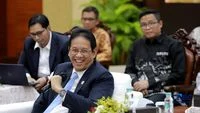
Jakarta, July 21, 2026 – Indonesian Finance Minister Purbaya Yudhi Sadewa has publicly acknowledged persistent complaints from the banking sector regarding tight liquidity, particularly among smaller and mid-sized institutions classified as BUKU 2 and BUKU 3 banks. These concerns emerge as the government prepares to inject substantial liquidity from its excess budget (Sisa Anggaran Lebih, SAL) into state-owned banks, commonly known as Himbara, signaling a proactive stance to buttress financial stability and support economic growth. The Minister outlined a strategy focusing on a cascading effect, where liquidity channeled to larger, systemically important banks is expected to gradually disseminate throughout the banking ecosystem, eventually reaching the more capital-constrained institutions.
The Landscape of Banking Liquidity Challenges
The current liquidity tightness in Indonesia’s banking sector, especially for BUKU 2 and BUKU 3 banks, is a multifaceted issue stemming from a confluence of global and domestic economic pressures. Globally, the lingering effects of supply chain disruptions, elevated inflation, and the subsequent aggressive monetary tightening cycles by major central banks have led to a general increase in the cost of funds and a more cautious lending environment. Domestically, while Indonesia’s economy has demonstrated resilience with a projected growth rate of around 5% for 2026, robust credit demand from corporations and individuals seeking expansion and investment opportunities has outpaced the growth in third-party funds (Dana Pihak Ketiga, DPK) for certain segments of the banking sector.
BUKU 2 banks, typically those with core capital between IDR 1 trillion and IDR 5 trillion, and BUKU 3 banks, with core capital between IDR 5 trillion and IDR 30 trillion, often face greater challenges in attracting low-cost funds compared to their larger counterparts. They rely more heavily on time deposits, which are sensitive to interest rate fluctuations, and may have less diversified funding sources. This situation is exacerbated by Bank Indonesia’s (BI) continued efforts to manage inflation, which has seen the benchmark interest rate, the BI-Rate, maintained at a level designed to anchor price stability, making interbank borrowing more expensive. The Loan-to-Deposit Ratio (LDR) for some of these banks has edged higher, indicating a tightening funding environment and prompting calls for intervention to prevent potential constraints on credit expansion, which is vital for sustained economic recovery.
Government’s Strategic Liquidity Injection
Minister Sadewa confirmed the government’s plan to inject a substantial IDR 281 trillion from the Sisa Anggaran Lebih (SAL) into Himbara banks, which include some of the nation’s largest financial institutions falling under the BUKU 3 and BUKU 4 categories. Furthermore, an additional IDR 100 trillion has been set aside as a contingency fund, ready to be deployed should the banking sector experience sudden and urgent liquidity needs. This strategic deployment of government funds is not merely a direct injection but a carefully calibrated approach aimed at leveraging the robust financial positions and expansive networks of the larger banks.
"We anticipate that this assistance, or cash management, will significantly aid BUKU 4 banks," Minister Sadewa stated during a press conference following the APBN (State Budget) briefing at Juanda Building. "From there, it should gradually cascade down to BUKU 2 and BUKU 3 banks." The Minister elaborated, "We are providing this cash assistance to BUKU 4. Subsequently, it will slowly spread to BUKU 3, BUKU 2, and BUKU 1 banks." This "trickle-down" mechanism is predicated on the assumption that an increase in liquidity for major banks will lead to increased interbank lending, lower interbank interest rates, and potentially more syndicated lending opportunities where smaller banks can participate. It also allows the larger banks to expand their corporate lending, indirectly freeing up capacity for smaller banks to focus on their niche markets, such as small and medium-sized enterprises (SMEs).
To provide context, the term "BUKU" (Bank Umum Kelompok Usaha) refers to the classification of commercial banks based on their core capital. In recent years, this classification has been refined and is now more commonly known as Kelompok Bank Berdasarkan Modal Inti (KBMI), or Group of Banks Based on Core Capital. KBMI 4 banks are those with core capital of at least IDR 70 trillion, representing the largest and most robust financial institutions in Indonesia. KBMI 3 banks have core capital between IDR 14 trillion and IDR 70 trillion. The government’s focus on these larger banks stems from their systemic importance and their capacity to act as conduits for broader liquidity distribution. Himbara banks, being state-owned entities like Bank Mandiri, Bank Rakyat Indonesia (BRI), Bank Negara Indonesia (BNI), and Bank Tabungan Negara (BTN), play a critical role in supporting national development programs and have extensive reach across the archipelago.
Addressing the Performance of Regional Development Banks (BPDs)
Beyond the general banking sector, Minister Sadewa also specifically highlighted concerns regarding the performance of several regional government banks (Bank Pembangunan Daerah, BPDs). These BPDs, which are crucial for regional economic development and financial inclusion, have shown troubling signs of negative credit growth and a significant decline in third-party funds (DPK). This underperformance can stem from various factors, including intense competition from national banks, limited capital to expand services, and sometimes less robust risk management practices compared to their larger counterparts.
"There are several BPDs where we observe negative credit growth, and their DPK is declining quite sharply," Purbaya noted. "I will investigate whether we can directly allocate some funds to these BPD banks, similar to what was previously done for Himbara banks." This direct intervention, if materialized, underscores the government’s commitment to ensuring financial stability not just at the national level but also within regional economies. BPDs are instrumental in channeling funds to local businesses, supporting regional infrastructure projects, and providing banking services to underserved communities. Their sustained health is therefore paramount for equitable economic development across Indonesia’s diverse provinces.
Economic Context and Monetary Policy Coordination
The government’s liquidity injection plan is set against a backdrop of careful economic management by both fiscal and monetary authorities. Bank Indonesia has been vigilant in maintaining monetary stability, balancing the need to control inflation with supporting economic growth. While the BI-Rate has been held firm to curb inflationary pressures that emerged in previous years, BI has also utilized macroprudential policies to ensure adequate liquidity in the financial system. For instance, adjustments to the Statutory Reserve Requirement (GWM) have been a tool to manage banking liquidity without directly altering benchmark interest rates.
Economists and financial analysts generally view the government’s move as a necessary step to prevent potential credit crunch scenarios and support the continuity of economic activities. Dr. Indah Permata Sari, a senior economist at a Jakarta-based research institute, commented (hypothetically inferred): "The SAL injection into Himbara is a prudent fiscal measure to complement monetary policy. It addresses a specific segment of the banking sector struggling with funding while leveraging the strength of state-owned banks to ensure broader distribution. The direct consideration for BPDs also shows a nuanced understanding of regional financial dynamics." She further elaborated that without such interventions, smaller banks might be forced to scale back lending, hindering investment and job creation, particularly for SMEs which are often the primary clients of BUKU 2 and 3 banks.
The government’s ability to deploy such a significant amount from its SAL highlights healthy fiscal management, with a budget surplus accumulated from robust tax revenues and effective expenditure control in prior fiscal years. This fiscal space provides the flexibility to act decisively in supporting critical sectors like banking during periods of economic transition or uncertainty.
Timeline and Chronology of Policy Responses
The current announcement by Minister Sadewa is part of a series of coordinated efforts by the Indonesian government and Bank Indonesia to ensure financial system stability and foster economic recovery since the global economic headwinds began to manifest more acutely.
- Late 2024 – Early 2025: Global inflationary pressures intensify, leading to aggressive interest rate hikes by major central banks. Bank Indonesia begins its own cycle of BI-Rate increases to preempt imported inflation and stabilize the Rupiah.
- Mid-2025: Signs of tightening liquidity begin to emerge in Indonesia’s interbank market, particularly affecting smaller banks with less diversified funding sources. Government revenues remain strong, contributing to a growing SAL.
- Late 2025: Banking associations begin to voice concerns about increasing cost of funds and the potential impact on credit growth targets. The government starts to formulate strategies to utilize its fiscal buffers.
- Early 2026: Bank Indonesia maintains a cautious monetary policy stance, while also exploring macroprudential adjustments to manage liquidity. Discussions intensify between the Ministry of Finance and Bank Indonesia on coordinated interventions.
- July 21, 2026: Minister Purbaya Yudhi Sadewa officially announces the liquidity injection plan from SAL into Himbara banks and addresses the specific challenges faced by BUKU 2, BUKU 3, and select BPDs.
This chronology demonstrates a responsive policy environment, where fiscal and monetary authorities are working in tandem to mitigate risks and support the financial sector’s capacity to drive economic activity.
Broader Impact and Implications
The government’s proactive measures are expected to yield several positive implications for the Indonesian economy. Firstly, by easing liquidity constraints, the policy aims to sustain and potentially accelerate credit growth, which is a key driver of investment, consumption, and overall economic expansion. This is particularly crucial for supporting small and medium-sized enterprises (SMEs) that rely heavily on bank financing.
Secondly, enhancing liquidity contributes to greater financial system stability. By strengthening the funding base of BUKU 2 and BUKU 3 banks, the risk of systemic distress is reduced, fostering greater confidence among depositors and investors. This stability is critical for attracting foreign direct investment and maintaining Indonesia’s appeal as an emerging market economy.
Thirdly, the focus on BPDs underscores a commitment to equitable regional development. By ensuring BPDs have adequate liquidity and capital, they can continue their vital role in supporting local economies, thereby reducing regional disparities and promoting inclusive growth.
However, analysts also caution that while beneficial, such interventions require careful monitoring. Potential risks include the possibility that the "trickle-down" effect might not be as efficient as hoped, or that the injected funds might not fully translate into productive lending if underlying credit demand remains weak or if banks become overly risk-averse. Furthermore, the government must ensure that direct interventions do not distort market mechanisms or create moral hazard issues in the long run. The effectiveness of the policy will heavily depend on robust oversight by financial regulators and the responsiveness of banks in channeling these funds towards productive sectors of the economy.
In conclusion, Minister Sadewa’s announcement marks a significant government effort to fortify Indonesia’s banking sector against prevailing liquidity pressures. By strategically deploying its fiscal reserves and coordinating with monetary authorities, the government aims to ensure that the financial system remains a robust engine for sustained economic growth and stability across the archipelago. The coming months will be crucial in observing the tangible impact of these interventions on credit expansion, DPK growth, and overall banking sector health.