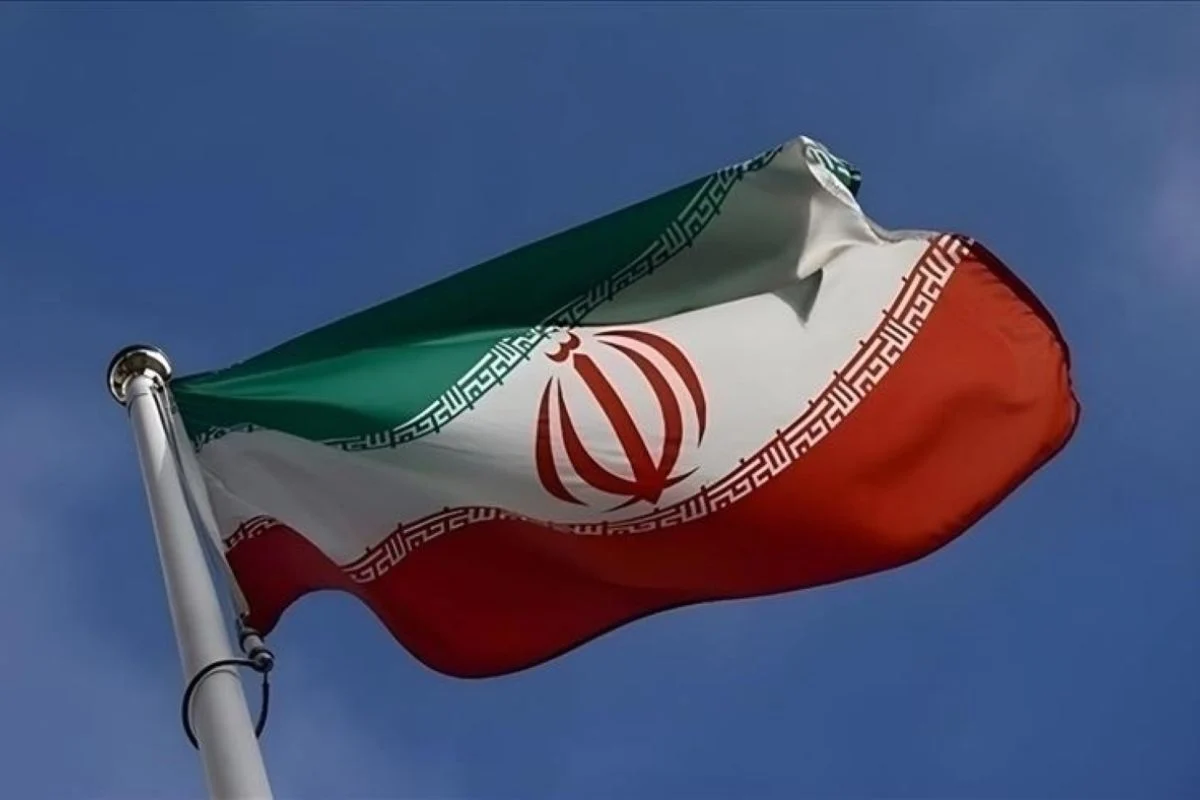
The Iranian currency, the rial, has been under intense global scrutiny, particularly as geopolitical tensions escalate and international economic policies, notably those from the United States, exert significant pressure. The administration of former U.S. President Donald Trump famously implemented a "maximum pressure" campaign, imposing tariffs and stringent sanctions, including up to 25 percent tariffs, on nations and entities maintaining business ties with Iran. This aggressive stance has had profound repercussions on Iran’s economy, manifesting most visibly in the precipitous decline of its national currency. Recent records indicate that the Iranian rial has plummeted to historic lows against major international currencies like the euro, underscoring the severe economic strain inflicted by prolonged sanctions and rampant inflation.
Despite the official status and international recognition of the rial, a curious phenomenon unfolds within Iran’s borders. Visitors to traditional bazaars or modern shopping centers will quickly notice that the term "rial" is virtually absent from everyday transactions. Instead, locals universally refer to prices and conduct commerce using the denomination "toman." This linguistic divergence is not merely a quirk of custom but a direct consequence of decades of hyperinflation, which has rendered the official rial values unwieldy and impractical for daily use. To simplify transactions and avoid cumbersome, multi-zero figures, the toman system has become the de facto currency for the Iranian populace. The stark contrast between the official legal tender and the commonly used medium of exchange often leaves international observers and tourists bewildered, prompting a deeper dive into the intricate relationship between the rial and the toman and the underlying economic forces at play.
The Anatomy of Iran’s Currency: Rial vs. Toman
Legally and administratively, the rial (IRR) is the undisputed official currency of the Islamic Republic of Iran. All formal financial activities, government documents, banking operations, and price listings in contemporary retail establishments are denominated in rials. The Central Bank of Iran (CBI) issues banknotes and coins exclusively in rials, bearing its legal mandate. Internationally, any financial transaction involving Iran, from trade to remittances, is recorded and understood in rials.
However, the daily economic life of Iranians operates on an entirely different linguistic and numerical plane. In markets, shops, and service industries, the "toman" reigns supreme. The practical relationship is straightforward: one toman is equivalent to 10,000 rials. This simplification effectively lops off four zeros from the official rial denomination, making prices far more manageable to articulate and comprehend. For instance, an item priced at 50,000 rials would be expressed as "five tomans," and a 600,000-rial purchase becomes "sixty tomans." This deeply ingrained practice has evolved as a coping mechanism against inflation, allowing citizens to conduct transactions without the constant mental gymnastics of handling excessively large numbers.
Historically, the toman itself was the official currency of Persia until 1932, when it was replaced by the rial at a rate of 1 toman = 10 rials. The current colloquial usage of toman, therefore, is a contemporary re-adoption of an older term, albeit with a significantly altered value. The persistent gap between the official and everyday currency names creates significant confusion, particularly for foreigners unaccustomed to this dual system. A tourist might be quoted a price in tomans, mistakenly assuming it is in rials, leading to either underpayment or overpayment if not clarified. The Iranian government, recognizing this long-standing discrepancy and the practical challenges it presents, has initiated a comprehensive redenomination policy aimed at formally aligning the official currency with the popular usage.
A History of Economic Pressure: U.S. Sanctions and Their Impact
The weakening of the Iranian rial is inextricably linked to a decades-long history of geopolitical tension and economic sanctions, primarily from the United States. While sanctions have been a recurring feature of U.S.-Iran relations since the 1979 Islamic Revolution, they intensified dramatically in the 21st century, particularly concerning Iran’s nuclear program.
A pivotal moment came with the signing of the Joint Comprehensive Plan of Action (JCPOA) in 2015, which saw international sanctions lifted in exchange for curbs on Iran’s nuclear activities. This period offered a brief reprieve, leading to a temporary stabilization and even strengthening of the rial, as Iran re-entered global oil markets and gained access to previously frozen assets. Foreign investment began to trickle back, and the economy showed signs of recovery.
However, this period of optimism was short-lived. In May 2018, the Trump administration unilaterally withdrew the U.S. from the JCPOA, deeming it insufficient, and reimposed a comprehensive "maximum pressure" campaign. This strategy aimed to cripple Iran’s economy and force it to renegotiate a more stringent nuclear deal. The sanctions targeted Iran’s most vital sectors:
- Oil Exports: The cornerstone of Iran’s economy, oil exports were severely restricted, drastically cutting off the primary source of foreign currency revenue. Buyers faced secondary sanctions, deterring most major purchasers.
- Banking and Financial Services: Iranian banks were largely disconnected from the SWIFT international payment system, making it nearly impossible to conduct international transactions legally. This hampered trade, investment, and access to global financial markets.
- Shipping and Insurance: Sanctions extended to Iran’s shipping lines and insurance providers, further isolating its trade.
- Key Industries: Sectors like petrochemicals, metals, and automotive were also targeted, limiting their ability to export and import necessary components.
The immediate effect of these renewed sanctions was devastating. Iran’s oil exports plummeted from over 2.5 million barrels per day before 2018 to as low as 200,000-300,000 bpd at certain points. This massive loss of revenue severely restricted the government’s ability to finance imports, manage the budget, and support the national currency. The rial’s value began a steep and accelerated decline, reflecting the market’s loss of confidence and the severe shortage of hard currency within the country.
The Rial’s Downward Spiral: A Chronology of Devaluation
The trajectory of the Iranian rial vividly illustrates the direct correlation between geopolitical events and economic stability.
- Pre-JCPOA (Early 2010s): Under earlier sanction regimes, the rial experienced significant depreciation. For instance, in 2012, its value against the U.S. dollar depreciated by over 80% on the unofficial market within a year.
- JCPOA Era (2016-2018): Following the implementation of the JCPOA in January 2016, the rial saw a period of relative stability. The exchange rate, which had hovered around 32,000-35,000 rials to the U.S. dollar, remained relatively consistent, and inflation eased somewhat.
- Post-U.S. Withdrawal from JCPOA (May 2018 onwards): This marked the beginning of the most severe phase of devaluation.
- 2018: Immediately after the U.S. withdrawal, the rial began a freefall. From around 42,000 rials to the dollar at the official rate, it plunged to over 100,000 rials/dollar on the unofficial market by July 2018, and further to 190,000 rials/dollar by September.
- 2019-2020: The pressure continued, exacerbated by declining oil prices and the COVID-19 pandemic. By mid-2020, the rial hit new lows, often trading above 250,000 rials to the dollar on the unofficial market.
- 2021-Present: Despite some fluctuations, largely influenced by prospects of JCPOA revival talks, the rial has remained extremely weak. It has frequently breached the 300,000, 400,000, and even 500,000 rials per dollar thresholds on the unofficial market, and similar drastic devaluations against the euro. The gap between the official and unofficial exchange rates has also widened, indicating significant market distortion.
This chronic devaluation has profound implications. It drastically increases the cost of imports, from essential medicines to industrial components, fueling domestic inflation. It erodes the purchasing power of ordinary Iranians, diminishes savings, and creates immense uncertainty for businesses trying to plan for the future. The black market for foreign currency thrives under these conditions, often dictating the real economic value of the rial.
Inflation as a Persistent Scourge
Hand-in-hand with currency devaluation, inflation has been a relentless and destructive force in the Iranian economy. The causes are multifaceted:
- Sanctions-Induced Supply Shocks: The inability to import necessary goods, raw materials, and machinery due to sanctions creates shortages, driving up prices.
- Reduced Oil Revenues: The government’s inability to earn sufficient foreign currency from oil exports leads to budget deficits, often financed by printing money, which directly fuels inflation.
- Liquidity Growth: Expansionary monetary policies, often aimed at stimulating the economy or covering budget shortfalls, increase the money supply without a corresponding increase in goods and services, thus raising prices.
- Global Commodity Prices: Iran, as an importer of many goods, is also susceptible to global price fluctuations, which are amplified by the weak rial.
- Expectations and Speculation: High inflation often creates a self-fulfilling prophecy, where people expect prices to rise further and thus spend their money quickly or convert it into assets, accelerating the inflationary cycle.
Annual inflation rates in Iran have consistently been among the highest globally. For several years following the reimposition of sanctions, annual inflation rates regularly exceeded 40%, sometimes even touching 50-60% for specific goods and services. This hyperinflationary environment is the primary reason why the "toman" system became indispensable. Imagine paying 5,000,000 rials for a simple meal; converting that to "500 tomans" makes the transaction far more practical. The psychological impact of dealing with ever-increasing numbers of zeros also contributes to a sense of economic instability and hardship for the average citizen.
Iran’s Response: The Redenomination Initiative
Recognizing the deep-seated confusion and practical difficulties caused by the rial’s diminished value and the dual currency system, the Iranian government has embarked on a significant currency redenomination initiative. In May 2020, the Iranian parliament passed a bill to formally change the national currency from the rial to the toman, slashing four zeros from its value.
Key aspects of this policy include:
- Formal Shift: The law officially designates the toman as the national currency.
- Zero-Stripping: The new toman will be equivalent to 10,000 old rials. This aligns the official currency value with the commonly used colloquial toman.
- New Sub-unit: The new toman will also have a sub-unit called the "qiran," with 1 toman equaling 100 qirans. This move is designed to facilitate smaller transactions and provide a more granular currency structure, similar to how many global currencies have cents or pence.
- Transition Period: The implementation of this change is planned to be gradual, with a transition period of up to two years, allowing old rial banknotes and coins to circulate alongside the new toman currency. The Central Bank of Iran projects the full rollout and replacement of old currency to occur between 2025 and 2026. During this period, new banknotes may feature both rial and toman denominations, or the toman value with faint outlines of the removed zeros, to aid public adjustment.
The objectives behind this redenomination are primarily to:
- Simplify Transactions: Eliminate the confusion of dealing with large numbers and the dual currency system.
- Psychological Impact: Instill a sense of economic stability and strength by presenting smaller, more manageable currency values.
- Reduce Printing Costs: Over time, the need to print high-denomination rial notes will diminish.
- Improve International Perceptions: Present a more stable and rational currency system to foreign investors and tourists.
However, critics argue that redenomination is largely a cosmetic change if not accompanied by fundamental economic reforms and relief from international sanctions. While it simplifies calculations, it does not address the root causes of inflation or currency depreciation. Without tackling high liquidity, budget deficits, and access to foreign currency, the new toman could eventually suffer the same fate as the old rial. The success of this initiative hinges on Iran’s ability to stabilize its economy, manage inflation, and potentially re-engage with the global financial system.
Socio-Economic Ramifications for Ordinary Iranians
The protracted currency crisis and rampant inflation have exacted a heavy toll on the daily lives of Iranian citizens:
- Erosion of Savings and Purchasing Power: The value of cash savings and fixed incomes diminishes rapidly, forcing families to spend immediately or convert assets into more stable forms, often real estate or gold, which are also prone to speculation.
- Increased Cost of Living: Basic necessities like food, medicine, and housing become increasingly expensive, pushing more families into poverty. Access to essential imported goods is particularly affected.
- Business Challenges: Businesses face immense difficulties in planning, pricing, and importing raw materials. Small and medium-sized enterprises (SMEs) are particularly vulnerable to supply chain disruptions and volatile exchange rates.
- Brain Drain and Emigration: The lack of economic opportunity and the erosion of living standards drive many educated and skilled Iranians to seek better prospects abroad, contributing to a significant brain drain.
- Social Inequality: The currency crisis often exacerbates existing social inequalities, as those with access to foreign currency or hard assets are better able to protect their wealth, while wage earners and the poor suffer most.
- Black Market Proliferation: The disparity between official and unofficial exchange rates encourages the growth of black markets for foreign currency, creating arbitrage opportunities but also contributing to economic instability and corruption.
International Reactions and Outlook
International financial institutions, such as the International Monetary Fund (IMF), regularly publish reports highlighting the severe challenges facing the Iranian economy. These reports often underscore the impact of sanctions, the need for structural reforms, and the high inflation rates. While the Iranian government consistently blames U.S. sanctions for its economic woes, it also acknowledges the need for internal economic adjustments. Officials from the Central Bank of Iran and the Ministry of Economy frequently issue statements affirming their commitment to combating inflation, managing liquidity, and supporting domestic production to mitigate the effects of external pressures.
Other global powers, particularly European nations, China, and Russia, have often expressed concerns about the humanitarian impact of sanctions and have sought ways to maintain limited trade channels with Iran, sometimes through mechanisms like INSTEX (Instrument in Support of Trade Exchanges), though these have had limited success. The future trajectory of Iran’s currency and economy remains heavily dependent on geopolitical developments, particularly the fate of the JCPOA and the prospects of sanctions relief under a new U.S. administration. Domestic economic reforms, prudent fiscal and monetary policies, and efforts to diversify the economy beyond oil will also be crucial for long-term stability. Without a significant reduction in external pressure and robust internal reforms, the challenges facing the rial, or the new toman, will likely persist.
In conclusion, the saga of the Iranian rial and its colloquial counterpart, the toman, is a microcosm of the profound economic challenges confronting Iran. Fueled by severe international sanctions and exacerbated by domestic inflationary pressures, the currency has undergone a dramatic devaluation, deeply impacting the lives of ordinary citizens. While the government’s redenomination efforts aim to simplify transactions and restore confidence, their ultimate success will hinge not merely on a change of name or the stripping of zeros, but on a fundamental shift in the geopolitical landscape and the implementation of comprehensive, sustainable economic reforms that address the root causes of instability.