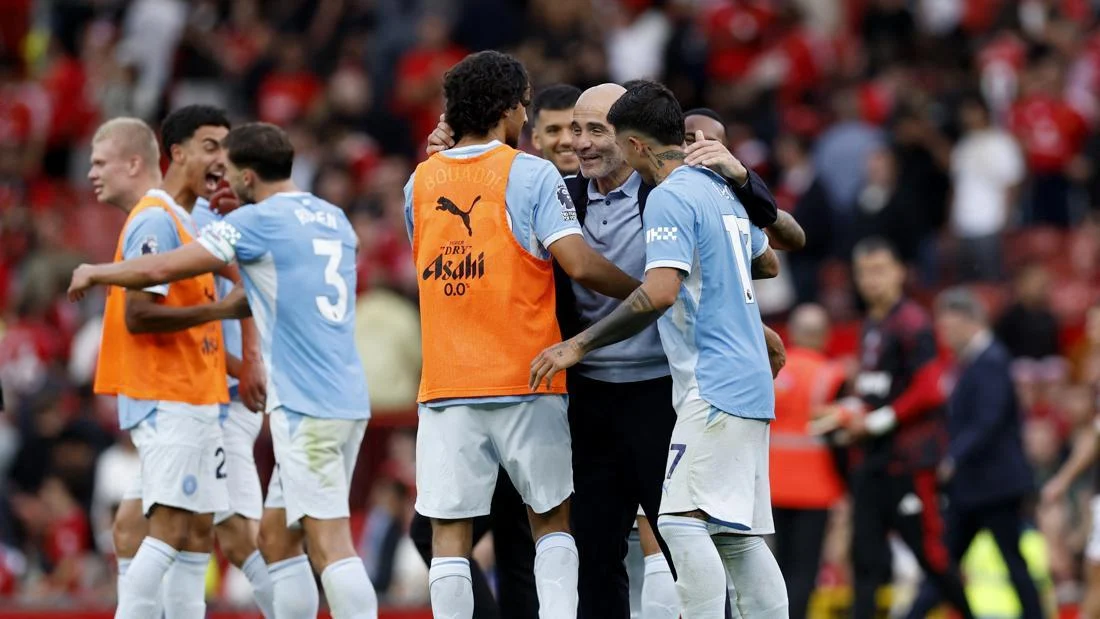
The landscape of English football has been irrevocably altered following the announcement that Manchester City has been found guilty of 114 separate breaches of Premier League financial regulations. Following a grueling, multi-year investigation and a comprehensive 12-week hearing conducted by an independent commission between September and December 2024, the reigning champions now face the prospect of unprecedented sanctions that could redefine the club’s legacy and the structural integrity of the top flight of English football.
The findings, reported by The Athletic, indicate that of the 115 charges originally brought against the club in early 2023, the commission upheld 114. These violations span a period of 14 years, from 2009 to 2023, encompassing a wide array of financial improprieties, including the failure to provide accurate financial information, the non-disclosure of remuneration packages for players and managers, and breaches of the Premier League’s Profitability and Sustainability Rules (PSR). Furthermore, the commission concluded that the club failed to comply with UEFA’s Financial Fair Play (FFP) regulations and neglected its obligation to cooperate with investigators during the extensive inquiry process.
A Timeline of Allegations and Legal Scrutiny
The roots of this investigation trace back to November 2018, when the German publication Der Spiegel published a series of leaked documents, colloquially known as "Football Leaks." These documents purportedly showed that Manchester City had inflated sponsorship income, with money being funneled into the club by its owner, Sheikh Mansour bin Zayed Al Nahyan, under the guise of commercial revenue from UAE-based entities.
Following the initial leak, UEFA launched its own investigation, which culminated in 2020 with a two-year ban from European competition and a €30 million fine. However, Manchester City successfully appealed the decision to the Court of Arbitration for Sport (CAS). CAS overturned the ban, citing that many of the alleged breaches were "time-barred" under UEFA’s statute of limitations, while acknowledging that the club had shown a "disregard" for the investigative process.
The Premier League, operating under different regulatory parameters, remained undeterred. In February 2023, the league officially charged the club with 115 breaches. The ensuing legal proceedings were kept largely behind closed doors, culminating in the 12-week independent commission hearing held in late 2024. The commission’s verdict now brings a conclusion to the first phase of this legal odyssey, marking a historic moment for the English game.
The Scope of the Financial Breaches
The sheer volume and diversity of the charges underscore the complexity of the commission’s work. The 114 confirmed breaches cover five distinct categories:
- Financial Reporting: The club failed to provide accurate financial information that gave a true and fair view of the club’s financial position, particularly regarding revenue from sponsorship and operating costs.
- Managerial and Player Remuneration: Evidence presented suggests that certain members of the coaching staff and squad were paid through entities outside the club’s official payroll, effectively circumventing salary cap regulations and hiding the true cost of the squad.
- Profitability and Sustainability (PSR): The club is alleged to have breached the league’s sustainability threshold, which limits losses over a rolling three-year period.
- Regulatory Non-Compliance: A failure to adhere to UEFA’s licensing and FFP rules for several seasons, a charge that the Premier League integrated into its own framework for domestic compliance.
- Lack of Cooperation: Perhaps most damaging to the club’s reputation during the hearing was the finding that the club failed to assist the Premier League’s investigation, withholding documents and evidence that were legally requested.
Potential Sanctions and Regulatory Precedents
As the football world awaits the final sentencing, legal experts are evaluating the severity of the penalties available to the commission. Under Premier League Rule W.51, the independent commission has the authority to impose a wide range of sanctions.
The most severe, and perhaps most debated, potential outcome is expulsion from the Premier League. While such a move would be unprecedented, the commission is not legally restricted from relegating the club to the lower tiers of the English football pyramid. More common, though still extreme, punishments include massive point deductions, which could effectively strip the club of past titles or future European qualification.
Financial penalties are also on the table. While a fine would be expected, the Premier League has indicated that monetary punishments alone are insufficient for violations of this magnitude. Furthermore, there is the potential for the "stripping of titles." If the commission determines that Manchester City’s financial cheating directly influenced their competitive performance during the seasons in which they won the Premier League, the league could theoretically reallocate those titles to the runners-up. This would trigger a chaotic legal domino effect, involving historical commercial contracts, broadcasting rights, and the legacy of rival clubs such as Manchester United, Liverpool, and Arsenal.
The Stance of the Club and the Path to Appeal
Throughout this process, Manchester City has maintained a posture of staunch defiance. Following the 2023 charges, the club released an official statement expressing its surprise and stating that it possessed "irrefutable evidence" to clear its name. The club has consistently argued that the allegations are based on stolen, incomplete, and out-of-context documentation.
It is widely expected that Manchester City will exercise its right to appeal the commission’s findings. The legal team representing the club—often noted for its size and experience in high-stakes litigation—will likely challenge the methodology of the commission, the interpretation of the rules, and the procedural fairness of the proceedings. An appeal process could drag the matter out for several more months, if not years, creating a period of significant uncertainty for the club, its investors, and its supporters.
Broader Implications for English Football
The resolution of this case serves as a litmus test for the Premier League’s governance. In recent years, the league has faced criticism for its perceived lack of teeth in enforcing financial regulations, especially as state-backed ownership models have become more prevalent. The guilty verdict sends a clear signal that even the most powerful and successful entities are subject to the same rules as smaller clubs.
From a commercial perspective, the implications are vast. Manchester City’s dominance over the last decade has been built on a foundation of massive investment. If that foundation is deemed illegal, the club’s commercial partnerships and global brand strategy will face intense scrutiny. Sponsors may be contractually entitled to review or terminate agreements if the club is found to have operated in breach of competition regulations.
Furthermore, this case has reignited the debate surrounding the "Independent Football Regulator" (IFR) in the United Kingdom. Advocates for the regulator argue that the Manchester City case proves that the league cannot be left to police itself, as the conflict of interest inherent in clubs judging other clubs is too great. The government’s commitment to establishing an IFR now seems more pertinent than ever, as the sport looks to move toward a more transparent and sustainable financial model.
Analytical Outlook: A Legacy in Question
The findings against Manchester City represent more than just a regulatory violation; they challenge the narrative of modern football excellence. For the fans who have celebrated four consecutive Premier League titles, this news is a profound disappointment. For the wider footballing community, it is a vindication of the belief that financial integrity must be the bedrock of competitive sport.
As the commission prepares to announce the specific sanctions, the club finds itself at a crossroads. Regardless of the outcome of the impending appeal, the reputational damage is significant. The "114 charges" will likely be cited in every discussion regarding Manchester City’s achievements for years to come. The club, which has transformed itself into a global powerhouse, must now navigate the most precarious period in its modern history.
The coming months will be defined by legal maneuverings, but the long-term legacy of this event will be determined by the commission’s final decision. Will it be a restorative moment for the Premier League, or will it lead to a prolonged period of legal and institutional instability? For now, the world watches as one of the most decorated clubs in modern history faces the possibility of being dismantled by its own success.