The Ministry of Energy and Mineral Resources (ESDM) is facing mounting pressure from energy experts, environmental observers, and civil society organizations to take decisive, uncompromising action against widespread illegal gold mining operations proliferating in the remote Sangihe Islands of North Sulawesi. Despite repeated enforcement actions, local law enforcement interventions, and the installation of police lines on multiple occasions, illicit extraction activities—characterized by the heavy deployment of industrial-scale heavy machinery—have resurfaced with alarming intensity in Desa Bowone, located within the Sangihe Islands Regency.
Energy sector analysts argue that the Ministry of ESDM, currently led by Minister Bahlil Lahadalia, possesses the statutory authority, regulatory mechanisms, and administrative leverage necessary to oversee mineral governance, revoke unauthorized operational footprints, and spearhead a national crackdown on illegal mining networks. As unregulated extraction continues to escalate, environmental watchdogs warn of compounding ecological catastrophes, including accelerated deforestation, severe topsoil erosion, coastal degradation, and the potential discharge of hazardous chemical waste—such as mercury and cyanide—into pristine marine ecosystems utilized by local fishing communities.
The resurgence of these illicit operations has laid bare the complex challenges of enforcing natural resource laws in Indonesia’s outer islands. Industry stakeholders, academic researchers, and legal experts are now demanding a coordinated, multi-agency response to dismantle the financial and logistical backbones supporting these unauthorized ventures, emphasizing that inconsistent enforcement only emboldens illegal operators to resume activities shortly after law enforcement personnel depart.
Anatomy of the Crisis in Sangihe: Scale, Scope, and Environmental Threat
The Sangihe Islands, an archipelago situated along the volcanic arc of North Sulawesi near the maritime border with the Philippines, are renowned for their rich biodiversity, fragile island ecosystems, and strategic ecological significance. However, beneath the mountainous terrain and coastal rainforests lie lucrative deposits of precious metals, drawing illegal prospectors and syndicates seeking rapid financial gains outside the purview of state regulation and taxation.
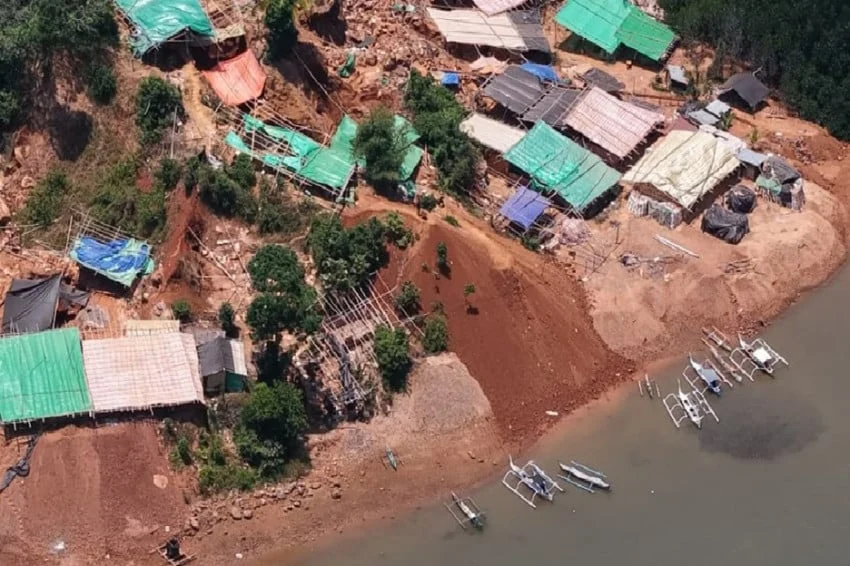
In Desa Bowone, the epicenter of the current controversy, illegal mining has transitioned from manual, small-scale panning to industrialized extraction operations. The deployment of heavy excavators and processing equipment has radically transformed the landscape, carving deep scars into hillsides and destabilizing local watersheds. Environmental scientists emphasize that island ecosystems are exceptionally vulnerable to mining-related disruptions. Unlike vast continental landmasses, small islands possess limited freshwater lenses, restricted drainage basins, and tightly interconnected terrestrial and marine habitats.
Of primary concern to local residents and environmental advocates is the unregulated use of toxic chemicals in the gold amalgamation process. Illicit miners frequently employ mercury and cyanide to separate gold from ore without implementing standard environmental containment protocols. Runoff from these makeshift processing sites routinely flows directly into local rivers and coastal waters, posing severe, long-term threats to marine life, coral reefs, and public health. Local communities, whose livelihoods depend predominantly on artisanal fishing and small-scale agriculture, report declining fish catches and deteriorating water quality, though comprehensive health and environmental impact assessments by regional authorities remain pending.
Chronology of Impunity: A Cat and Mouse Game with Enforcement
The ongoing crisis in Sangihe is not a sudden development but rather the latest chapter in a protracted battle between local authorities and resilient underground mining networks. A detailed chronology of events reveals a persistent pattern of temporary crackdowns followed by rapid operational rebounds:
Phase I: Initial Detection and Escalation
Months prior to the current flare-up, community reports highlighted a sudden influx of heavy machinery and migrant labor into the forested areas of Desa Bowone. Operating largely under the cover of dense vegetation and remote topography, the illegal miners established unauthorized access roads, set up rudimentary camps, and commenced round-the-clock excavation.
Phase II: Law Enforcement Interventions and Police Lines
Alarmed by the rapid expansion of the unpermitted sites, regional law enforcement agencies, in coordination with local police units, launched targeted raids. During these operations, authorities confiscated equipment, detained key operational personnel, and established physical barriers. According to local tracking data, police lines have been erected at the Bowone mining sites on at least four separate occasions over the past year.
Phase III: The Resurgence Cycle
Despite the visible presence of police lines and the legal warnings attached to them, mining syndicates routinely exploit enforcement gaps. Approximately two months following the most recent major sweep, operations resumed under the cover of night, eventually expanding back to full daylight capacity. Heavy machinery was reportedly brought back onto the sites, and processing facilities were swiftly repaired or replaced. Crucially, despite multiple cycles of raids and re-occupations, public records indicate a striking absence of high-level arrests or prosecutions targeting the financial backers and organizers behind the illicit network.
The Statutory Role of the Ministry of ESDM
Weighing in on the governance failures underpinning the Sangihe situation, Fahmi Radhi, an energy economics observer and academic at Universitas Gadjah Mada (UGM), asserted that the primary responsibility for curbing illegal extraction lies squarely with the central government. In a formal statement released on Tuesday, September 15, Radhi emphasized that the Ministry of ESDM is equipped with specialized directorates designed to handle regulatory infractions and uphold legal standards across the mining sector.
"The Director General who handles law enforcement within the Ministry of ESDM is the official who should be taking decisive action," Radhi stated. He pointed out that while regional police forces play a vital tactical role in executing raids and securing crime scenes, the overarching strategy, intelligence sharing, and administrative deterrence must originate from the central ministry.
Radhi further stressed that if enforcement actions in Sangihe require specialized logistical support or expanded manpower, the Ministry of ESDM must proactively coordinate with the Indonesian National Police (Polri), the Attorney General’s Office, and relevant environmental ministries to mount an unyielding campaign.
Addressing Perceived Disparities in National Enforcement
A central critique raised by energy analysts and legal scholars centers on the apparent inconsistency in how illegal mining is treated across different geographical jurisdictions in Indonesia. While high-profile crackdowns have frequently made headlines in resource-rich provinces on Sumatra and Kalimantan—where illegal coal and gold operations face aggressive asset seizures and heavy-handed dismantling—archipelagic regions and remote outer islands often experience prolonged periods of regulatory neglect.
Fahmi Radhi cautioned against the application of double standards in state law enforcement. "If rigorous enforcement actions can be systematically executed in Sumatra, why can they not be enforced with equal vigor in Sangihe?" he questioned.
This sentiment is echoed by broader civil society coalitions, who argue that selective enforcement fosters an environment of impunity. When illegal miners observe that operations in certain regions continue unhindered for months despite repeated violations, confidence in regulatory institutions erodes, and local populations lose faith in the state’s commitment to the rule of law.
The Invisible Hand: Syndicates, Protection, and Organized Crime
The sheer scale of illegal gold mining in Sangihe—characterized by the movement of heavy excavators, massive fuel supplies, chemical precursors, and numerous workers—has led industry experts to conclude that these operations cannot exist in a vacuum. Operating industrial machinery in remote forest zones requires substantial capital, complex logistics, and a steady supply chain.
Rizal Kasli, a senior member of the Advisory Council of the Indonesian Mining Professionals Association (Perhapi), noted that large-scale illegal mining typically relies on sophisticated support systems. According to Kasli, such ventures are exceptionally difficult to sustain over extended periods without the active involvement, collusion, or protection of influential local figures or external entities.
While Kasli emphasized that allegations of protection and systemic patronage remain unproven, he maintained that comprehensive, transparent investigations by law enforcement are essential to unmask the true beneficiaries of the trade. Unraveling the financial trails, corporate fronts, and illicit networks financing the Sangihe operations is viewed by mining experts as the only permanent solution to prevent underground syndicates from simply replacing confiscated equipment and resuming production.
Economic, Fiscal, and Social Implications
The proliferation of illegal mining in Indonesia extends far beyond localized environmental damage, carrying profound macroeconomic and fiscal consequences:
Loss of State Revenue: Unregulated mining bypasses statutory royalty payments, production fees, and corporate income taxes. Billions of rupiah in potential state revenue that could otherwise be allocated toward regional development, infrastructure, and public health in areas like North Sulawesi are systematically lost to the shadow economy.
Market Distortion and Unfair Competition: Legitimate mining corporations and licensed small-scale miners (IPR) who invest heavily in environmental compliance, safety standards, and fiscal obligations are placed at a severe disadvantage when competing against illegal operators who incur zero regulatory overhead.
Social Friction and Community Division: The influx of transient migrant laborers associated with illegal mining camps frequently strains local infrastructure and alters traditional community dynamics. Disagreements over land use rights, environmental degradation, and the distribution of economic spoils can fracture communities, pitting those who benefit from short-term mining payouts against those bearing the long-term ecological costs.
Pathways Forward: Policy Recommendations for the Ministry of ESDM
As pressure mounts on Minister Bahlil Lahadalia and his leadership team at the Ministry of ESDM, energy and legal experts have outlined a multi-step roadmap to restore order in Sangihe and establish a more robust deterrent framework nationwide:
-
Immediate Operational Interdiction: Deploying joint task forces comprising ESDM investigators, national police, and military personnel to physically secure the Bowone mining sites, confiscate all heavy machinery, and neutralize operational infrastructure permanently.
-
Financial Investigations and Asset Recovery: Expanding investigations beyond low-level laborers and machine operators to target financiers, suppliers of heavy equipment, and purchasers of illegal gold using anti-money laundering (AML) statutes.
-
Strengthening Regional Supervisory Capacity: Enhancing the monitoring capabilities of regional energy offices through satellite surveillance, drone technology, and formalized whistleblower channels that empower local residents to report illicit activities without fear of retaliation.
-
Formalization and Alternative Livelihoods: Where appropriate, evaluating the viability of establishing legally regulated People’s Mining Permits (Izin Pertambangan Rakyat – IPR) under strict environmental guidelines, while simultaneously investing in sustainable agricultural, fisheries, and ecotourism alternatives for local populations.
Conclusion
The unfolding crisis in the Sangihe Islands serves as an urgent test case for Indonesia’s natural resource governance. As illegal gold mining continues to threaten fragile island ecosystems and defy repeated surface-level interventions, the demand for structural, top-down leadership has never been more acute. With civil society, academic experts, and professional associations aligned in calling for decisive intervention, the Ministry of ESDM stands at a critical juncture. How the ministry chooses to exercise its statutory authority in Sangihe will send a powerful signal regarding the state’s resolve to uphold environmental integrity and enforce the rule of law across every corner of the archipelago.