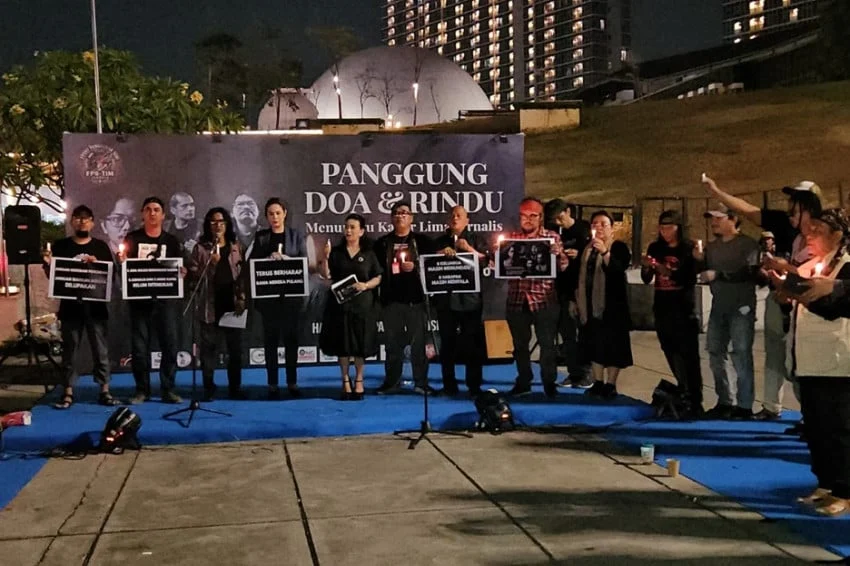
The front courtyard of the Taman Ismail Marzuki cultural center in Central Jakarta transformed into a solemn space of reflection and collective hope as artists, cultural figures, journalists, and members of the public gathered for a vigil titled Panggung Doa and Rindu, Menunggu Kabar Lima Jurnalis. The gathering, held under the night sky on Monday, September 14, 2026, served as an emotional outlet for a community anxiously awaiting news regarding five journalists and three vessel crew members who went missing in the treacherous waters of the Sunda Strait.
Among the missing media professionals is Yudistiro Pranoto, an esteemed photojournalist with the iNews Media Group, whose disappearance alongside his colleagues has sent shockwaves through Indonesia’s journalistic community. The event combined traditional expressions of solidarity with poignant artistic tributes, highlighting the deep professional and personal bonds within the country’s creative and media sectors. Participants engaged in communal prayers, poetry readings, and a synchronized candle-lighting ceremony, all accompanied by the haunting, patriotic strains of Ibu Soed’s classic composition, Tanah Airku. Attendees clutched placards bearing messages of hope, resilience, and demands for sustained rescue efforts, turning the cultural landmark into a focal point of national solidarity.
David Karo-karo, the initiator of the Front Penggerak Seniman TIM, explained that the event materialized through a spontaneous outpouring of humanitarian concern. Speaking to the gathered crowd and press corps, Karo-karo emphasized that the solidarity action transcended professional affiliations, rooting itself in the fundamental empathy of fellow citizens witnessing an unfolding maritime tragedy.
Chronology of the Sunda Strait Maritime Incident
The disappearance of the eight individuals stems from a routine journalistic and documentation assignment that turned perilous nearly a week prior to the Jakarta vigil. According to official reports compiled by maritime authorities and disaster management agencies, the incident began on Monday, September 7, 2026.
A vessel carrying a media team and ship operators set out into the Sunda Strait—a notoriously demanding body of water separating the islands of Java and Sumatra, known for its unpredictable weather patterns, strong underwater currents, and heavy maritime traffic. The team was tasked with covering environmental and maritime conditions in the region. However, regular communication with the vessel ceased abruptly during the afternoon hours of September 7.
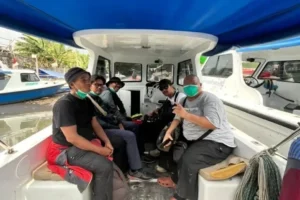
When shore-based teams failed to establish contact by evening, emergency protocols were triggered. Initial search and rescue (SAR) operations were launched immediately, led by the National Search and Rescue Agency (BASARNAS), supported by the Indonesian Navy (TNI AL), the Water Police (Polairud), and local fishing communities. Despite deploying naval vessels, rigid-hull inflatable boats, and aerial reconnaissance assets, initial sweeps yielded no definitive trace of the missing boat or its occupants, hampered by high waves, deep waters, and low visibility during nocturnal search phases.
Recognizing the gravity of the situation and the relentless appeals from families, media organizations, and civil society groups, authorities officially extended the active search and rescue window by an additional three days, pushing the operational deadline as initial standard response times elapsed. Rescue coordinators noted that maritime drift modeling suggested the vessel or survivors could be dispersed over a wide geographical arc extending into the Indian Ocean approach or trapped in secluded coastal pockets along the western coast of Java or southern Sumatra.
Context of Maritime Safety and Journalistic Risks
The tragedy in the Sunda Strait underscores the profound physical dangers inherent in field journalism, particularly reporting that requires maritime or remote wilderness travel. While war reporting and political unrest frequently dominate discussions on journalist safety, environmental, maritime, and investigative reporting often expose media workers to severe elemental hazards.
The Sunda Strait itself holds a formidable reputation in maritime history. Situated along the Sunda Megathrust zone, the region is geologically volatile—infamous for the cataclysmic 1883 eruption of Krakatoa and more recent tsunamis, such as the 2018 Anak Krakatoa collapse. Beyond geological hazards, the strait experiences severe seasonal squalls, turbulent tidal currents where the Indian Ocean meets the Java Sea, and dense commercial shipping lanes accommodating massive container vessels and tankers.
Media safety advocates have long pointed out that while media institutions maintain protocols for high-risk urban assignments, maritime reporting often operates in a regulatory grey area regarding mandatory safety gear, vessel seaworthiness certifications, and real-time satellite tracking. The ongoing crisis has thus reignited intense debates within Indonesian media circles regarding safety standards, insurance policies, and risk assessment procedures before dispatching reporters onto open waters.
Official Responses and Extended Search Operations
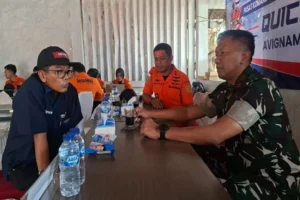
As the search entered its critical extended phase following the initial standard seven-day SAR window, BASARNAS and joint operational commanders intensified their coordination efforts. Officials established an integrated command post along the Banten coastline to streamline communication between maritime patrol units and families waiting for updates.
In an official statement released by joint rescue coordinators, authorities confirmed that search grids had been expanded significantly based on oceanographic data factoring in wind speed, wave direction, and surface current velocities. Air assets, including helicopters equipped with thermal imaging technology, were deployed to comb remote island shores and floating debris fields, while local fishermen were enlisted as coastal spotters due to their intimate knowledge of local waters.
Media management from the iNews Media Group, alongside leadership from the Alliance of Independent Journalists (AJI) and the Indonesian Journalists Association (PWI), have maintained a continuous presence at the operational command centers. Representatives have expressed gratitude for the tireless efforts of the rescue personnel while calling upon the government to deploy advanced sonar technology and deep-sea exploration equipment to scan the seabed of the strait, where strong undercurrents could potentially have affected the vessel’s drift.
Broader Implications for Press Freedom and Solidarity
The emotional resonance of the Panggung Doa and Rindu event at Taman Ismail Marzuki reflects a broader cultural anxiety regarding the welfare of truth-seekers in contemporary Indonesia. The incident has galvanized a rare cross-sectoral solidarity movement, bridging the gap between artists, intellectuals, corporate media workers, and independent creators.
Sociologists and cultural analysts monitoring the vigil note that public spaces like TIM have historically served as the moral conscience of the capital, where artistic expression converges with sociopolitical empathy. By turning to poetry, song, and communal prayer, the participants did not merely mourn an ongoing tragedy; they reaffirmed the intrinsic value of human life and the unyielding dedication of journalists who risk their lives to document the realities of the archipelago.
As the search operations in the Sunda Strait continue into their second week, the nation watches with bated breath. The combined pressure of intensified state-backed rescue missions and the unyielding spiritual solidarity demonstrated by the arts and media communities underscore a singular national hope: that Yudistiro Pranoto, his fellow journalists, and the vessel’s crew will be found safe and brought home.