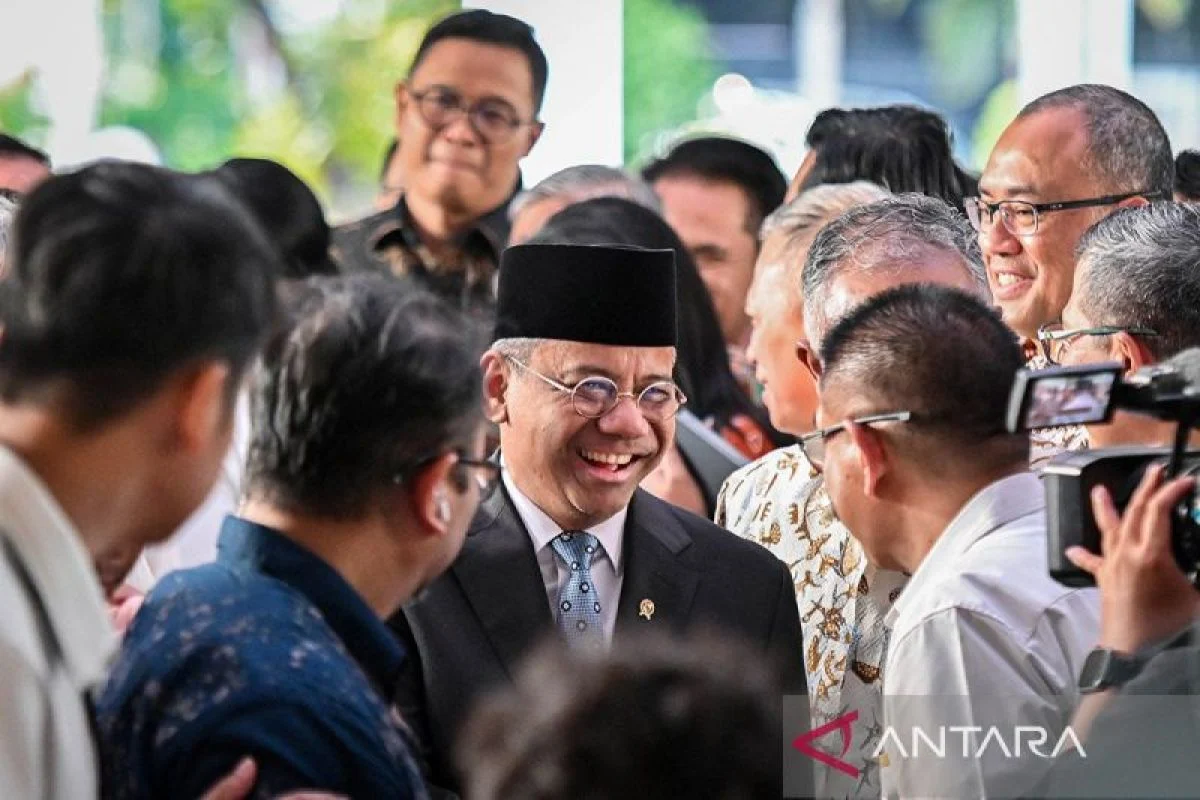
The political landscape in Jakarta shifted significantly on Monday, September 14, 2026, as President Prabowo Subianto enacted the sixth major reshuffle of the Kabinet Merah Putih. The most consequential adjustment occurred at the helm of the Ministry of Finance, where Suahasil Nazara was sworn in as the new Minister of Finance, replacing Purbaya Yudhi Sadewa. The ceremony, held at the State Palace, marks a pivotal moment for Indonesia’s fiscal management, signaling a strategic transition in the administration’s economic policy approach as the government approaches the mid-term of its tenure.
This appointment is particularly noteworthy as Suahasil Nazara becomes the third individual to occupy the position of Minister of Finance within the Prabowo-Gibran administration, following the initial tenure of Sri Mulyani Indrawati and the subsequent stint by Purbaya Yudhi Sadewa. The rapid succession in one of the government’s most critical portfolios has drawn significant attention from economists, international investors, and policymakers, all of whom are closely monitoring how the change will influence Indonesia’s fiscal stability and sovereign credit outlook.
A Proven Technocrat Takes the Helm
Suahasil Nazara is no stranger to the inner workings of the Ministry of Finance. His ascent to the top position follows a long and distinguished career within the government’s economic apparatus. Before his elevation, he served as the Deputy Minister of Finance, working closely with his predecessors to navigate the complex macroeconomic challenges that have characterized the post-pandemic era.
Beyond his most recent role, Nazara previously held the position of Head of the Fiscal Policy Agency (BKF), where he was instrumental in shaping Indonesia’s tax policies and economic stimulus packages. His academic background, combined with years of institutional experience, suggests that the administration is prioritizing continuity and technical expertise during this period of leadership transition. In his inaugural remarks following the inauguration ceremony, Nazara emphasized his commitment to maintaining the "health and credibility" of the State Budget (APBN). He underscored the importance of ensuring that the budget deficit remains strictly within the legislated limits, a message aimed at reassuring both domestic markets and international rating agencies.
The Chronology of Administrative Flux
The reshuffle on September 14, 2026, serves as the sixth iteration of the Cabinet Merah Putih since President Prabowo Subianto assumed office in October 2024. This frequency of adjustment reflects a dynamic, and at times turbulent, governance strategy. Since the inception of the administration, the cabinet has undergone various recalibrations, often driven by shifts in political alliances, economic performance requirements, and the need for greater efficiency in policy implementation.
- October 2024: Commencement of the Prabowo-Gibran administration with the initial formation of the cabinet, featuring a mix of political appointees and technocrats.
- Early 2025: The first series of minor adjustments, aimed at refining ministerial coordination.
- Late 2025: A significant shift in the economic team, which saw the transition of the finance portfolio to Purbaya Yudhi Sadewa.
- September 2026: The sixth and most recent reshuffle, headlined by the appointment of Suahasil Nazara, intended to solidify fiscal management as the administration faces increasing pressure to meet infrastructure and social welfare targets.
The frequency of these changes has led to debates among political analysts regarding the stability of the executive branch. While some observers argue that such adjustments are necessary to optimize performance in a challenging global economic environment, others express concerns that constant personnel changes may hinder the continuity of long-term economic planning.
Economic Implications and Fiscal Challenges
The transition at the Ministry of Finance occurs at a critical juncture for Indonesia. The country is currently balancing the need for ambitious development projects—a hallmark of the Prabowo-Gibran agenda—with the necessity of maintaining fiscal discipline. Global economic headwinds, including volatile commodity prices and fluctuating interest rates in major economies, have necessitated a cautious approach to state spending.
Analysts note that Suahasil Nazara’s primary challenge will be to balance these competing priorities. The APBN serves as the primary engine for the government’s development goals, yet it must remain resilient against external shocks. By appointing a career civil servant and a fiscal expert, the President appears to be signaling a pivot toward "prudent growth."
Furthermore, the new Minister of Finance is expected to focus on tax reform and increasing the efficiency of state revenue collection. With the national debt-to-GDP ratio remaining a key metric for global investors, Nazara’s mandate is likely to include a focus on broadening the tax base and optimizing non-tax state revenues, ensuring that the government does not resort to excessive borrowing to fund its infrastructure initiatives.
Official Responses and Market Sentiment
The market response to the cabinet reshuffle has been measured. While investors generally prefer political stability, the appointment of a known technocrat like Nazara has provided a sense of continuity. Financial institutions in Jakarta have indicated that the focus remains on the government’s adherence to the fiscal rule, which mandates that the budget deficit should not exceed 3% of GDP, unless under specific emergency conditions.
"The appointment of Suahasil Nazara is a positive signal for fiscal continuity," noted an analyst from a leading investment firm. "He understands the mechanics of the Ministry of Finance better than most. The market will be watching for the upcoming budget revisions and his strategy for maintaining fiscal space for development while keeping inflation in check."
From the government’s perspective, the reshuffle is presented as a necessary evolution. President Prabowo has consistently maintained that his cabinet is a "work-without-holiday" team, suggesting that personnel changes are not a reflection of failure but a mechanism to ensure that the most capable hands are steering the ship during critical phases of the national agenda.
Broader Context: The State of the Cabinet
The Cabinet Merah Putih, now nearly two years into its mandate, continues to face intense scrutiny from the public and the legislature. Beyond the Ministry of Finance, other ministerial positions have also seen turnover, reflecting the complex coalition dynamics that underpin the current administration.
The emphasis on economic performance is a core pillar of the administration’s legitimacy. With recent surveys suggesting that the public is highly focused on cost-of-living issues and job creation, the Ministry of Finance sits at the center of the government’s ability to deliver on these promises. The appointment of a seasoned official like Nazara is viewed by many as an attempt to professionalize the economic team further and insulate fiscal policy from the pressures of political maneuvering.
Looking Ahead
As Suahasil Nazara settles into his new office, the immediate tasks ahead are clear: finalization of the fiscal framework for the upcoming year, coordination with Bank Indonesia regarding monetary and fiscal synergy, and ensuring that the government’s social safety nets remain funded despite budgetary pressures.
The sixth reshuffle of the Prabowo-Gibran government is more than just a change in leadership; it represents a tactical recalibration. By elevating a technocrat to lead the Ministry of Finance, the administration is betting that institutional memory and deep expertise will serve as the best defense against economic uncertainty. For Indonesia, the next several months will be a test of whether this new leadership can successfully navigate the narrowing path between aggressive development and fiscal prudence.
As the administration continues its tenure, the public and the international community will look for consistency. If Nazara can deliver on his promise of a "healthy and credible" APBN, he will likely provide the stability that the administration needs to move forward with its broader legislative and developmental objectives. However, if economic growth stagnates or if the budget deficit widens, the pressure for further adjustments may persist, keeping the political discourse in Jakarta in a state of perpetual anticipation.
The appointment of Suahasil Nazara is a definitive statement that for the remainder of this term, the government is prioritizing technical competence and fiscal discipline—a strategy that will likely define the legacy of the Prabowo-Gibran administration’s economic management. Whether this move is enough to stabilize the broader political environment remains to be seen, but for now, the markets and the public are watching with a mixture of caution and expectation.