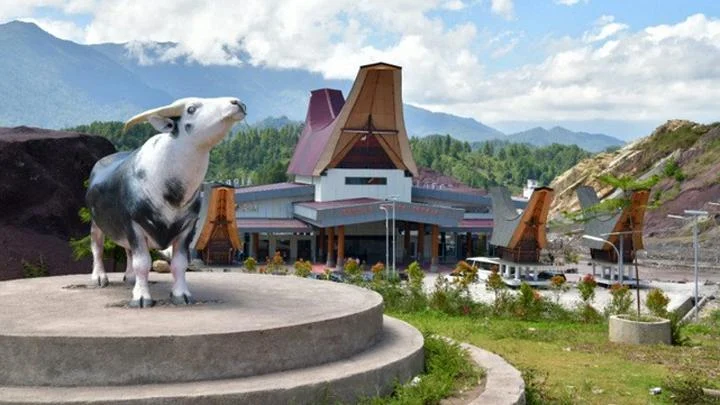
The inauguration of Toraja Airport, formerly known as Buntu Kunik Airport, in Tana Toraja Regency, South Sulawesi, marks a significant milestone in Indonesia’s ongoing infrastructure development strategy. President Joko Widodo officially opened the facility on Thursday, March 18, 2021, emphasizing its critical role in unlocking the economic and tourism potential of the region. Broadcast live via the official YouTube channel of the Presidential Secretariat, the event underscored the government’s commitment to bridging geographical divides in the archipelago through strategic transportation investments.
For decades, the rugged and mountainous terrain of Tana Toraja presented formidable challenges to travelers and logistics alike, largely isolating the region from major economic hubs. By establishing a modern commercial aviation gateway, the central government aims to dismantle these physical barriers. President Widodo expressed optimism that the airport would serve as a catalyst for local economic revitalization, fostering job creation, encouraging entrepreneurship, and establishing new economic centers within Tana Toraja and its surrounding districts.
A Complex Engineering Endeavor Rooted in Perseverance
The realization of Toraja Airport stands as a testament to engineering perseverance. The project’s genesis dates back to 2011 when initial construction began to replace the aging and geographically constrained Pongtiku Airport located in Ratentayo. However, the initial phase of development encountered severe hurdles, leading to a prolonged hiatus. The primary obstacle lay in the extreme topography of the region, characterized by steep hills and deep valleys that made conventional airport design virtually impossible.
Construction efforts remained stalled for years until the administration of President Joko Widodo revived the initiative. In 2018, the central government resumed development, tackling the daunting geographical challenges head-on. Under the revised master plan, engineers executed a monumental earth-moving operation, which notably included the systematic leveling of three distinct hills to clear the necessary path for the runway.
According to Minister of Transportation Budi Karya Sumadi, the construction of Toraja Airport was among the most technically demanding aviation infrastructure projects undertaken in recent years due to the treacherous terrain. Despite these obstacles, the first phase of construction spearheaded by the central government was successfully completed by mid-2020. Regular commercial services were subsequently introduced, with prominent domestic carriers Wings Air and Citilink establishing scheduled flights connecting Makassar, the capital of South Sulawesi, to Toraja.
Chronological Timeline of Toraja Airport Development
To fully understand the significance of the March 2021 inauguration, it is essential to trace the chronological milestones that shaped the airport’s multi-decade trajectory:
- 2011: Initial ground-breaking and commencement of construction for Buntu Kunik Airport, intended to replace the constrained Pongtiku Airport.
- 2011–2017: Construction progresses at a slow pace, eventually halting due to complex topographical challenges, funding constraints, and logistical difficulties.
- 2018: President Joko Widodo’s administration formally revitalizes the project, injecting renewed momentum and central government oversight into the construction timeline.
- Mid-2020: Phase I construction successfully concludes, featuring a functional terminal building and an initial runway capable of accommodating ATR aircraft.
- Late 2020: Trial flights and initial commercial operations commence, with airlines such as Wings Air and Citilink introducing regular routes between Makassar and Toraja.
- March 18, 2021: President Joko Widodo officially inaugurates the facility, formally cementing its operational status and announcing its new designation as Toraja Airport.
- 2021 and Beyond: Continuation of Phase II infrastructure enhancements, including ongoing efforts to clear remaining topographical obstacles and extend the runway to accommodate larger narrow-body aircraft.
Technical Specifications and Infrastructure Specifications
Spanning a total area of 141 hectares, Toraja Airport was designed in modular phases to accommodate progressively larger aircraft and increasing passenger volumes. During the initial operational phase, the airport featured a 1,600-meter asphalt runway engineered specifically to handle turboprop aircraft, such as the ATR 72, which are well-suited for regional Indonesian routes. The initial infrastructure also included an apron measuring 94.5 by 67 meters and a taxiway spanning 124.5 by 15 meters.
To accommodate anticipated growth in tourism and business travel, the master plan incorporated a comprehensive second phase of development. This expansion focuses on extending the runway length to 2,000 meters, a critical upgrade that will enable the facility to safely accommodate larger jet aircraft, such as the Boeing 737.
In addition to airside improvements, the landside infrastructure features a modern terminal building encompassing 1,000 square meters. The terminal is designed with passenger comfort and efficiency in mind, boasting a maximum capacity of approximately 150 passengers during peak operational hours. The architectural design subtly incorporates local cultural motifs, reflecting the rich heritage of the Torajan people while maintaining contemporary aviation standards.
The Etymology and Renaming Process
The transition from Buntu Kunik Airport to Toraja Airport was not merely administrative; it was the result of extensive local consultation and cultural consensus. Prior to the official inauguration, local government authorities engaged in comprehensive dialogues with traditional leaders and customary stakeholders representing 19 distinct sub-districts (kecamatan) across Tana Toraja.
This collaborative approach ensured that the naming convention resonated deeply with the local populace and accurately represented the broader geographical and cultural identity of the region. Following formal agreement among the traditional leaders and the regency government, the proposed name change was submitted to the Regional House of Representatives (DPRD) for ratification during a plenary session. Upon receiving legislative approval, the recommendation was forwarded to the provincial government of South Sulawesi before receiving final legal endorsement from the Ministry of Transportation.
Economic Implications and Tourism Sector Revival
The opening of Toraja Airport carries profound economic and social implications for South Sulawesi. Tana Toraja has long held a reputation as a world-class cultural tourism destination, renowned for its unique traditional architecture (tongkonan), elaborate funeral rites, and scenic highland landscapes. However, prior to the airport’s completion, reaching the region required a grueling overland journey of approximately eight to ten hours by car from Makassar, significantly limiting visitor numbers and impeding commercial logistics.
By drastically reducing travel time—cutting the journey from a full-day road trip to a brief flight of less than an hour—the airport removes the primary logistical bottleneck facing the tourism sector. Industry analysts project a substantial increase in international and domestic tourist arrivals, which in turn will stimulate investment in local hospitality, culinary enterprises, micro, small, and medium enterprises (MSMEs), and tour operators.
Furthermore, the improved air connectivity facilitates the rapid transport of perishable agricultural goods and local commodities to broader domestic markets, integrating Tana Toraja more deeply into the national supply chain. As infrastructure enhancements continue, the region is poised to transition from an isolated cultural enclave into a vibrant, economically self-sustaining hub in eastern Indonesia.